




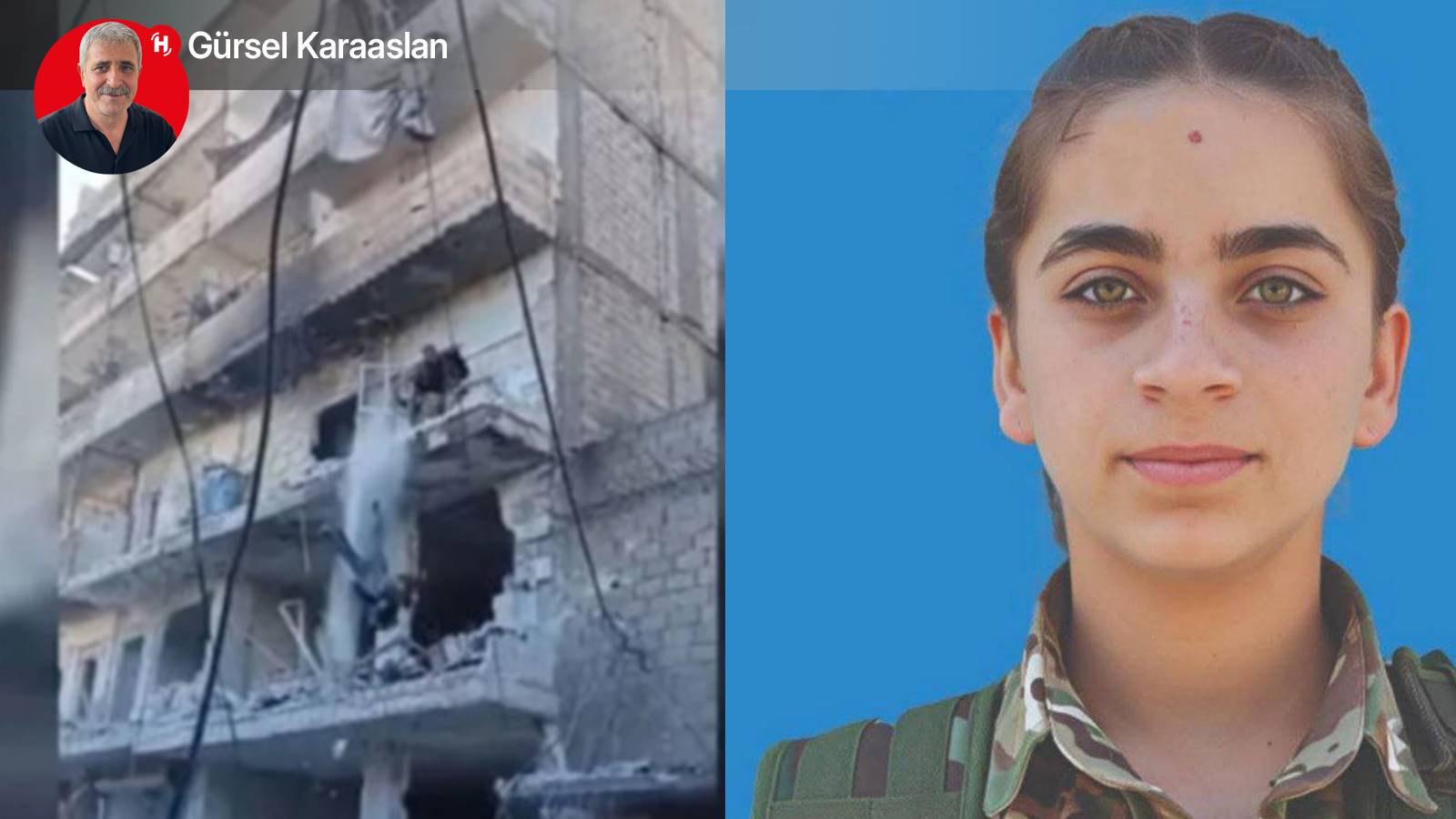
 The story of the resistance of Amara, the Kurdish woman thrown from the fifth floor in Aleppo, is more than an isolated murder of a woman; it is a threshold where the political structure of the Middle East, woven by the male mind, crystallizes. It is not just the moment a body hits the ground; it is a contemporary scene of the centuries-long decline of a people, a gender and an identity. Amara did not fall; she was dropped. And it was not just a male hand that brought her down, but the state of masculinity.
Kurdish women have never been just “women” in Middle Eastern politics. She has been simultaneously coded as an ethnic threat, a moral target and an object of political silencing. For this reason, Kurdish women's bodies have become a field of direct intervention not only within the family, but also by the state, war and border politics. E
For the male-dominated order, the Kurdish woman is both a border line to be controlled and a memory to be suppressed. Amara's body was therefore punished not only in the name of honor, but also in the name of order.
In the Middle East, women are carried not as individuals but as a burden of meaning. The Kurdish woman bears the heaviest of this burden. She is forced to represent the honor of the man, the dignity of the tribe, the security of the state and the morality of society at the same time. This burden of representation does not bless the woman; it takes her hostage. Because when so much meaning is attached to a body, that body no longer belongs to itself. Amara's crime was precisely this: Owning her own life, her own body and her human identity as a whole. There is no greater threat to the male mind than this.
This murder is not an outburst of individual rage; it is the silent implementation of an organized mentality. Male-dominated politics uses violence against women not as an exception but as a regulatory tool. The woman's body is transformed into a site of punishment where the system reestablishes itself. Violence is not an aberration here, but a method. The throwing of Amara from the fifth floor is the oldest political practice used by masculinity to cover its failures: Silencing women.
The issue of identity further deepens this violence. While being Kurdish is still treated as a crime in itself in this geography, being a Kurdish woman is the embodiment of this crime. The male-dominated order establishes its power through the suppression of the “other”. And this other is often embodied in the body of a woman who speaks, resists and exists. Amara's story of resistance is therefore the result not only of misogyny but also of ethnic denial.
Here we see a darker picture: A world where violence is on the payroll. In this geography, masculinity often lives off its domination, not its labor. In the Middle East, where war, poverty, gangsterism and impunity are intertwined, masculinity experiences a power deficit and fills it with violence against women. Hitting women is the least risky, cheapest and most rewarded display of power within the system. Amara's story of resistance is not a price that masculinity pays; it is a bill that masculinity cuts to women.
On a philosophical level, Amara's fall is a response to Hannah Arendt's “the banality of evil” that transcends the concept of "evil". Evil here is not ordinary; it is institutionalized. Narratives circulated under the name of tradition, custom, morality and order paralyze the individual conscience. Murder ceases to be a decision and turns into a ritual. No one is guilty; everyone thinks they have done their duty. Thus, femicide becomes a social procedure, not a moral collapse.
Amara's story of resistance is directly linked to the endless state of war in the Middle East. A permanent state of emergency suspends the law; suspended law costs women's lives the most. As public violence increases, violence in the private sphere becomes invisible. The body dismembered by a bomb is considered “political”, the body dismembered by a man is considered “personal”. Yet both are the product of the same male-dominated mind. They work with the same logic of devaluation.
In conclusion, Amara's fall from the fifth floor is not the tragedy of a moment, but the logical outcome of a long political process of nationalized masculinity. In this process, the female body is turned into an object of bargaining between identity and power. It is not only Amara who falls; justice, morality and the common conscience also crash to the ground with her. 1938 There is a historical continuity between the women thrown off the cliffs in Dersim and Amara thrown from the fifth floor in Aleppo. The methods change, the male mind does not.
This is why this event cannot be consumed as news. It is a call for confrontation. As long as there is no confrontation, the balconies, windows and borders of the Middle East will always remain male abysses for women. And the fall of Kurdish women will continue to be the most naked political reality of this geography.