



There are some encounters that ostensibly center around an objection, a protest, but in reality are a response to a much deeper, much older call. The anti-geothermal protests in Varto (Gımgım) and Karlıova (Kaniyereş) are exactly such an encounter: A belated but powerful response to the call of the earth, to the unceasing voice of memory.
Years have kept the people of this geography distant from each other. Some became alienated from each other through migration, some through forced ruptures, some through the invisible borders of life. Those who grew up on the slopes of the same mountain, drank the same water, felt the same wind became unable to hear each other's stories and share each other's pain after a while. Longings were buried inside, memories were silenced. Everyone carried the lack of separation from their own land in their own loneliness.
And then, years later, they reunited for one reason: geothermal.
But this coming together was not only to defend nature. It was also a moment of getting to know each other again, of remembering what had been lost, of completing unfinished sentences. When their eyes met, they saw not only the present but also the past. There was a bit of sadness in every glance, but there was also a joy hidden in that sadness... The surprise of saying “Are you here too?” merged with the warmth of saying “I'm glad you're here”.
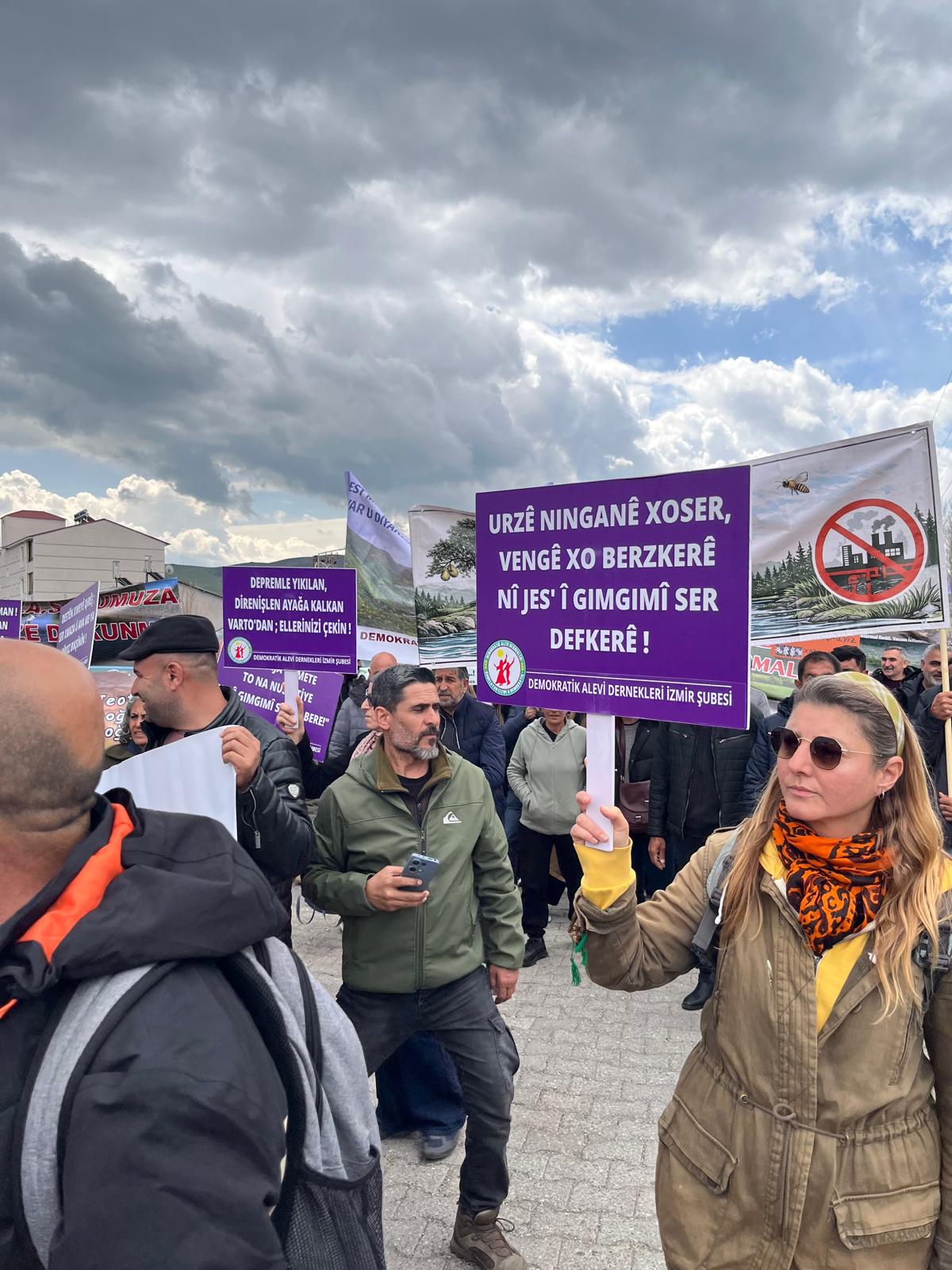
That day, in Gimgim and Kaniyeresh, people didn't just shout slogans. They shared smiles. They remembered the “hello” they thought they had forgotten. They found their own past in each other's faces. Hands separated by years met again at the end of the same banner. And in that moment, the anti-geothermal protest transcended its borders; it turned into a reunion rather than a resistance.
And perhaps the most meaningful thing was this: For a moment that day, people left behind all the identities that clung to them. No religious beliefs were discussed, no political affiliations. No one asked each other what they believed in or who they supported. Everyone just clung to the hope created by the longing and the reunion. There were no divisive voices among the people who were in contact with their land and each other again after years. There was only the simple and deep peace of togetherness.
Solidarity is often a theoretical concept. But here, that day, solidarity became concrete: in a look, in a greeting, in a shoulder to give. People began to hear each other's stories again. Pain eased as they were shared, longings gained meaning as they were expressed. Sharing, which had been forgotten, came back to life.
Perhaps the most striking was this: The smiles. Those smiles were not ordinary. They contained years of accumulation, longing, resentment and the astonished happiness of meeting again. Every smile was a silent sentence saying “I am glad we met”. Every hello was a small but powerful touch that healed the wounds of the past.
Therefore, what is happening in Gımgım and Kaniyereş cannot be read only as an environmental struggle. It is also a reawakening of social memory, a re-establishment of broken ties. The geothermal protest has become an occasion in this sense, calling people not only to defend nature but also to find each other again.
Because sometimes a question of land is actually a question of memory.
Sometimes a protest is actually a reunion.
And sometimes people come close to each other again in the shadow of the very thing they most oppose.
This is exactly what happened in Gimgim and Kaniyereş:
The earth spoke, people heard each other.