



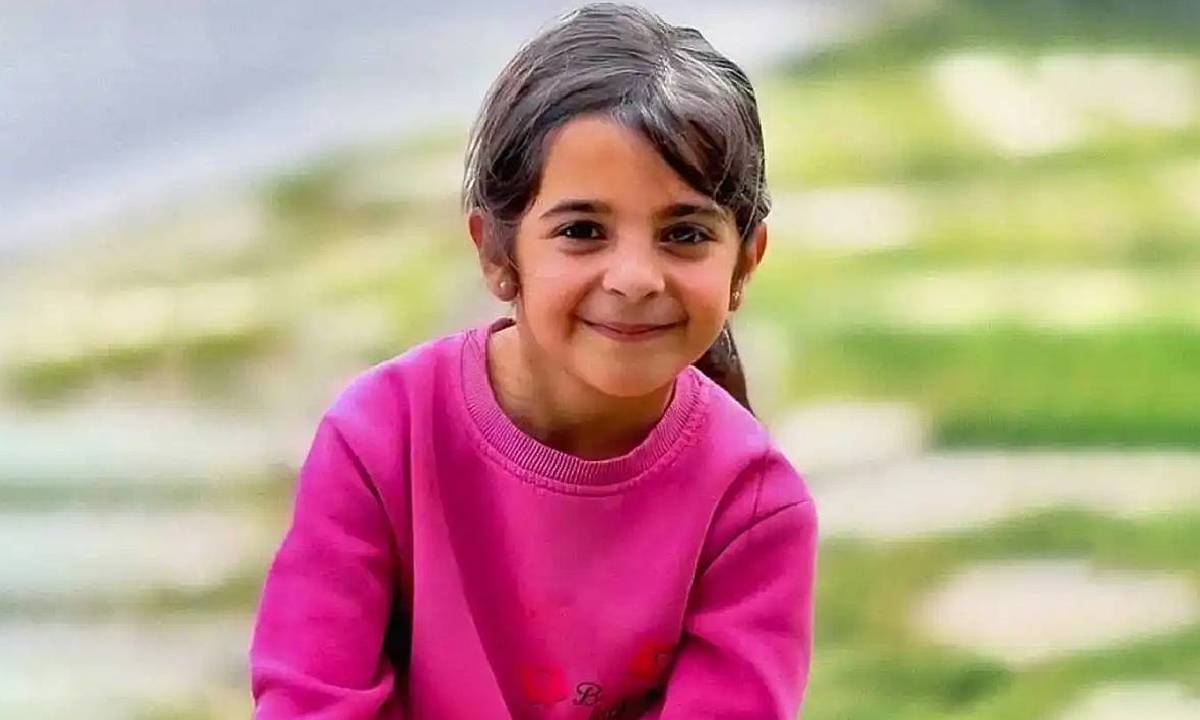
“Narin went to a Quran course after having lunch. However, she did not return home after the course. The footage was captured by the primary school's camera at 15.15.’
Media ombudsman Faruk Bildirici's list, which summarizes news reports and commentaries published between Narin Güran's disappearance on August 21, 2024 and the first days of the trial, starts like this.
In the Narin Güran case, it is clear that the media did not do well, not only with its field reporters, who published countless false news reports, but also with its on-screen commentators. However, let's face it, when we look at the list, we see that the media, unlike the police, buttoned the first button correctly.
The most difficult part of writing this article was deciding where to start. Bildirici's list was inspiring. Thus, I thought I could offer a flashback narrative that would help understand the truth, starting from the place where the police should have started when searching for Narin.
But first, let us shed light on the day of the incident by clarifying the narrative of Yüksel Güran, who was spoken about in the most reckless manner possible, from the village coffee house to the television screens, whose every word and gesture was interpreted as a fortune telling, and whose words were constantly attributed intentions.
A candle for Narin Guran II: One Blind Faith, One Invisible Suspect, Three Stories
Event Day
According to mother Yüksel Güran's account, Narin was dusting off the television at home after lunch when she glanced at the clock and realized she was late for the course. Although her mother told her that the course was almost over, Narin asked for permission, saying that the classes lasted until 4 p.m. She also asked for a second permission to play with her cousins, who had recently returned to the village, after the course. Narin left home at around 14.00 and went to the Quran course for the first time that summer and never returned.
After seven in the evening, the mother prepared to set the table and asked her son to call Narin. At this point, however, it was realized that the child was missing.
This sequence of events constituted the core of Yüksel Güran's narrative, which he repeated both in interviews with the press and in his statements to judicial authorities. This delay of a few hours, which could be considered normal in village life, became the first link in the misdirections and investigative errors that led to the distortion of the truth in the Narin case. Today we can better understand that it was this unfortunate delay that led to the shaping of the investigation around the suspicion of domestic homicide.
The Hill Path where Narin's Truth is a Secret
One of the headlines on Bildirici's list is particularly striking: ”He became a secret on the way to the hill / Narin's last image emerged.”
Narin, who was caught on the school camera leaving her cousins at 3:15 p.m. (corrected 3:11 p.m.) on her way back from the Quran course, had to follow this path, over the hill, and then continue a little further on a flat area to reach her home. The path mentioned in the news report was the path where Narin disappeared after the last time she was seen on camera.
A Candle for Narin Güran III: Prejudices, Media and Collective Evil
Last Murder Suspect in Investigation Case
Nineteen days after his disappearance, Narin was found in a sack buried in a hole and covered with stones in the bed of the Eğertutmaz Creek, two kilometers from the village. It was only that day that a security camera from a farm on the road leading from the village to the creek bed was noticed and examined.
In the footage, half an hour after Narin's last moment captured on the school camera (15:41), a red car was seen driving towards the stream bed, stopping three minutes later at a point close to where the child's lifeless body was found, and then moving again after waiting for 38 minutes.
Thus, the law enforcement agency had a surprise encounter with the last suspect in the case, which it had been investigating as a murder investigation since the early days: Nevzat Bahtiyar.
The path where Narin was last seen passed right next to Bahtiyar's house. In fact, Bahtiyar's house was the only house along the path, apart from her elderly mother's house, with which she shared the same courtyard. The area between this house and the path was almost a blind spot compared to the village and Narin's own house.
According to the statements of Bahtiyar and his wife, when Narin entered the path and headed towards her house, Bahtiyar was in a position where he was likely to see her. Indeed, at 15.08, he had left the house immediately after calling Salim Güran, who was also the mukhtar, about a blockage in the plumbing of his house.
His testimony about what he did next changed constantly. The time frame in question corresponded to the time of the incident, which the police and the media could not adapt to. The time of the incident was an unnecessary detail for retired police officers who were preparing for reality-show stardom by solving murders with media disinformation!
“He could have denied burying it” / “No evidence against him”
During the search of Bahtiyar's house, sacks belonging to the same series as the sack in which the little boy was found with all the clothes, belongings and slippers he was carrying on his way back from the course were found. The sack in which the lifeless body was hidden was found in Bahtiyar's house.
The forensic examination, the details of which I do not want to go into, revealed that Narin's death was not the result of a sudden outburst of anger or an accident; it was the result of a conscious and deliberate intervention. The child was left silent and breathless. There was a mark on her body suggesting the possibility of abuse (PSA).
Nevzat Bahtiyar was detained late on the day Narin was found. He claimed that he had received Narin's lifeless body from Narin's uncle Salim Güran, who had been arrested eight days before him and about whom there was much speculation and village gossip on social media. He changed his account of how he received the lifeless body three times.
First false hypothesis: Narin disappeared at around 18/time of incident
The delay in recognizing Narin's disappearance and the police's reliance on witness testimonies rather than the concrete data of CCTV footage led to an initial misjudgment of the time of the incident. Salim Güran was someone who became a suspect because of this ‘wrongly buttoned first button’.
On the day of the incident, a 16-year-old village boy who had returned to the village from his work in Diyarbakır at around 18.00 said that he had seen Narin playing with other children when he reached the village. In line with this statement, until Nevzat Bahtiyar was captured, Narin was recorded as ‘the child who went missing around 18.00’ in all the minutes. As a result of various developments, which I will elaborate on later, law enforcement was certain that Salim Güran, whose departure from the village at 18.59 (18.55 in real time) was identified in the CCTV footage, was the person who took Narin out of the village.
A swab sample taken from Salim Güran's car, which Narin was known to have recently ridden in, was found to contain Narin's DNA, leading to his arrest before the body was found. However, when Nevzat Bahtiyar was captured, the possible scenario constructed by the police collapsed. The time of the incident had changed and the real time frame became clear...
So far in the judicial process, the evidence against the family members has been refuted one by one. On the contrary, new evidence has emerged in their favor, almost to the point of leaving no gaps. Despite this, there are still those who do not consider Nevzat Bahtiyar a suspect in the murder; they believe that his confession has helped justice: “He could have denied burying it”. An alternative scenario worth testing... Maybe this will be a way to test the argument in the reasoned verdict that there is no evidence implicating him as the perpetrator of the murder.
If Bahtiyar had said that he had gone to the stream to fish, he might have had a chance to convince the authorities in this one-sided and “narrowed” investigation. But Bahtiyar could not have known this. The fact that the vehicle was captured on CCTV made it impossible for him to know how much about himself was captured on camera. Bahtiyar could not escape a partial confession.
So let's proceed by adding the condition that the investigation be effective and multifaceted to our alternative scenario: If Bahtiyar had denied everything, other data about him would still be available. The sack found in his house, the camera recording of the last time Narin was seen, the recording showing the vehicle Bahtiyar was driving in the creek, his wife's statement about Bahtiyar's possible location... In this case, couldn't these data be used as evidence against Nevzat Bahtiyar? Would Salim Güran still be the prime suspect when such clear new data on the time of the incident had emerged?
Although Nevzat Bahtiyar's testimony varied at many points, only his statement that he ‘received the lifeless body from Salim Güran’ was found consistent and taken into consideration by the court.
As for Salim Güran, with whom Bahtiyar claims to have had direct contact, the current picture of the time of the incident looks like this: Güran was returning from shopping in Diyarbakır with other family members at around 14.30. On his way back, he refueled at a gas station. At 14.32, it is recorded that his vehicle was caught by the PTS at a point close to the village. At 14.39 he plugs his phone into the charger and at 15.21 he takes it out. Meanwhile, at 15.08, there is a short phone call with Nevzat Bahtiyar about ’plumbing malfunction’.
From 15.20 to 15.43, the phone is active and used continuously. Güran, who is known to have bought gold before, checks gold prices on his phone, accesses websites of interest such as agricultural incentive payments, uses the calculator app and makes bill payments via mobile banking, which requires user approval. At the same time, only 45 steps were taken on the phone between 15.00-16.00, and the phone remained at a fixed point until 15.30.
Salim Güran's statement about the time of the incident was based solely on the testimony of family members at the first stage of the investigation. He had said that he had eaten and rested after returning home from shopping, and that he had gone to the field at around 16.00 when he received a call from his worker. During the appeal process, data from image recordings allowed these statements to be tested in the timeline. Similarly, Enes Güran's and Yüksel Güran's own statements and the statements of their witnesses appear to coincide perfectly with the image recordings.
Today, we see that the evidence and data against the family members, starting with the indictment, is largely derived from assumptions, as well as rumors, media/social media-based disinformation and subjective impressions, and back-projected prejudices that came into play after Bahtiyar's testimony.
We understand that the Darbaz Report, which is one of the main bases of the verdict, is, above all, evidence that has been constructed according to a scenario, that it contains data that is technically impossible to obtain and that it is scientifically invalid, from the expert report and related articles submitted by Tuncay Beşikçi, one of Turkey's leading forensic informatics experts, during the appeal process. Other reputable forensic informatics experts have also made similar assessments regarding the Darbaz invention.
Critical data on the phone movements of the defendants was initially obtained thanks to Beşikçi, who was initially asked for his opinion on the Darbaz and UKB reports, and who also asked to examine the image records. Few people pay attention to this case once and lose interest. Although Tuncay Beşikçi was initially hesitant to take part in this case, which he was familiar with as far as the media reflected, he prepared his reports with almost dedication; he continued to work on them after his assignment ended and still does.
One of the latest data Beşikçi has obtained is about Bahtiyar's phone usage at the time of the incident: Bahtiyar's phone screen unlocks at 15.11 and only unlocks again at 16.08.
I am ending here the first of a series of dossiers that will be repetitive for those interested in the subject and uninteresting for others. I am closing for today.