



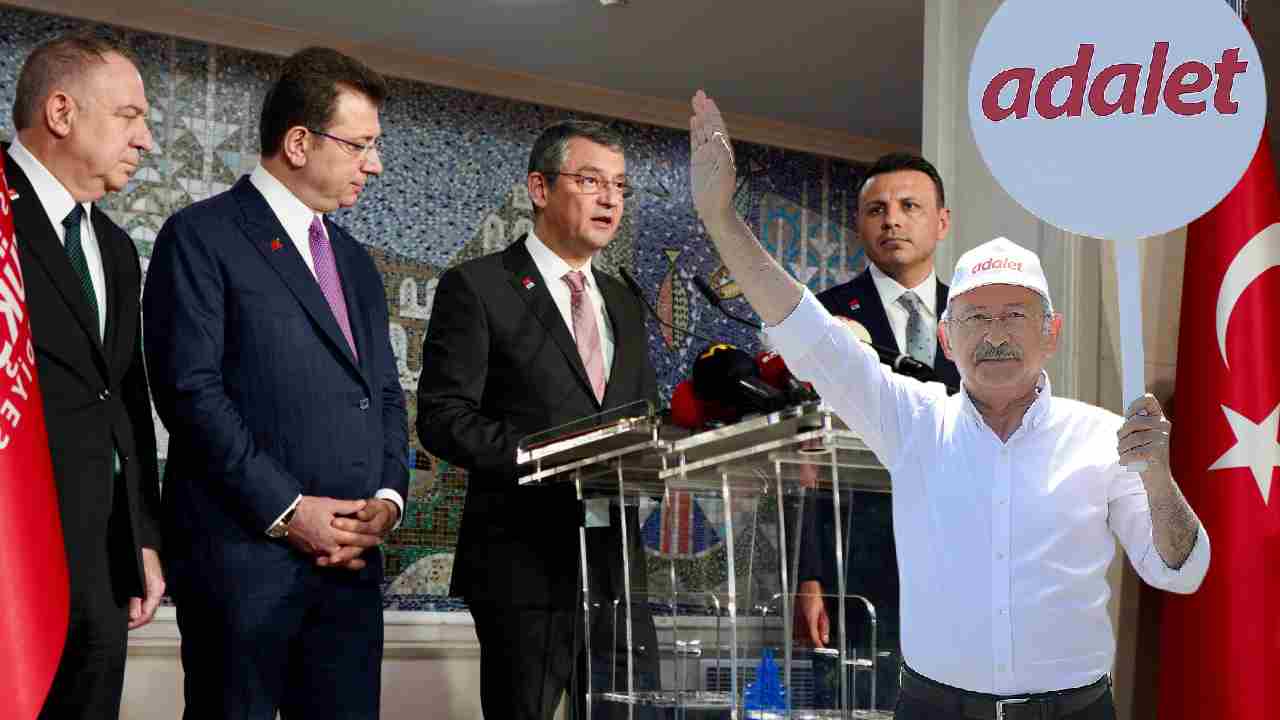
For many years, politics in Turkey has been read only in terms of the power-opposition struggle. However, today's developments show that the issue is no longer just a matter of power. The real issue is a major rupture that pits morality against self-interest, conscience against rent, populism against the order of the profiteers.
Today's debates in the Republican People's Party, the unethical images, the allegations of corruption and interest relations over municipalities are all signs of this very rupture. Because when a political movement moves away from its founding values and loses its moral compass, all that remains is a struggle for power. From that point on, it is not about principles, but about relationships, rent networks and balances of interests.
This is why it is no longer just a party issue.
It is a question of the values on which politics will be based.
At this point, one inevitably feels the need to go back and think again:
What was Kemal Kılıçdaroğlu fighting against?
Was he really fighting only a power system, or was he fighting a larger mentality that was insidiously embedded in politics?
The picture that emerged today shows that while Kemal Kılıçdaroğlu was fighting against the reign of oppression, he was also unwittingly surrounded by a “reign of extortionists” growing around him.
The struggle of Kemal Kılıçdaroğlu, who was discredited for years and systematically isolated even in his own political neighborhood, is much clearer in retrospect today.
Because his politics tried to be the politics of the people, not the politics of rent.
He talked about the pensioners of this country for years.
He brought to the agenda the millions condemned to live below the hunger line.
He defended the farmer's tractor, the producer's diesel, the worker's sweat.
“He opposed the ”gang of five" system and said that public resources should be used for the people.
He dreamed of a Turkey where children did not go to bed hungry.
He tried to defend the rights of 86 million people, not a handful of privileged people.
Maybe that's why he has always been a target.
Because he saw politics not as a “field of spoils” but as a field of conscientious responsibility.
He brought to the agenda families who could not pay their electricity bills, houses without boiling pots, teachers who were not appointed, unemployed youth and farmers who could not get the fruits of their labor. While defending the fair use of public resources, his main concern was the sweat of this country's brow.
Looking at the picture today, it is clear that Kılıçdaroğlu was not only fighting against a government, but also against a system of interests that devalued labor, turned politics into a rent-seeker's market and rose on the backs of the people.
Perhaps the most painful thing is this:
While Kemal Kılıçdaroğlu was fighting against the reign of oppression, it turned out that he was also fighting against another growing danger in politics, namely the reign of the extortionist.
Because the picture that emerges today clearly shows how moral values have been eroded in some areas of politics.
This is the reason why some of the debates within the CHP today have caused so much disappointment among the public. Because people want to see the CHP not only as a political party, but also as the bearer of justice, merit, clean politics and the values of the republic.
If today these values are up for debate, it is not only an institutional crisis; it is also a moral breakdown.
And it is precisely at times like these that the concepts of “principled politics”, “servant's rights”, “clean governance”, “fight against waste” and “moral stance” that Kemal Kılıçdaroğlu has been defending for years take on new meaning.
Because when morality is lost, only interests remain.
When principle is lost, loyalty gives way to self-interest.
When conscience is silenced, politics becomes the domain not of those who fight for the people, but of those who amass power.
However, Kemal Kılıçdaroğlu's understanding of politics was centered on the people, not rent.
There were farmers who produced.
There were workers who lived by the sweat of their brow.
There were pensioners struggling to make ends meet.
There were young people struggling to survive in debt.
And above all, there was the conscience burden of children going to bed hungry.
“He tried to establish a political language that says ”I don't eat unrighteousness".
He talked about waste.
He explained how public resources were transferred to certain circles.
He tried to explain why farmers cannot produce, why workers are impoverished, why pensioners are struggling to survive, why young people are hopeless.
And the most fundamental power he used to do all this was moral legitimacy.
Moreover, Kemal Kılıçdaroğlu's understanding of politics did not only consist of emphasizing economic justice or the social state. In fact, his understanding of “halalization” was not a political bargain, but a quest to restore the social conscience. For years, he tried to repair the polarized fault lines of this society. This is precisely why his call for “halalization” was important. Because halalization was not only a confrontation with the past, but also a will to purify politics from grudges, revenge and interest calculations. It was a moral call to re-establish social peace, to create a conscientious bond with marginalized groups and to move politics back to a human-centered ground. He wanted this country to face its pain, to grow social peace instead of polarization. Because he knew that a common future could not be built without coming to terms with the wounds of the past.
Today, when we look at the point reached by those who set out with the rhetoric of “change”, serious question marks arise in the minds of the society. Because change makes sense not only with slogans, but also with principles, transparency and consistency.
At this point, the back-door diplomatic relations of some circles that have emerged with the discourse of “change”, the political contacts reflected in public opinion and the closeness they have established with the understandings they heavily criticized yesterday inevitably deepen the discussions.
Are those who set out with the rhetoric of change really moving politics to a more ethical and democratic ground, or are they producing similar methods to those they criticized yesterday?
In particular, the public debate over the talks with figures such as Bülent Arınç raises the question of whether the “change” discourse is really a principled transformation or a search for a new balance of power. Because the issue is not just a matter of talks. The real issue is whether politics is shaped through transparent or closed-door relations.
More importantly, the debates on the violation of the legal order, party statutes and institutional conventions in internal party processes cause the issue to go beyond the dimension of mere political competition. Because when politics starts to erode its own law and grounds of legitimacy, not only institutional trust but also social trust suffers.
Every political move that goes beyond the law, even if it may seem like a gain in the short term, undermines the legitimacy of institutions in the long term. And when a political movement starts to erode its own law and its own principles, it is itself that suffers the greatest damage.
Today, the question inevitably arises:
Are some steps taken in the name of intra-party struggle unwittingly paving the way for bigger crises that will damage the historical legitimacy and institutional structure of the CHP?
Today, politics is once again undergoing a major moral test. Because a political movement cannot survive only by winning elections. If ethical values erode, if merit is replaced by loyalty, if transparency is surrendered to a web of relationships, if populism remains in rhetoric and the order of privilege grows, then politics ceases to be the hope of society.
This is precisely why the principles that Kemal Kılıçdaroğlu has been defending for years have become important again.
Because some people can lose elections...
But he does not lose his principles.
Some may lose their office...
But he does not lose his conscience.
And history often writes not of the winners, but of the moral survivors.
Looking back today, it is clear that Kemal Kılıçdaroğlu's greatest struggle was not only against the political power, but also against the growing decay within politics itself.
Because it is sometimes more difficult to fight against those who speak on behalf of the people but disconnect from the people, those who call themselves justice but produce privilege, those who call themselves change but pursue personal fortune, those who call themselves morality but establish order in silence; sometimes it is more difficult than fighting with the government.
The real question is this:
Can politics return to a moral ground?
Will merit, honesty and public conscience become the fundamental criteria again?
Or will politics remain merely an arena for power relations and interest calculations?
The real collapse of a society begins not with an economic crisis but with the normalization of moral decay.
And it is precisely for this reason that the politics of honesty, transparency, fairness, social justice and conscience that Kemal Kılıçdaroğlu has been advocating for years has become not just a political preference but a social need.
Because politics is always reshaped one day.
But lost morality, lost conscience and destroyed trust is the most serious destruction of a society.
And history has taught us this:
One day the systems of oppression will collapse...
But the reigns of the mendicants silently rot the souls of societies.
Perhaps the truth that needs to be understood most today is this:
You can defeat a human being...
You can leave him alone...
You can even be wronged for years.
But when the time comes, principles speak.
And today, time shows once again:
Kemal Kılıçdaroğlu's greatest strength was not his office but his moral stance.
Because politics can save the day.
But morality determines its place in history.
‘Orders of oppression will one day collapse, but the reigns of the extortionists will silently rot the conscience of society.’
Kadir POLAT