



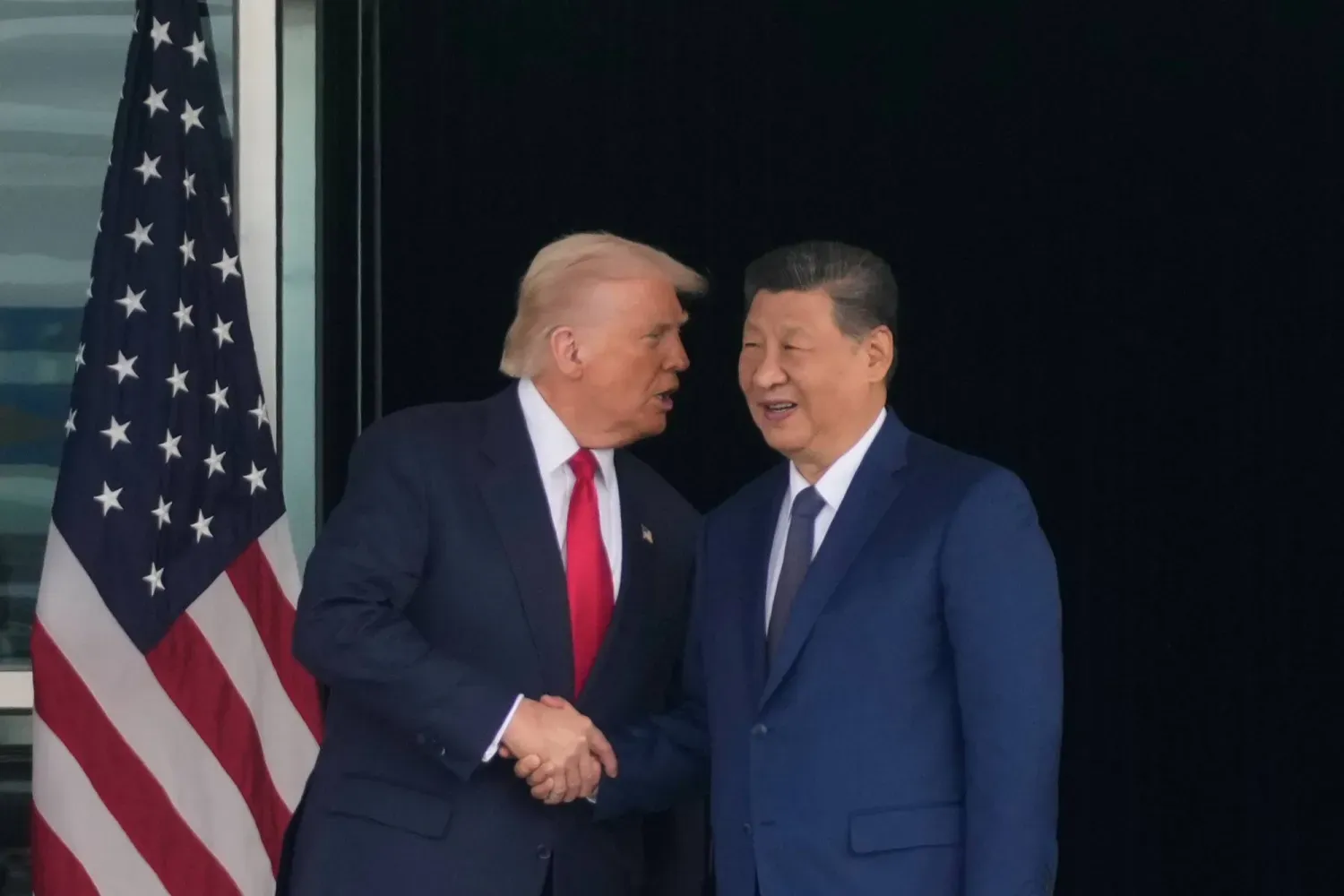
US President Trump's visit to China is important both strategically and in terms of current regional political developments. The outcome of Trump's meeting with Chinese leader Xi is especially important in terms of global power relations. It is clear that it will be a meeting that will be carefully monitored not only by states but also by global companies.
The strategic and political backdrop to this meeting is Taiwan and Iran in terms of topicality, but it goes much further than that and will have a significant impact on the development and direction of the capitalist global economy.
The relationship between China and the United States, the two major economic powers of the global world, is much more complex and multifaceted than we think. It will be a reflection of regional and global competition and the struggle for hegemony at a much higher level than it appears.
There is no doubt that the Middle East will definitely be on the agenda due to the US-Israeli war against Iran. Likewise, whether or not the US recognizes Taiwan, which is a constant factor in China's security strategy, is also important. These two issues will be on the table, but when we take into account the identities of the members of Trump's delegation, we can see on which issues the strategy of the relations between China and the US is based. Therefore, although there are some international and Asian issues in terms of the topicality of Trump's visit to China, it seems that it is mainly related to the redesign of global trade between the two countries. Therefore, we can say that once the US and China reach a compromise on global trade competition, the Iran and Taiwan issues will be resolved much faster or they will find a common point of compromise.
Analyzing the relations between China and the US based on some concrete data would help us think more objectively and draw the right conclusions.
There are four main aspects that determine a country's role in global power relations. These are its geographical size and location, population density, military power and multifaceted economic potential. In the 21st century, concrete situations and analyses are made on the basis of these four basic elements that determine the role of a country in global balances. When an assessment is made in terms of understanding the current situation of the two great powers in the world global system, we can put forward more concrete ideas about where the development trend is heading and what the competition for hegemony might be
US - China Geographic and Population Situation
| Fields | USA | China |
| Surface area | 9,834,000 km² | 9,597,000 km² |
| Total Population | 341 million | 1.41 billion |
| Population Density | ~35 persons/km² | ~147 people/km² |
| Capital | Washington, D.C. | Beijing |
| Official Language | English | Mandarin Chinese |
| Continental Location | North America | Asia |
| Border Neighbors | Canada, Mexico | 14 countries (Russia, India, Mongolia, Pakistan, Vietnam, etc.) |
The surface area of the two countries is very close. China's population is more than 4 times that of the US, which makes the difference in many respects. The high population density gives China a great advantage in terms of cheap labor. For this reason, in a country like China, it is in the position of a country that does not receive immigration from outside, but gives immigration in reverse. In the US, on the contrary, it constantly needs to receive immigration from outside. In fact, we can define the US as a country of immigrants both historically and currently. Due to China's population density, urbanization has certain problems in terms of infrastructure and resource utilization. However, this situation contributes to the country's economic growth as it improves China's labor consumption and infrastructure. In fact, it can be said that one of the factors that make China one of the fastest growing countries in the world economy is its population density and meeting the demands of this population has a significant impact. The fact that China is located in Asia, which has become a competition of global power relations, gives it an important advantage. Because the Asian continent represents nearly of the world in terms of both surface area, population density and economic potential. This plays an important role in China's development tendency and potential.
While the USA has borders with Canada and Mexico in the Americas, China has approximately 22 thousand km of borders with 14 countries, namely North Korea, Russia, Mongolia, Kazakhstan, Kyrgyzstan, Tajikistan, Afghanistan, Pakistan, India, Nepal, Bhutan, Myanmar, Laos and Vietnam. In addition to this land border, we can also consider South Korea, Philippines, Japan, Malaysia and Indonesia as neighboring countries within the Maritime Continental Shelf. We can talk about both positive and negative aspects for China, which has such a wide range of neighbors.
The Balance of Military Power between the US and China
| Category. | USA | China |
| Defense Budget | 997 billion $ | 314 billion $ |
| Total Population | 341 million | 1.41 billion |
| Active Military Personnel | 1,395,000 | 2,535,000 |
| Reserve Forces | 806,700 | 510,000 |
| Paramilitary Forces | 0 | 1,500,000 |
| Main Battle Tanks | 4,640 | 6,800 |
| Total Number of Aircraft | 12,784 | 3,440 |
| Fighter Planes | 3,101 | 1,986 |
| Bombers | 147 | 5 |
| Helicopters | 5,442 | 1,019 |
| Navy Ships | 243 | 1,023 |
| Aircraft Carriers | 20 | 3 |
| Submarines | 71 | 61 |
| Nuclear Warheads | 5,042 (1,770 deployed) | 600 (24 deployed) |
The US military budget is about 1 trillion dollars compared to China's 317 billion dollars. In other words, the US military is 3 times the Chinese military budget. Although China has rapidly increased its military budget in recent years and does not disclose the actual amount of its military budget, it is clear that it is behind the US. Naturally, this is a factor affecting military power relations. China, which is rapidly developing with its military potential, has determined a very serious military strategy to close the gap with the US. China has the potential to be considered the world's second military power and has essentially become the strategic military power of the Asian continent. Although China is not openly engaged in military competition with the US, it has defined a strategy to balance its military power with the US until the 2040s. Considering the accelerating pace of technology in the war industry, it is quite possible to achieve this strategic goal.
In this respect, the US still maintains its leadership position in terms of military technology. China is increasing its naval power, especially in the Asia-Pacific, in order to gain regional supremacy. In the long run, China's numerical superiority in the navy and land forces is trying to balance the US technological superiority. Although the US's clear superiority in nuclear deterrence is one of the most critical factors maintaining the global security balance, it is expected to be balanced in the next few years. It is stated that China is catching up with China in terms of hypersonic weapons and artificial intelligence supported systems. In addition, China is rapidly developing its aircraft carrier system and will put 6 new aircraft carriers into service by 2030.
US-China Economic Relations and Balance
| Indicator | USA | China |
| GDP (Nominal) | 32.38 trillion $ | 20.85 trillion $ |
| GDP (PPP) | 32.38 trillion $ | 36.3 trillion $ |
| GDP Per Capita (Nominal) | 94.430 $ | 14.874 $ |
| GDP Per Capita (PPP) | 94.430 $ | 25,000 around $ |
| GDP Growth Rate (2026) | %2,3 | %5,4 |
| US Exports to China (2025) | 106.3 billion $ | — |
| US Imports from China (2025) | 308.4 billion $ | — |
| US Trade Deficit with China (2025) | -202.1 billion $ | — |
| Debt/GDP Ratio (2026) | %137 | %92 |
According to 2025 data, the US remains the world's largest economy with a GDP of $32.4 trillion, while China ranks second with $20.9 trillion. However, in terms of purchasing power of countries, China ranks first with 36.3 trillion dollars and second with 32.4 trillion dollars. National Income per capita is 94 thousand dollars in the US and about 15 thousand dollars in China. In other words, the National Income Per Capita of the USA is 6 times that of China. In terms of purchasing power, this ratio is again 94 thousand dollars for the US and 25 thousand dollars for China. Growth rates according to GDP are given as % 2.3 in the US and % 5.4 in China.
One of the most important imbalances between the US and China is the ratio of imports and exports between the two countries. US exports to China are about 106 billion dollars. Conversely, China's exports to the US are about $308 billion. China's export surplus is about 202 billion dollars. The United States has the world's highest debt to GDP ratio of % 137. China's ratio is % 92.
Of the top 100 largest companies in the world, 60 are based in the US and 13 in China. Despite the fact that a significant portion of the largest global companies are of US origin, China's export ratio in the world has been steadily increasing, while the US, on the contrary, has been experiencing a certain decline. According to 2025 data, China's export surplus of 1.2 trillion dollars is quite remarkable, despite all the pressure from the US. China's export surplus for years despite the global crises in the world economy stands out as an important factor affecting global power relations.
This is precisely the problem between the US and China. It is whether China's annual export surplus of 1.2 trillion dollars should be transferred to the global economy. This is a problem not only between the US and China but with all global economic powers. If a compromise can be reached with China on this issue, we can say that the problems can be solved very quickly.
Area Companies and Representatives Attending Trump's Visit to China
| Sector | Company | Representative / CEO |
| Automotive & Energy | Tesla | Elon Musk |
| Technology | Apple | Tim Cook |
| Finance | BlackRock | Larry Fink |
| Blackstone | Stephen Schwarzman | |
| Citigroup | Jane Fraser | |
| Goldman Sachs | David Solomon | |
| Mastercard | Michael Miebach | |
| Visa | Ryan McInerney | |
| Aviation & Space | Boeing | Kelly Ortberg |
| GE Aerospace | H. Lawrence Culp Jr. | |
| Chip & Technology | Micron | Sanjay Mehrotra |
| Qualcomm | Cristiano Amon | |
| Coherent | Jim Anderson | |
| Nvidia | Jensen Huang | |
| Biotechnology | Illumina | Jacob Thaysen |
| Social Media & Technology | Meta Platforms | Dina Powell McCormick |
| Food & Trade | Cargill | Brian Sikes |
According to the statement made by the White House, representatives of the world's 17 largest US-based global companies will take part in the delegation; “During Trump's visit to China between May 13-15, 2026, “Tesla CEO Elon Musk, Apple CEO Tim Cook, BlackRock CEO Larry Fink, Nvidia CEO Jensen Huang, Boeing CEO Kelly Ortberg, Blackstone's Stephen Schwarzman, Cargill's Brian Sikes, Citigroup's Jane Fraser, Coherent's Jim Anderson, GE Aerospace's H. Lawrence Culp Jr. Lawrence Culp Jr, David Solomon of Goldman Sachs, Jacob Thaysen of Illumina, Michael Miebach of Mastercard, Dina Powell McCormick of Meta Platforms, Sanjay Mehrotra of Micron Technology, Cristiano Amon of Qualcomm and Ryan McInerney of Visa”.
Very important meetings will be held in sectors such as Automotive, Energy, Aerospace, Biotechnology, Social Media technologies, but especially Chip technology, Food-Commerce and Finance. Among these, it is understood that Chip technology and the Finance sector will come to the forefront. Although the US is facing serious problems, especially Iran, we see that the center of the visit to China is economic relations as a whole. We can say that this is not a coincidence and is related to the reasons listed above.
The US-based global companies involved in the visit have strategic partnerships with China. It is known that none of these companies are happy with Trump's China policy. China is both a huge global market with a population of 1.4 billion and an indispensable country for global companies with its cheap labor force. For this reason, global companies are making significant efforts to resolve the economic problems between the US and China. US-based global corporations are the ones most demanding the removal of Trump's tariffs on Chinese goods, which have no practical significance.
Iran-Taiwan Equation on the Table to Redefine Power Relations
One of the most topical issues of the Trump visit is Iran and Taiwan. Taiwan is an extremely strategic issue for China and one that cannot be compromised. As is known, Taiwan is a non-member state of the United Nations. In the United Nations Security Council resolutions, Taiwan is still considered as a Chinese territory. Taiwan, which is a de facto state, is also a country that produces approximately 18 percent of the world's SUVs in today's data, which is also in a highly developing trend in terms of economy.
The US policy on Taiwan is essentially based on a strategy of controlling China. For this reason, the US does not officially recognize Taiwan as an independent country, but provides significant military support. This is one of the important factors negatively affecting China-US relations. Trump may announce that he will adhere to the United Nations-recognized China policy according to the economic and technological agreements he will make with China. This would at least create a psychological relief for China.
The second issue is Iran. The scale of the US war against Iran, especially the crisis in the Strait of Hormuz, an energy corridor, has brought the global energy transfer to a complete standstill. Although China is one of the important countries affected by this process, it continues to support Iran. In these two months, Iran has gotten much closer to China. There are some indications that it has entered the Chinese sphere of influence, not only commercially but also diplomatically and politically. It is clear that the US needs China to open the Strait of Hormuz and to solve the problem of enriched uranium in Iran's hands. China's initiative and resolving power in the Iranian issue will not only pave the way for a positive development in US-China relations but also for an increase in its political initiative on a global scale.
On his way to China, Trump will make a significant effort to establish strategic cooperation with China, contrary to what he had said before. A compromise will be reached by taking into account that without the Chinese economy, the US economy would face significant problems and that US-based global companies have an obligatory relationship with China. It is also highly likely that China will implement a win-win policy by transferring some of the accumulated export surplus trillion dollars to the US economy.
In addition, two current political situations, Taiwan and Iran, will be on the table and will certainly be discussed. A compromise between the parties will have a significant impact on the recovery of the global economy.
Dr. Mustafa Peköz