



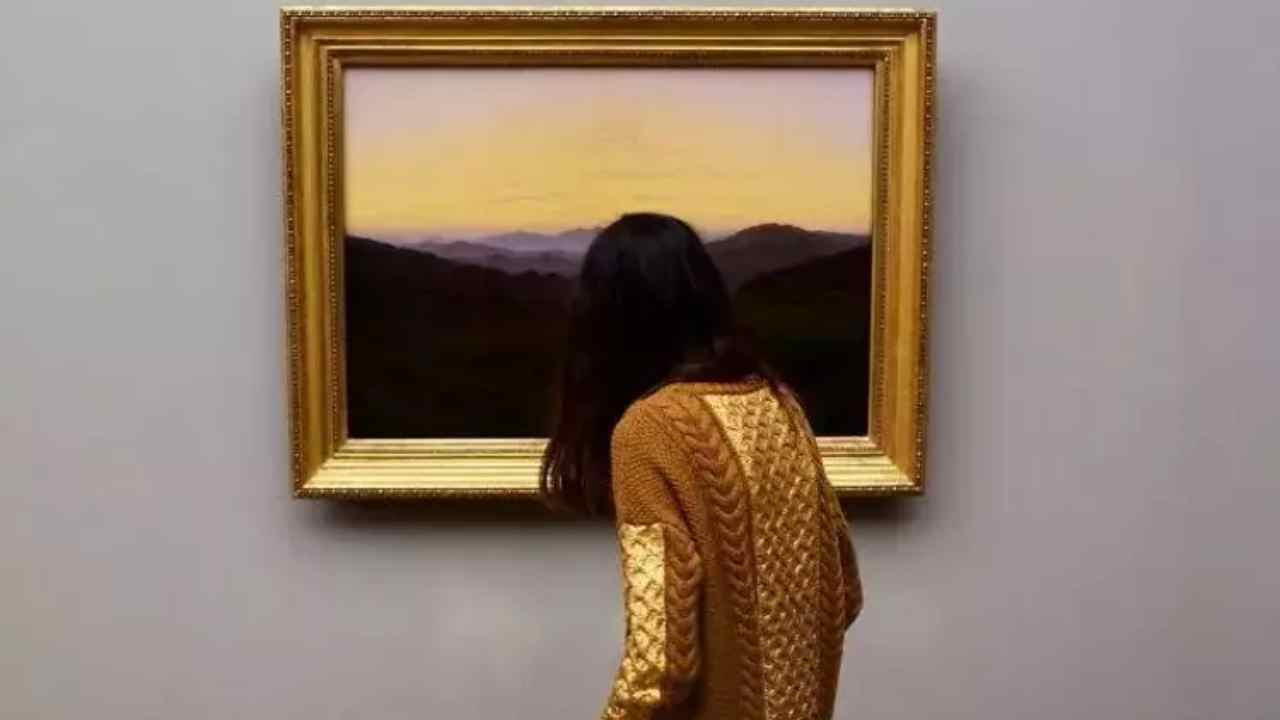
The new generation's relationship with culture and art resembles an unnoticed handover rather than a loud rupture. There is neither an open reckoning with the past nor an absolute commitment to tradition. Instead, there is a slow shifting of meanings.
While art was once a value that had to be protected and looked at from afar, today it is transforming into an experience that seeps into everyday life and touches ordinary moments.
There is no longer a sharp hierarchy between a painting hanging in a museum and a short image on a phone.
For this generation, art is an open possibility rather than a completed object. A poem exists not to be memorized but to be rewritten. A piece of music is not meant to be listened to, but to be cut, cut up, reproduced and moved to other contexts. A work of art ceases to be the result of a single intention and turns into a space where many contacts intersect. Meaning is not fixed; it is reconstructed in every encounter.
Beauty is not as absolute a criterion as it used to be. The new generation is not only looking for aesthetic pleasure when looking at art; they expect a contact, a jolt, a confrontation. The value of a work is determined by what it touches rather than how perfect it is. Works that make the invisible visible, that open space for the repressed, that break the silence are more appreciated. Art is thus transformed from a decorative object into an ethical call.
With the dissolution of grand narratives, the language of art is also becoming smaller and simpler. Giant scenes, heavy discourses and assertive discourses are being replaced by personal sentences and fragile narratives. For the new generation, art does not have to explain everything; sometimes it is enough to convey a memory, an emotion or an unfinished thought. This fragmented and incomplete state does not weaken art; on the contrary, it gives it an honest depth.
The relationship with arts and culture institutions is also changing. Museums, galleries and theaters still exist, but they are no longer the only centers. Digital media, independent productions and temporary spaces accelerate the circulation of art. Art is spreading more directly and more pluralistically, without having to pass through specific doors.
Perhaps the most obvious transformation is taking place in the position of the viewer. The new generation is a subject that is involved in art rather than an eye that stands in front of it. It is not enough to look; it is almost inevitable to interpret, share and transform. As the distance between the artist and the viewer narrows, meaning emerges not from a single source but from multiple encounters.
Today, culture and arts are not a showcase of identity for the new generation. Rather, it is a way of searching, a field of experimentation, and sometimes a way out. Art does not rise above life; it walks side by side with it. That's why it is more fragile, more temporary, but at the same time more real. The new generation does not consume art; it tests it, probes it, reconstructs it. And perhaps this is exactly why art is still breathing.
This is precisely why what can be done practically for culture and the arts starts with small but continuous steps in everyday life, rather than big projects or costly endeavors.
First of all, it is important for the individual to become a producer (without the expectation of becoming a professional). At the point where individual effort meets society, culture and art become visible. Poetry nights, short film screenings or street exhibitions organized with open calls bring art into everyday life. By enabling art and artists to meet young people, they contribute to the transfer of culture and art between generations.
The common point of all these processes is to stop seeing culture and art as a field that is only consumed, and to consider it as a value that is co-produced and carried. The more culture touches everyday life and the more people embrace it, the more vibrant and transformative it becomes.
On a broader scale, steps taken at the institutional level ensure the permanence of the cultural environment. In other words, the establishment of democratic and communal cultural spaces that are not profit-oriented opens up the production space for communal artists. And again, artworks in social spaces (neighborhood, street, home) ensure that art is not limited to certain circles.
The more culture and art proliferate, the stronger the consciousness of existence becomes, along with aesthetics, and the deeper the sense of equality; thus society finds itself on a common ground that not only sustains but also gives meaning.
Gürsel Karaaslan