




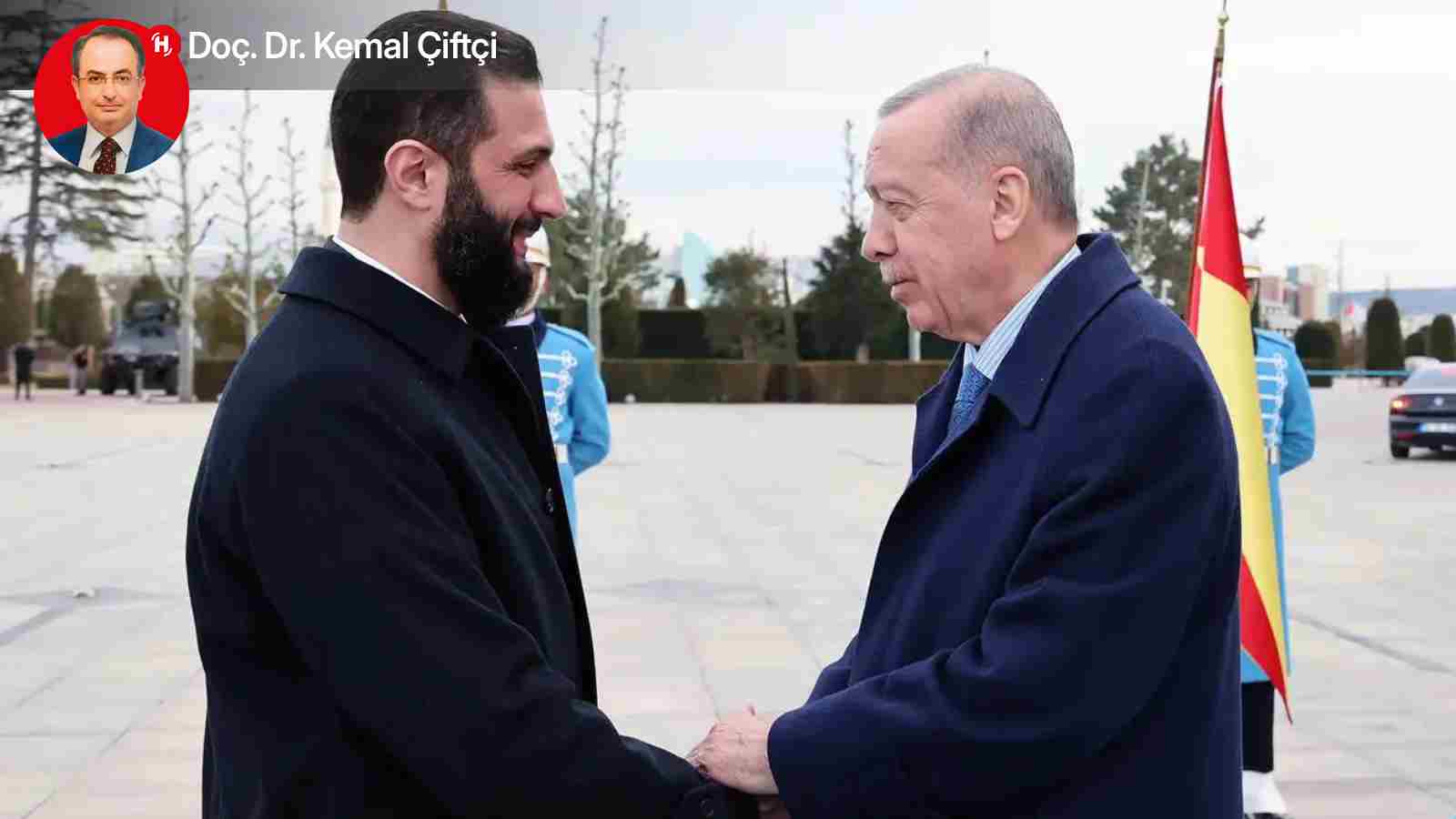
 The Syrian crisis has never been solely “popular uprising against an authoritarian regime” as a local fault line. From the very beginning, what happened in this geography was the re-establishment of the shifting balance of power in the international system through local fault lines. The picture that emerged in Damascus today - with Hayat Tahrir al-Sham controlling the capital, Golani recognized as the head of state and SDF/YPG’s forced withdrawal from the field - is a new but unsurprising phase in this long process.
Before getting to this point, it is necessary to rewind the memory back to the Damascus Spring.
Damascus Spring and the Rational Ground
In the early 2000s, after the death of Hafez al-Assad and the somewhat forced rise to power of Bashar al-Assad, a period of relative détente began in Syria. Expectations of political liberalization were limited; however, there was a pragmatic and rational opening in foreign policy. Turkey-Syria relations reached the best level in their history during this period. With visa exemptions, increased trade, and even a symbolic nomenclature, referring to the Schengen Area model in the European Union “Shamgen” a regional integration project was being discussed.
This rapprochement served not only the interests of both countries but also regional stability. However, this ground did not last long. This is because Syria's strategic alliance with Iran was not deemed tolerable, especially by the US at the global level and Israel at the level of regional powers. It was precisely at this point that the idea of regime change was introduced.
Insistence on Regime Change and Double Strategy
“Arab Spring” In Syria, the process was designed as a geopolitical intervention rather than a social transformation. While aiming to topple the secular-Baathist regime, two tools were used on the ground at the same time: Islamist organizations and ethnic-based separation strategies.
Islamist groups were supported to weaken the regime, while the SDF/YPG was supported to create a de facto political space in northern Syria, detached from the center. “Fight against ISIS” This structure, which was legitimized on the grounds of the Syrian civil war, turned into an implicit autonomy project targeting Syria's territorial integrity. For Turkey, this situation led to the issue being seen not only as the Syrian civil war, but also as a matter of national security.
Disintegration of the SDF/YPG Equation
One of the most striking developments at this point is that this structure, which is being built through the SDF/YPG, has turned out to be extremely fragile. With the withdrawal of support by the US, it has been “ground force on the ground” was ineffective in a short period of time and it became clear that it was not a sustainable political project.
This picture confirms an important fact:
The SDF/YPG is not the product of a local social consensus, but of a foreign-backed geopolitical design. When the support disappeared, so did the project. “Syrian Kurdistan” The rhetoric did not find a response on the ground and has virtually disappeared from the agenda.
New Era and Forced Normalization
The new power structure that has emerged in Damascus today and the rapid normalization of Turkey-Syria relations are the result of an imperative imposed by geopolitics rather than an ideological rapprochement. Turkey's priorities now are border security, Syria's territorial integrity and the existence of a central authority that can be taken into account on the ground.
From this point of view, the ground for a rational relationship, which was possible during the Damascus Spring but left unfinished, is being re-established, albeit with different actors.
Conclusion: Changing Actors, Unchanging Reality
The Syrian file shows us this clearly:
Actors may change, regimes may transform, but geography and geopolitical constants do not. For Turkey, Syria is a case that should be read not on the basis of ideological preferences, but on the basis of state wisdom, security balances and regional stability.
The missed opportunity of the Damascus Spring may have returned today in a different form. The question is whether this time Turkey will be able to build a lasting and rational Syria policy instead of short-term projects.