

Mehmet Türkmen, who defended and put forward a de facto-legitimate line of action against both the pandemic conditions and Kod-29 between 2020-2022, broke away from the traditional union movement in this process and became the founding General President of BirTek-Sen. Afterwards, Gaziantep textile workers achieved many gains with their struggle and became the voice of textile workers all over Turkey. As the OHS Assembly, we have been in solidarity with the textile workers in Gaziantep and BirTek-Sen on the basis of ’struggle‘ since the pandemic process and we have shoulder to shoulder in the struggle for workers’ health.
Mehmet was arrested a week ago. At this point, in order to strengthen our solidarity and contribute to the workers‘ health struggle in the city, we have prepared the ‘Gaziantep occupational homicides in the textile sector report’. Because we know that 'resistance and solidarity' are more important right now.
Why was BirTek-Sen President Mehmet Türkmen arrested?
Mehmet was arrested on March 16 for a speech he made during the resistance of Sırma Halı workers who were protesting for not receiving their wages. Let us remind you what the speech was: “Do you know a single boss in Başpınar, especially your boss, Şireci and Şireci, who does not eat the rights of the workers? All of them are all violating the rights of the workers, all of them are violating the livelihood of the workers, all of them are violating the rights of the workers, all of them are stealing the rights of the workers. Isn't that so? Just two months ago, two workers” arms were severed in Şireci, two workers died here. Has anyone ever held them to account for one of them? No. In this country, if you are a boss, if you are rich, you can violate the rights of workers, you can cause the death of workers by not taking safety precautions, you can commit murder, no one will hold you accountable. In this country the law does not apply to the rich. When a worker demands his rights, they arrest his unionist, confront him with their truncheons, and impose a ban, right? ..."
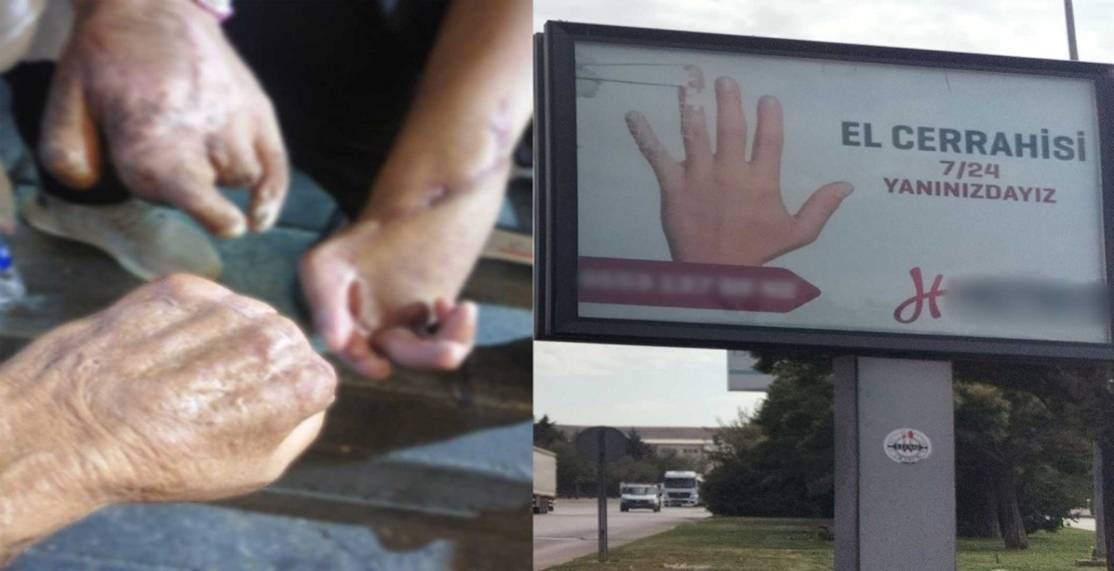
Yes, we are saying what Mehmet said: Due to the frequency of work accidents resulting in the loss of limbs such as hands, arms, fingers, legs and eyes, what Gaziantep workers call the ‘slaughterhouse system’ is becoming widespread across the country. ‘Accidents’ are hidden; treatment is provided in private hospitals without registration or under the pretext of ‘individual accidents’. The worker cannot reach justice after an ‘accident’ that is not registered in a hospital or reported to law enforcement.
In fact, in Gaziantep, which is presented as a ‘role model for Anatolia’, the working class struggle is sought to be controlled and suppressed in order to prevent the pace of production and exports from falling. The boasted export figures and profit margins are possible thanks to the oppressive labor regime that reigns in the city, which imposes excessive and intensive work, disrupts the struggle for rights, and establishes a collaborative unionism understanding. Unions that object to this situation and defend a de facto-legitimate line of action are wanted to be silenced.
Gaziantep as a textile city
Gaziantep is the epicenter of the Southern Anatolia basin, which accounts for 75 percent of Turkey's textile production. Among the hundreds of factories, the majority are companies that manufacture synthetic yarns used in the production of machine-made carpets and machine-made carpets. The number of companies producing polyester, texturized polyester yarn and spun polyester yarn has increased. The majority of companies are active in acrylic yarns, polypropylene yarns, machine-made carpets, tufted woven carpets, cotton yarn, polypropylene sacks and bags, non-woven fabrics, knitwear knitted goods-clothing combed cotton garments clothing textile branches.
Gaziantep alone accounts for 91 percent of Turkey's machine-made carpet production, 91 percent of polypropylene yarn production, 82 percent of nonwoven fabric production, 77 percent of acrylic yarn production, 40 percent of PE or PP strip sack production, and 36 percent of cotton yarn production.
In the 2023 and 2024 lists of the ‘Turkey's Top 500 Industrial Enterprises’ research announced by the Istanbul Chamber of Industry, 29 companies from Gaziantep took place and ranked fifth on a provincial basis. In the 2024 ‘Second 500’ list, Gaziantep ranked third with 36 companies. While the textile sector is the locomotive, its share in the ISO ‘Second 500’ list is over 41 percent.
In the textile sector, on the other hand, the average wage of a worker is 31,600 TL, that of a compounder is 35,300 TL, and that of a machinist is 42,000 TL. The disruption of production due to strikes or work stoppages in the city led by BirTek-Sen is critical not only for the region but also for supply chains (including international competitive pressure). In this period when the textile sector is in a structural crisis in terms of production and export parameters, it becomes more important to prevent protests and strikes and to suppress the union movement in the city. Mehmet was arrested for the continuity of this order. Let us repeat at this point: ‘Resistance and solidarity’ are even more important now!
81 percent from the national press, and 19 percent from information gathered from workers’ colleagues, families, occupational safety experts, occupational physicians, trade unions and the local press;
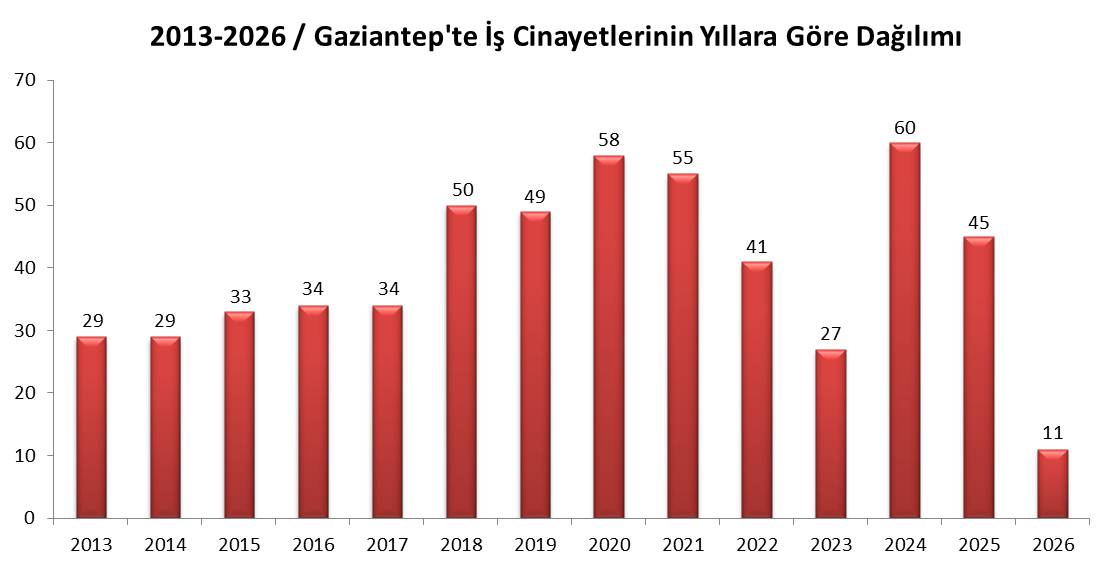
29 workers in 2013, 29 workers in 2014, 33 workers in 2015, 34 workers in 2016, 34 workers in 2017, 50 workers in 2018, 49 workers in 2019, 58 workers in 2020, 55 workers in 2021, 41 workers in 2022, 27 workers in 2023, 60 workers in 2024, 45 workers in 2025 and 11 workers in the first two months of 2026; ‘at least’ 555 workers have lost their lives in ‘work murders' in Gaziantep since 2013...
At this point, let us briefly remind the concepts we use in our reports:
1- According to our laws, the concept of “occupational health” is used. However, this concept expresses an understanding that targets not the health of the worker but the health of the business, that is, the efficiency and profitability of the business. However, the health of workers comes before any economic benefit and growth. That is why we use the concept of “workers” health“ instead of ”occupational health".
2- Our basic criterion is that “all work accidents are preventable”. Since worker deaths are preventable, we define them not as “work accidents” but as “work murders”, which is a historical concept of struggle of the working class struggle.
3- As the OSH Assembly, we are able to reach and record some of the worker deaths in the occupational homicide reports we compile with our limited means. This is why we emphasize “at least”. Otherwise, when we consider the worker deaths and occupational diseases that are almost never recorded, which we cannot learn under the limitations of the algorithms of internet search engines and which we find missing when we compare them with the SSI statistics, the number of occupational murders in Gaziantep is much higher than known.
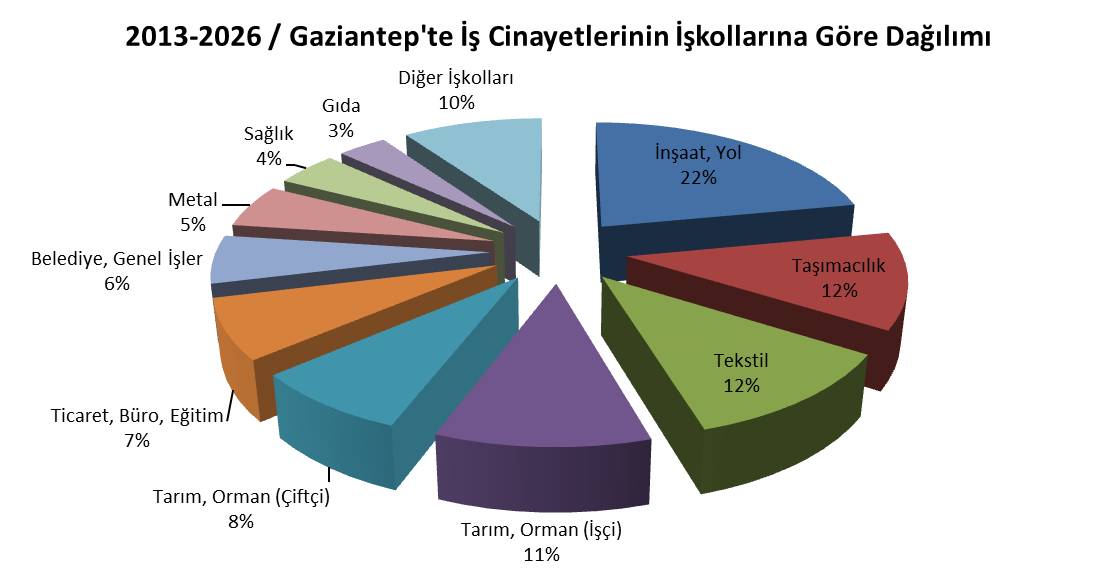
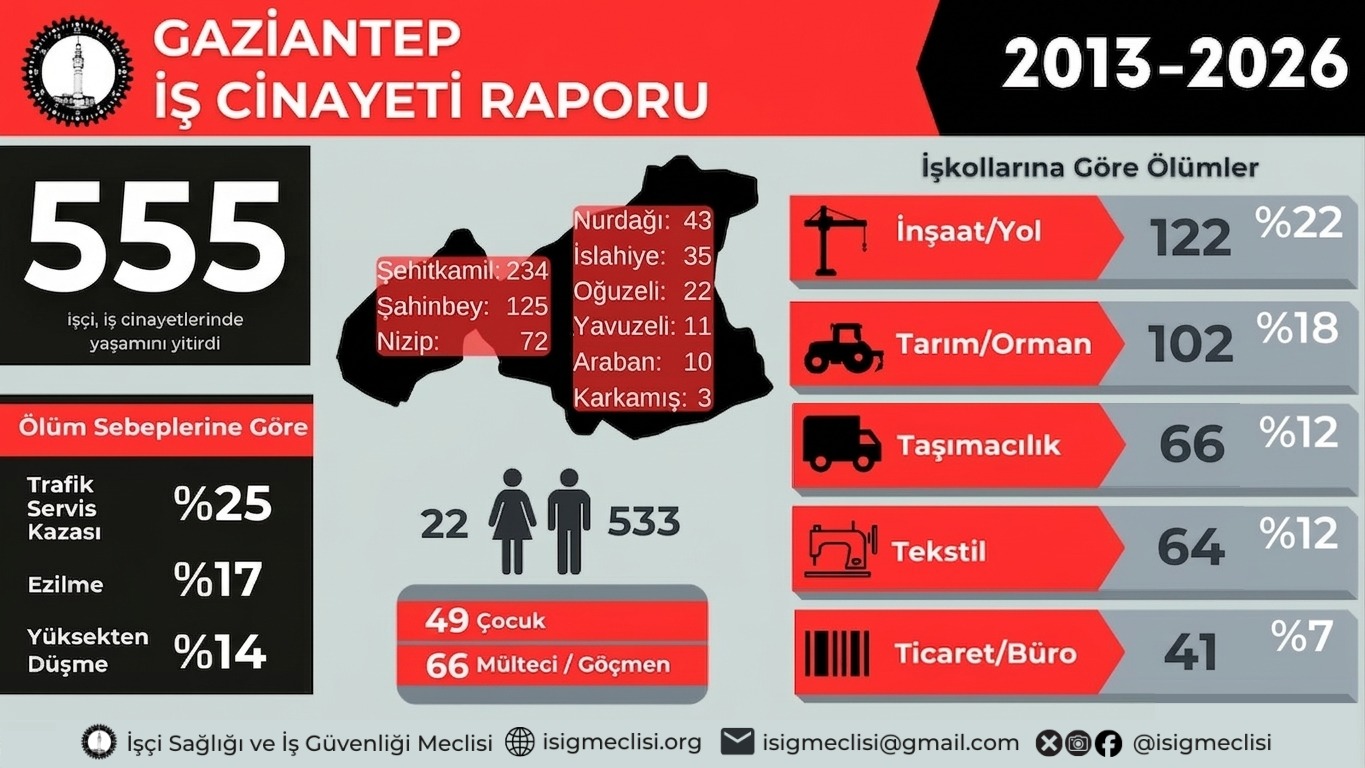
Distribution of occupational homicides in Gaziantep according to sectors of work is as follows:
122 workers in Construction, Roads; 102 workers in Agriculture, Forestry (58 workers and 44 farmers); 66 workers in Transportation; 64 workers in Textile, Leather; 41 workers in Trade, Office, Education, Cinema; 33 workers in Municipal, General Works; 30 workers in Metal; 24 workers in Health, Social Services; 19 workers in Food, Sugar; 10 workers in Petro-Chemistry, Rubber; 8 workers in the Defense, Security sector; 6 workers in the Wood, Paper sector; 6 workers in the Energy sector; 5 workers in the Accommodation, Entertainment sector; 4 workers in the Mining sector; 2 workers in the Press, Journalism sector; 2 workers in the Banking, Finance, Insurance sector; 1 worker in the Communication sector; 1 worker in the Cement, Soil, Glass sector; and 9 workers whose line of work we cannot determine based on the data we have...
When we look at the sectors of work, construction, transportation, textiles and agriculture are in the top four. The difference from Turkey in general is that textiles are among the first four lines of work where the highest number of workplace homicides occur and the deaths of migrant workers are high:
1- Gaziantep is the city with the highest number of worker deaths in the textile industry after Istanbul. However, while the deaths in Istanbul are mostly in garment workshops, in Gaziantep they are in textile factories. Tekirdağ, Bursa and Denizli follow these two cities in terms of worker deaths. Today, however, Gaziantep is the center of the textile industry and of worker deaths/injuries. In the Organized Industrial Zones in Başpınar, there is complete boss arbitrariness, while the bosses increase their profits, workers work in miserable conditions and without health and safety measures. As a result, the rate of textile worker deaths is 12 percent, 4-5 times higher than the average in Turkey.
2- As far as we can determine, 66 migrant workers, 64 of them Syrian, have lost their lives in Gaziantep in the last thirteen years. The death rate of migrant workers, who are seen as cheap labor, is 12 percent, more than twice the average in Turkey. Of the Syrian workers who died in occupational homicides, 22 were working in construction, 17 in textile, 10 in agriculture, 6 in metal, 3 in general works, 2 in food, 2 in trade, 1 in chemistry and 1 in accommodation. Again, 1 Sudanese worker working in the accommodation sector and 1 Nepali worker working in the general works sector lost their lives.
3- Finally, we should also mention the construction sector. Gaziantep was among the cities most affected by the February 6 earthquake. In the reconstruction activities that started after the earthquake, 31 construction workers lost their lives. We would like to underline this issue that we mentioned in the February report on work murders.
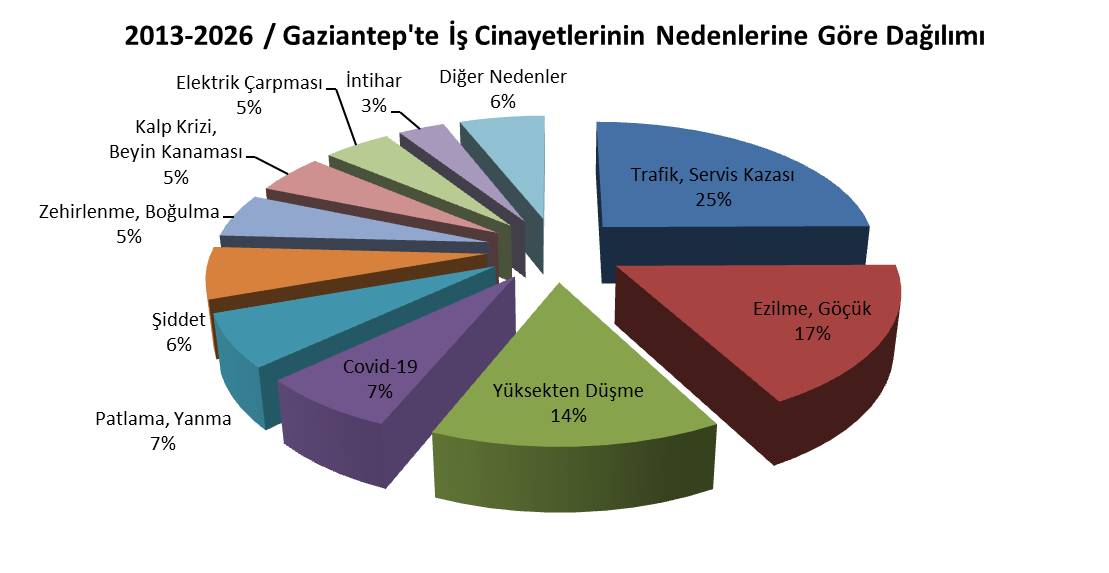
Distribution of occupational homicides in Gaziantep according to their causes is as follows:
138 workers due to Traffic, Service Accidents; 96 workers due to Crush, Collapse; 78 workers due to Fall from Height; 38 workers due to Covid-19; 36 workers due to Explosion, Combustion; 35 workers due to Violence; 30 workers due to Poisoning, Drowning; 27 workers due to Heart Attack, Brain Hemorrhage; 26 workers due to Electrocution; 18 workers due to Suicide; 15 workers due to Object Impact, Fall; 3 workers due to Cutting, Snapping; 15 workers due to other reasons...
When we look at the causes of death, in parallel with Turkey in general, worker service accidents, crushes and cave-ins, and falls from height are in the top three. However, worker deaths due to Covid-19 (acute for 25 months), explosion and combustion and violence in workplaces are above the average in Turkey:
1- In addition to health workers, all workers were worked to death during the pandemic without taking any precautions. Textile workers, office workers, security guards, etc. As a result, at least 38 of our friends lost their lives due to Covid-19.
2- Cases of violence at workplaces are very common in the city. Dr. Ersin Arslan, the symbol of violence in healthcare, was stabbed to death in the hospital where he worked on April 17, 2012. On January 23, 2024, Atta Almanan, a Sudanese man, was stabbed to death in a quarrel that broke out because he demanded money from the café where he worked. On the other hand, there are workers, especially migrants, who are killed by gangs trying to extort money from workers.
3- Our fellow workers lost their lives as a result of explosions in textile, food and chemical workshops, especially in metal, due to the precautions not taken.
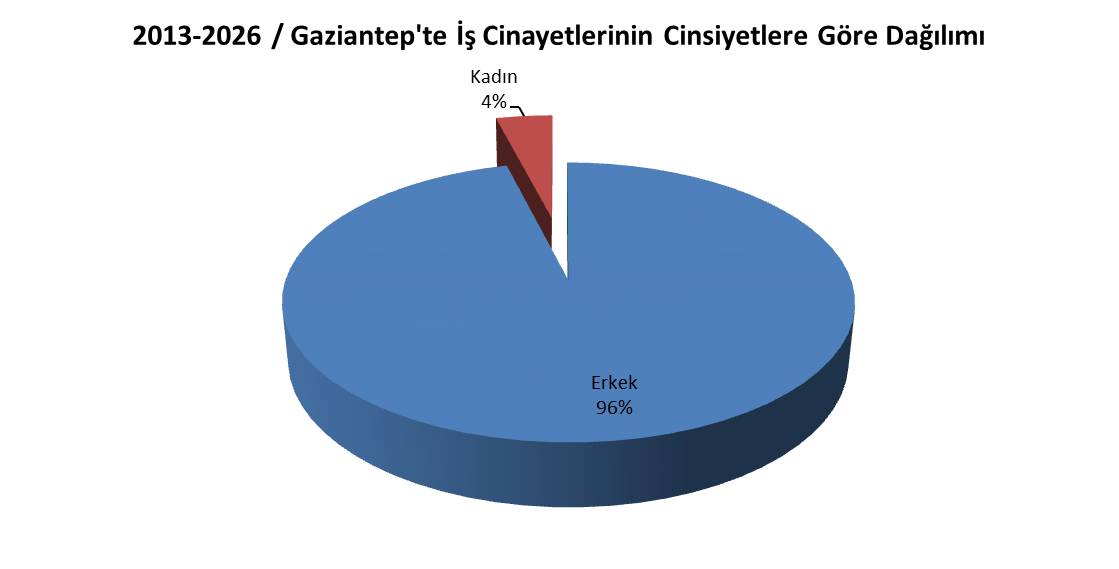
The distribution of occupational homicides by gender in Gaziantep is as follows: 22 female workers and 533 male workers lost their lives...
Female worker deaths are lower than the average in Turkey. However, let us remind you of the deaths of women workers that made the agenda of Turkey:
1- Monna Rai, a Nepalese domestic worker, was found dead on the terrace of the house belonging to Şireci Tekstil boss Ahmet Şireci.
2- Merve Kaçmış was an archaeologist at Gaziantep Museum and Provincial Directorate of Culture and Tourism. She ended her life by committing suicide. In the letter she left behind, she described the mobbing she was subjected to. Her brother said, “The pressure and mobbing put my sister into an emotional breakdown.” Kültür Sanat-Sen, on the other hand, stated in a statement that “there are mobbing lawsuits filed against the Museum Director” and added: “This incident that caused our archaeologist friend to lose his life is not suicide but murder and those responsible must be brought to justice immediately.”.
3- Saadet Harmancı, a contracted Turkish teacher at a secondary school, also ended her life by committing suicide. In the letter she had left, she had said “...I couldn't do it... I'm sick and tired of being mobbed... I'm sick and tired of being told every day that you are hanging by a thread”.
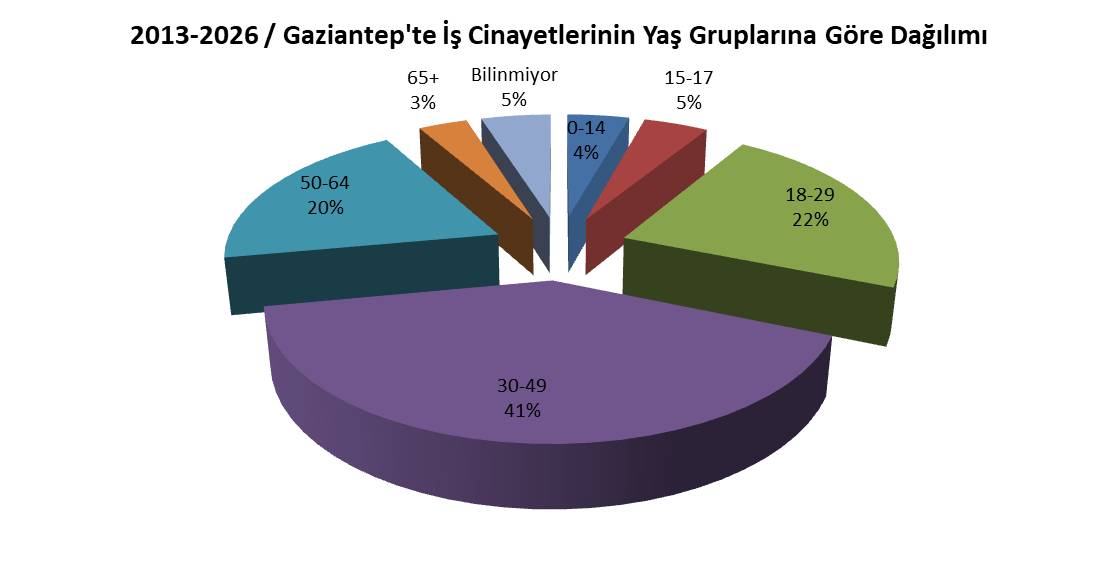
Distribution of occupational homicides in Gaziantep by age groups is as follows:
24 child laborers aged 14 and under,
25 children/young workers aged 15-17,
124 workers aged 18-29,
227 workers aged 30-49,
109 workers aged 50-64,
19 workers aged 65 and over,
27 workers whose ages we don't know lost their lives.
1- When we look at age groups, child labor deaths are almost twice the average for Turkey. This rate is even three times higher for child workers aged 14 and under. Of the child workers who died in occupational homicides, 26 were working in agriculture, 7 in textiles, 6 in construction, 3 in food, 3 in metal, 2 in trade, 1 in wood and 1 in transportation. Child labor in industry is particularly concentrated in Ünaldı.
2- Again, when we look at the deaths of workers under the age of 30, we see that it is one third of all deaths. We should note that there is a young working class in Gaziantep with the effect of migrant workers.
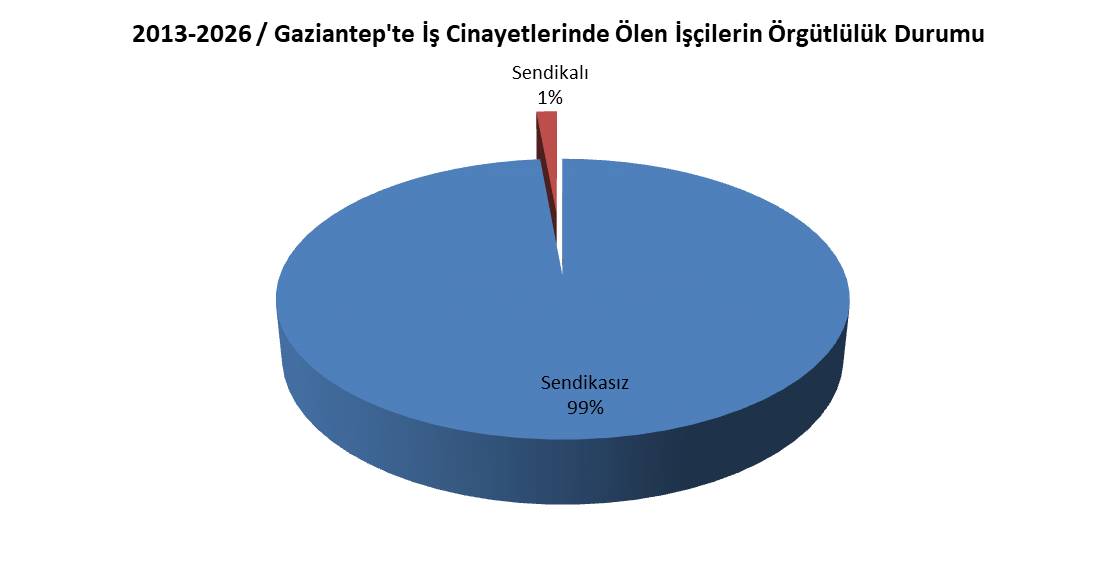
In Gaziantep, 8 (1.44 percent) of those killed in workplace homicides were unionized workers, while 547 (98.56 percent) were non-unionized. At this point, two points should be underlined.
1- This table shows that workers in the city are unorganized. The unionization rate is very low, precarious work and boss arbitrariness dominate the workplaces.
2- On the other hand, collaborationist unionism is dominant in the organized unions. Collaborative unions, which do nothing to solve the problems of workers in the city, even turn a deaf ear to the demands of their own members. At this point, it is very important to support the unions that organize the current problems of the working class in the line of actual and legitimate struggle and historically in the line of class struggle.
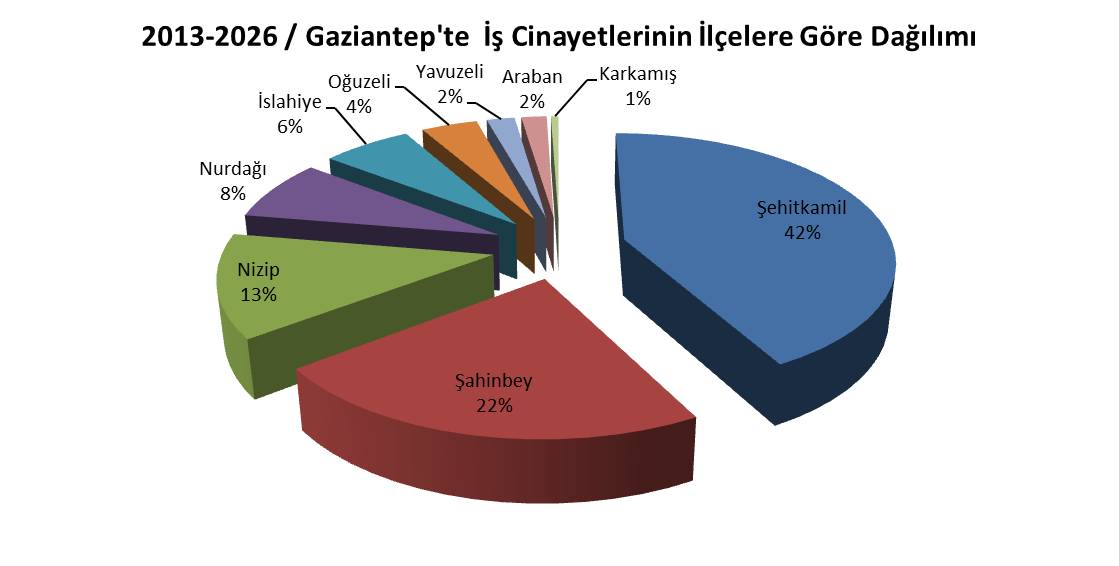
234 deaths occurred in Şehitkâmil; 125 in Şahinbey; 72 in Nizip; 43 in Nurdağı; 35 in İslahiye; 22 in Oğuzeli; 11 in Yavuzeli; 10 in Araban; 3 in Karkamış...
When we look at this table, we see that Şehitkamil is the center of industry, especially textile, metal, food, wood, and logistics. Another center is Şahinbey. In these two districts, deaths in the municipal and service sectors, especially construction, are also high. In other districts, we see that industry decreases and deaths in the agricultural sector increase, respectively...
2013-2026 / We respectfully commemorate the 555 workers who lost their lives in work murders in Gaziantep...
Bünyamin Beşe, Kemal Kekeç, Yusuf El İsa, Şaban Özgezer, Zafer C., Hüsniye Selvi, Emrah Şahin, Osman Solmaz, İbrahim Acen Baba, Halil Kamalı, Şemsettin Mehmet G., Mehmet Karakuş, Emine Y., Haydar Aksoy, Halil Kaçar, Mehmet Yaşar Aksan, Davut Bozan, Salih Demir, Hasan Gürbüz, Ali Altıntaş, Mustafa Fırat, Kadir Solak, Hüseyin Yiğit, İsmail Yırtıcı, Mehmet Hanifi Kılıç, B.B., Ercan Çoban, Ali S., Cuma Yalçın, Süleyman Sevinç, Müslüm Güçlü, Emrah Batmaz, Mustafa Kadan, Mehmet Horuz, Alperen Kılıçparlar, Enver Soğancı, Aziz Dolaşan, Ahmet Enes Gül, Eylem Sefi, Ahmet Kaya, Turan Günbaş, Celal Kılıçer, Yakup Acun, Ebubekir Demir, Adem Bozkurt, Ahmet Demir, Hacı Erdoğmuş, Veysel Feyda, Muhammet Eroğlu, Reşit Yıldırım, Kamil Sağır, Ahmet Kılınç, Mahir El Vas, Emrah Dal, Muhammed Güler, Ali Altunbaş, Mustafa Yılmaz, Cevahir El Hamid, İsmail El İsmail, Mehmet Bulut, İsmail Uygun, Burhan Bilgin, Deniz Bilgin, Muhammed Hinki, Samir Hammude, Mehmet Koçyiğit, Ziyad Rico, Mustafa Özcan, Oğuz Bozkurt, Halil Yavşalak, Mustafa Taş, Ökkeş Öztekin, Mehmet Tuvaş, Müti İbrahim, Gökhan A., Hasan Üstünova, Adem Tura, Omar Fahed, İsmet Bali, İbrahim Halil Güneş, Mehmet Çelik, Ümit Karaçalıoğlu, İbrahim Çelik, Metin Uyguner, Veysel Durmaz, Furkan Bozkurt, Casım Karadaş, Ökkeş Yıldırım, Abdulhamid El Obaid, Imam Yıldırım, Ömer Ateş, Doğan Moraner, Musab Muhammed, Mehmet Arslan, Muhammet Emin Arı, Reşit Kaya, Muhammed Durdu Arısever, Nevzat Karaaslan, Serdar Akdeniz, Hüseyin Gökdemir, Remzi Görünmez, Ziya Öztekin, Mustafa Kurt, A.D., Nihat Evrensel, Atta Almanan, Bülent Ecevit Korkmaz, Mehmet Büyük, Kalender Karayılan, Mehmet Şahan, Ali Şahan, Ali Maslak, İhsan H., Ahmed Türkmen, Cihan Kodalak, Mustafa Arslan, Ahmet Bayram, Volkan Arı, Oktay Arı, Salih Çelik, Şahin Boz, Mehmet Şakir Paksoy, Emirhan Şimşek, İsmail Aksoy, Muharrem Dursun, Salih Eroğlu, Osman Efe, İsmail Gemci, Mehmet Alakırık, Nahsan Bulut, Hakan Bozkurt, Ahmet Şehitoğlu, Mahmut Kılıç, Şeref Zor, Lütfiye Şabulak, Ferit Türkkan, Nadiya Berkel, Ökkeş Gögebakan, Sıtkı Özbilge, Halil Bağiy, Ali Koç, Ahmet Sefer Bakar, Mahmut Coşkun, Harun Karafak, Kadir Karafak, Ramazan Bezgin, Lütfü Çalakan, Emrah Özboya, Serdar Tufan, Kenan Kaya, Muhammed Ashour, Hasan Ahmad Asaad, Halil Kılıçoğlu, Galip Avşar, Mustafa Baydemir, İbrahim Yurdabakan, Veysel Teymur, Yavuz Taşdemir, Raid Hasan, Şahap Kaplan, İsmail Sağlam, Tayfun Mercan, Hasan Karakan, Hüseyin Kılıç, Ali Saltık, Ayhan Taşatan, Kadriye Güngör, Seyfettin Sur, Mustafa .Ekrem Çağlayan, Ahmet Ağaç, Yusuf Karahan, İdris Kayna, Adem Bademoğlu, Garip Unat, Mehmet Başer, Mustafa Çalışkan, Ömer Ceylan, Cuma Kılıç, Ahmed Melli, Mehmet Öztürk, Ziyep Kalit, Mehmet Katılmış, Fuat Taşdelen, Muhittin Avci, Şahin Demir, Halil Alınmış, Hüsniye Alınmış, Muhammed Hasan, Hacı Çevik, Abdülkadir Atıcı, Salih Solmaz, Abdullah Solmaz, Cemil Yılmaz, Ali Osman İvedi, Memik Altunbaş, Sabri Türkoğlu, Mehmet Çulcu, Ömer Çetin, Mustafa Aybak, Necati Mortaş, Galip Çiçek, Samet Mercan, Fahri Ağca, Ahmet Ahmed, Yusuf Yağmur, Hüseyin Karakoyun, Ahmet Bayrakoğlu, Ali Ören, Husem Yusuf, Ahmet D., Kutman Doğan, Mehmet Akıncı, Nedim Aygün, İbrahim Çapa, Latif Demir, Halil Öztürk, Mehmet Kızılbent, Ayşe Alpak, Mervan Aslan, Ali Öztürk, Şevket Aksüt, Muhammet Kasım, Ahmet Şıho, Ahmet Bekro, Orhan Kurtoğlu, Şaban .Salih Kaya, Ali Solmaz, Mustafa Akfırat, Halit Kılıç, Ramazan Dönmez, Şehmuz Polat, Mikail Cengiz, Şahin Aytaç, Fatih Keleş, Ramazan Sevinç, Osman Güvercinoğlu, Mustafa Çelik, Halil Kılıçoğlu, Deniz Keklikçi, Ferhat Ali, Hasan Tirit, Ala Zuru, Hacı İbrahim Ayaz, Cengiz Uçar, Cengiz Kaplan, Ahmet Kaya, Sinan Ç., İbrahim Halil Korkmaz, İbrahim Ortakaya, Salih Karayılan, Bozan Karanfil, Halil Tapar, Suat Öncebe, Remzi Yılmaz, Ali İhsan Çeliktaş, Ökkeş Yanar, Habib Geçer, Servet Kaplan, İsrafil Sarı, Mahmut Birlik, Samet Barış Aydın, Muhammed Osman, Ahmet Yıkıcı, Selahattin Şimşek, Ekrem Demirbaş, Abdurrahman Halaf, Osman Avcı, Enver Türk, Hasan Kiraz, Bekir Çınar, Engin Doğan, Hasan Çoban, Kasım Özdemir, Abdullah Ahmed, Salih Ekinci, Fikret Bilici, İlknur Bedir, Oğuzhan Kılınç, İhsan Karabıyık, Ahmet Keskin, Hakan Sağlam, Nazlı Ünal, Süleyman Polat, Ali Bayık, Uğur Güneş, Mustafa Altunbaş, Fatma Mılla, Hüseyin Deniz, Sariye Diker, Murat Demirel, İbrahim Şahin, Ali Bor, Hanifi Özdemir, Recep Aslan, Serkan Öztürk, Ahmet Salih, Mahmut Maruf, Hamza Nasır, Hasan Bozgeyik, Mehmet Türkmen, Mehmet Ören, Abdulcelil Koşar, Ahmet Turan, Mustafa T., Uğur Dönmez, Mustafa Üstün, Osman Dal, Mehmet Koroğlu, Coşkun Yıldız, Zekeriya Abdullah, Halil Taşçı, Ali Kaygın, Mehmet Çetinkaya, Mehmet Yatmaz, Yusuf Kaya, Berat Taş, Betül Altıntaş, Mehmet Cemal Akkulu, Velican Özcoşkun, Mehmet Şekeroğlu, Ömer Perçin, İsmail Değirmenci, Mustafa Akbay, Uğur Akkuş, Mustafa Ali Kelebek, Meryem Çam, Yılmaz Güneş, Enes Alramo, Halil İbrahim Demir, Burhan Özdemir, Mustafa Çoban, Vedat Öksüz, Saadet Harmancı, Korkut Küçükcan, İbrahim Şen, Mahmut Özbal, Mahmut Koyuncu, Recep Kurt, Mehmet Durmuş, Ahmet Çakallı, İhsan Yeter, Cuma Damlar, Hasan Avcı, Ahmet Taş, İsmail Ceylan, Mehmet Ali Kubat, Kazım Vural, Nafi Dişli, Ömer Koçak, Necati Er, Murat Güraras, Servet Açık, Celal Eraslan, Hüseyin Bülbül, Mehmet Güngör, Osman Yenidoğan, Ömer Balaban, Eyüp Dal, Tevfik Fukra Erikli, Mustafa Mustafa, Mustafa Bulut, Mehmet Mazıbaş, Mehmet Nergiz, Ferhat Taş, Mahmut Kızılkaya, Bekir Taşkın, Asiye Torun, Ahmet Özel, Murat Budak, Eyüp Elmas, Bahadır Hazar, Yusuf Çelik, Saib Erdoğan, Mustafa Yanardağ, Mehmet Genç, Mehmet Karaca, M.G., Savaş Yılmaz, Serdar Sucu, Süleyman Tahmazoğlu, Mustafa Örgüç, Cuma Kara, Özkan Avsal, Mesut Aydemir, Bekir Doğan, Ali Kiraz, Yunus Taputanış, Ahmet Temir, Enver Özçoban, Hüseyin Süyür, Adem Doğan, Hüseyin Eryılmaz, Erhan Taşar, Hamza Çökükoğlu, Wakkas Topal, Walid El Eşkar, Celal Söğüt, Hamza Sarıkaya, Ramazan Güngör, Metin Aslan, Ahmet Kaya, Erol Erat, Hamit Yılmaz, Abdurrahim Cuma, Mahmut Muhammed, Ali Alemu, İsmail İlhan, Ayşegül Öğüt, Monna Rai, Kemal Budak, Ertan Özcan, Mustafa Çabuk, Mahmud El Sati, Hüseyin Yılmaz, Recep Sağlam, Kadir Uçar, Şahin B., Muhammed Alpaslan, T.Y., M.K., Muhammed Düver, Mehmet Ali Beşaltı, Abd Hamudi, Ramazan Gürcünoğlu, Mehmet Kavgacı, Orhan Dönmez, Uğur Kartal, Rıza Alper, Mustafa Bekirmustafaoğlu, Abdullah Korkmaz, Kemal Kırmızı, Merve Kaçmış, Hüseyin Turan, Mahmod Shabek, Oktar Dolaşır, Ali Rıza Sandıklı, Adem Tancan, Vedat Erdoğan, Salim Karaman, Muhammed Kaddur, Bostan Eser, Salih Bulut, Mustafa D., Bekir Kurt, İbrahim Hakkı Büyükbeşe, Mehmet Murat Sepin, Abdülhamit Gür, Mehmet Deniz, Mikail Mercan, Mecit Muhammed Madal, Emcet El Shwavbi, Emat Eldin, Mahmut Ağdemir, Mehmet Emir, Yaşar Karahan, Mahir Çöt, Hasan Kaya, Mustafa Yavuz, Mansur Hösük, Ökkeş Can, Yıldıray Özyurt, Mehmet Yatmaz, Mustafa Çelik, Osman Duman, Mustafa Emino, Abdullah Şahin, Şerif Korkmaz, İlyas Kök, Soner Terlemez, Fatih Yılmaz, Sameddin Çiftçi, Gazi Sarı, Emrah Yurtaçan, Ali Çiftçi, A.E., Yusuf Kılıç, Müslüm Yıldırım, İsmail Öztürk, Ömer Tarık Ç., Ercan Şeker, Resat Aday, Hayri Özkeçeci, Ziyed Ağcı, Sakine Kılıç, Hasan Özyıldız, Mehmet Çinpolat, Mustafa Kesiktaş, Ercan Kılıç, Abdullah .Ali Taşar, Abdullah Yüzbaşı, Remzi Mutafoğlu, Mehmet Kaplan, Arif Küçük, Arif Güngördü, Abdülkadir Gül, Umut Yakup Tanrıöver, Muhammed Abdulkadir Esen, Halil Özden, Abdullah Kütük, Tuba Uzdilli, Mehmet Bozkurt, Mehmet Polat, Ahmet Polat, Hamza Dülükoğlu, Şükrü Erkut, Bilal Aybar, Semih Musso, Enes Furkan Tutar, Eymen Ahmed, Ali Özkan Açar, Ömer Saydan, Yakup Çelik, Bekir Özdemir, Muhammet Şiveybe, Kemal Çelebi, Bozan Cengiz, Mustafa Bozkurt, Bilal Ömer Farac, Yaşar Üstündağ, Nuri Üstünel, Özkan Tüzün, Mustafa Elbaş, Mehmet Ali Kurtoğlu, Muhammet Cabran, Mehmet Gül, Şahin Salman, Ayşe Yıldız, Hacer Karaca, Emin Üzer, İsmail Özdemir, Mehmet Apalak, Maaruf Bozkan, Mahmut Türkmen, Mehmet Dağdelen, Umut Koç, Mert Köseoğlu, Abdulsamet Ceylan, Mustafa Özkaya, Abdurrezzak Kahya, Abdurrahman El Şeyh, Abdullah Neccar and eleven workers whose names we did not learn...