



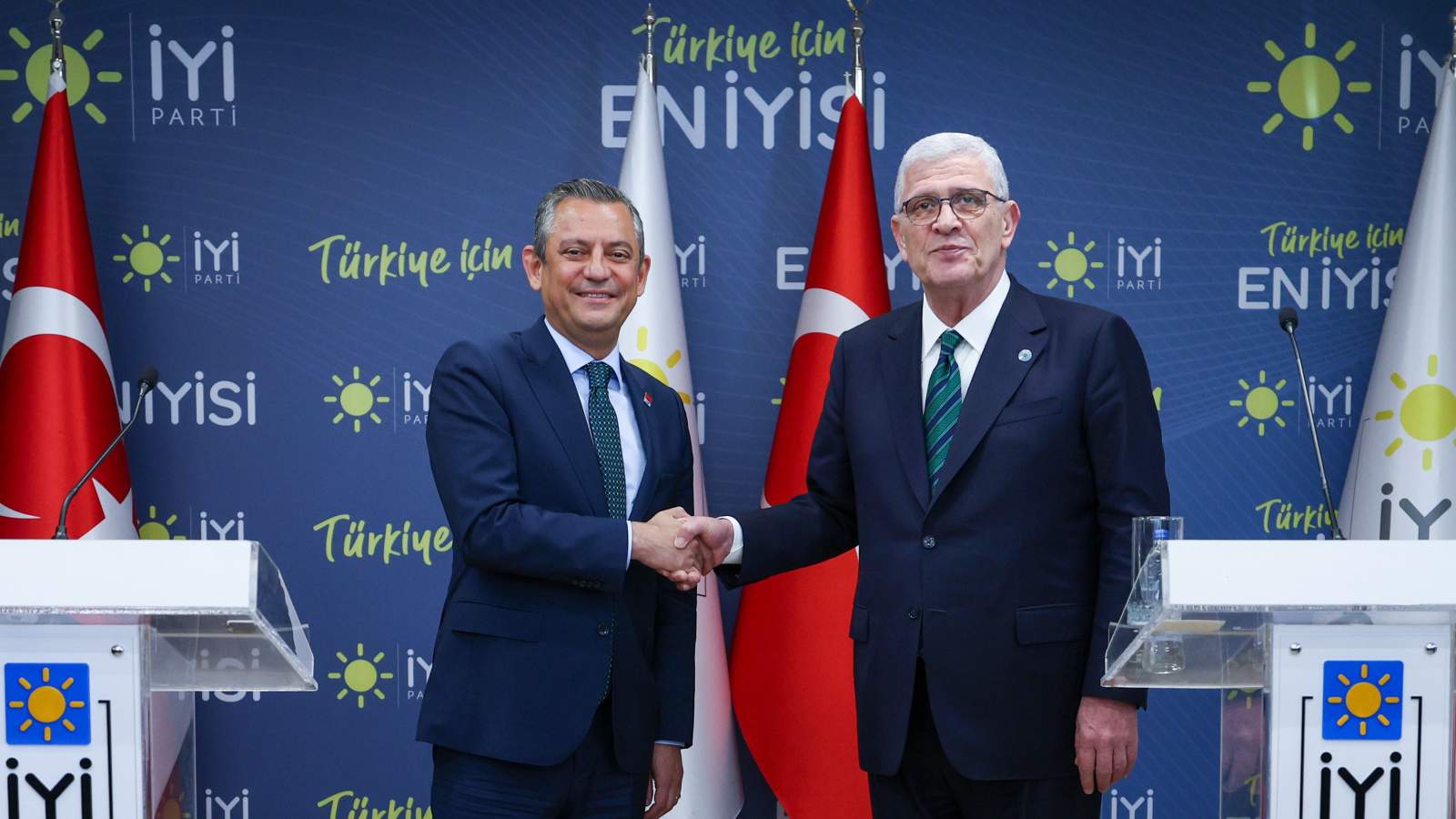
In politics, it is common for party members to use affectionate terms of address such as “Baba,” “Karaoğlan,” “Reis,” “Mücahit,” and so on when referring to their beloved leaders. However, political rivals have traditionally addressed one another using formal and distant language. In recent years, a shift in this regard has been observed.
CHP Chairman Özgür Özel, after being elected chairman, used the terms “Abi” and “Abla” to address the former and current chairpersons of the İYİ Party—a party with which his own party had once worked in solidarity but had recently become rivals again. However, using such informal terms does not always guarantee sincerity. A recent development in this regard occurred following the trustee operations.
Dervişoğlu's Response to Özel Regarding Bakırhan
DEM Co-Chair Tuncer Bakırhan’s statement—“We will do exactly what the Şeyh Saits, Seyit Rızas, and Sakines did!”—made during a speech following the appointment of trustees to three DEM-run municipalities has drawn criticism from certain circles. İYİ Party Chairman Müsavat Dervişoğlu criticized Bakırhan in a statement during a group meeting, claiming that Özel was also present during the controversial speech and said, “By remaining silent, you are endorsing the pulpit of treason.”.
“Someone who shares a brotherly bond with us”
Özel was also asked about Dervişoğlu’s claim. Özel first noted that he was not present at the time the remarks were made, and continued, “It saddens me that someone who knows me well—someone with whom I share a brotherly bond—would contribute to spreading such inaccurate information through a group meeting. Still, as always, our final word is, ”May he be well.’”.
“He had also received a sharp response from Akşener, whom he referred to as ”sister”
Özel also addressed Meral Akşener—Dervişoğlu’s predecessor, that is, the party’s former leader—as “Abla,” but received a sharp rebuke in response. Akşener, during an iftar program with party members on March 28, said the following regarding the CHP: “Don’t call me ”sister’ or anything like that—I don’t want it. Because your insincere, slimy flattery in calling me ‘sister’ is a huge insult to our people, who see me as their sincere sister, brother, and mother.”.
Özel, in response to Akşener’s remarks, had replied, “My response to my party leader is two words: May she be well. She’s like a sister to me. An old friend never becomes an enemy.”.
“It seemed strange for him to call her ”Bro“ and ”Sis”
Commenting on Özel’s statement that he shares a “brotherly bond” with Dervişoğlu, journalist and writer Akın Olgun wrote in a post: “Does it strike me as odd that the leader of the main opposition party addresses other party leaders as ‘big brother’ or ‘big sister’? Is that even appropriate in terms of political etiquette?”.
First, İmamoğlu called Akşener “Sis”
When we reached out to Olgun regarding the post in question, he noted in his assessment that addressing political figures in Turkey as “big brother” or “big sister” is a new phenomenon, stating, “Actually, if I’m not mistaken, we first encountered this when İmamoğlu addressed Akşener as ‘abla.’ Later, we saw Özel use this form of address as well,” he said, and continued:
The result of ‘Erdoğanization" in political discourse
“The transformation of the Republic’s political etiquette and the way people address one another into the ‘neighborhood’ language that began with the Erdoğan era is, in fact, a reflection of the regime we are currently experiencing and undergoing. This ”Erdoğanization’ of language also indicates the extent to which the politics he represents has come to resemble him. Culturally speaking, this style of address, which has plagued segments of society that have embraced the Republic’s Enlightenment-era approach, can unfortunately be seen as a cultural victory for the sociology represented by Erdoğan."
“A state of mind in which one regards the other as superior, rather than one based on respect”
“Olgun, pointing out that the terms “Abi” and “Abla” are also forms of address that undermine equality from the very start, said, ‘Rather than being a measure of respect, it’s an attitude that accepts the other person’s dominance from the outset. ‘Of course, this form of address has its place in human relationships, but its establishment in politics is, in my view, absurd from a political science perspective,’ he concluded.”.