



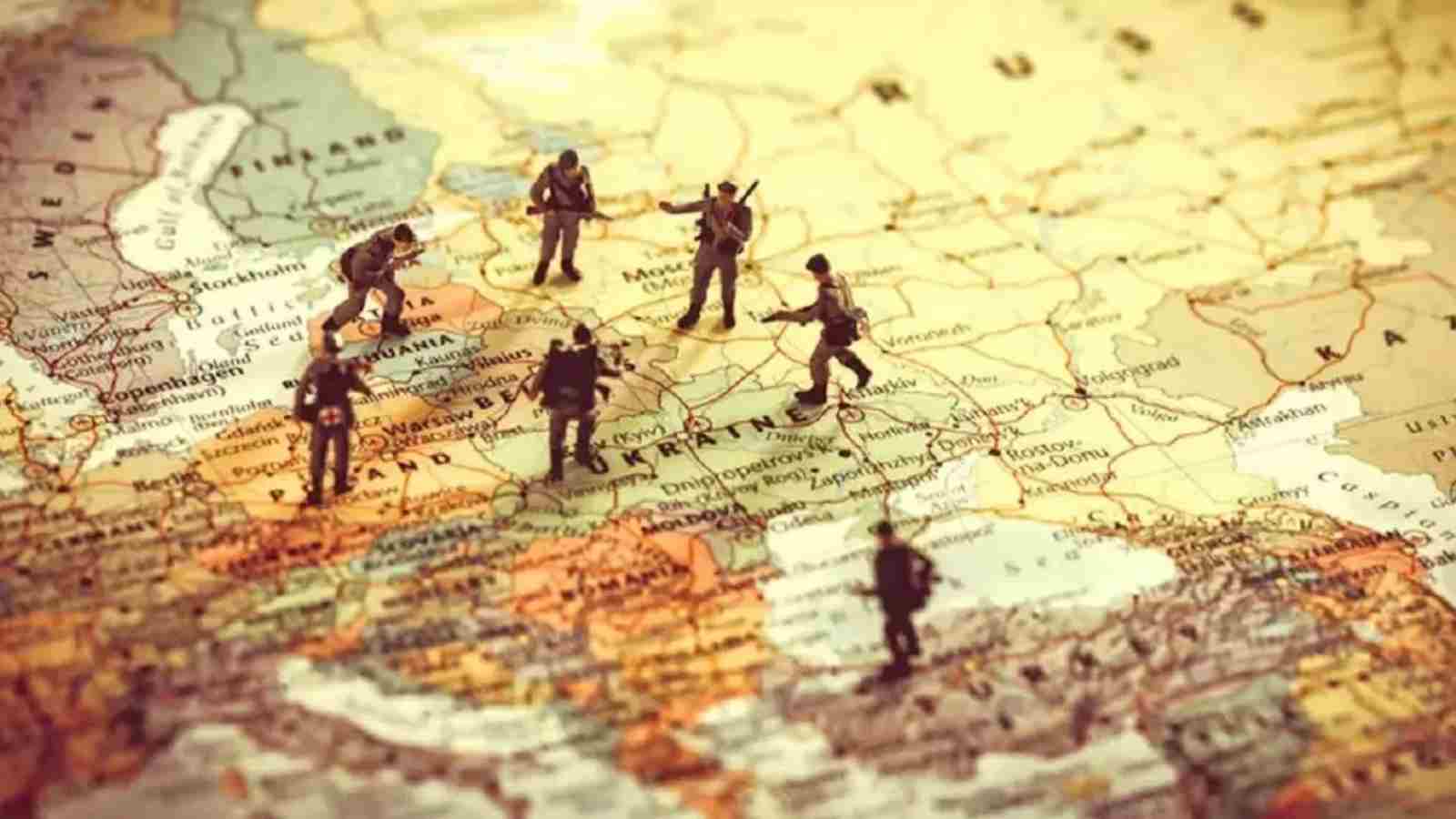
The dynamics of the intensifying conflict on the Iran-US-Israel axis should be read not only as a regional power struggle, but also as a breaking point that accelerated the structural transformation of the international system. The global order, which was shaped in the aftermath of the Second World War and acquired a “unipolar” character especially after the end of the Cold War, was built on the military, economic and normative superiority provided by American hegemony for a long time. This period, often referred to as “Pax Americana” in the international relations literature, produced a certain stability through global trade networks operating under the US security umbrella, the dollar-centered financial system and liberal international institutions. However, this stability was largely based on the structural asymmetry created by American power, and liberal norms and international law were claimed to constitute the ideological superstructure of this power architecture.
In this context, recent geopolitical tensions, especially the intensifying conflict dynamics in the Middle East, have seriously questioned the sustainability of this order. The strategic rivalry between Iran and the United States and Israel is increasing the risk of open military confrontation, a process that affects not only regional security balances but also the global distribution of power. This development has strengthened the debate on the evolution of the international system from a unipolar character to a multipolar and more ambiguous structure. Multipolarity means that global power is distributed among multiple great powers rather than concentrated in a single hegemonic actor. Such a structure tends to increase competition in decision-making processes while at the same time reducing the predictability of the system.
One of the most theoretically striking aspects of this transformation is that the fragility of international law and liberal norms in the face of realpolitik has become more visible. Realpolitik is an approach that emphasizes that states act in foreign policy in line with balances of power and material interests rather than moral or normative principles. From this perspective, international law can often be seen not as a regulatory framework that rises above power relations, but rather as a normative superstructure that legitimizes the existing distribution of power. At this point, Karl Marx's approach of historical materialism can be recalled. Historical materialism is a theory that argues that the ultimate determinant of social and political structures is economic relations of production and material infrastructure. According to Marx, legal, political and ideological institutions are elements of the “superstructure” that rise above this material infrastructure.
The current geopolitical crises have brought certain aspects of this theoretical framework back to the agenda. The global power struggle is characterized not only by ideological competition but also by the struggle for control over energy lines, critical raw material resources, trade corridors and global supply chains. A significant number of modern wars, although ostensibly justified on the basis of security or values, are closely related to the sharing of these strategic resources that constitute the economic infrastructure. For this reason, periods of war and crisis tend to make the material basis of the system visible beyond ideological discourses.
In the pre-war period, the global economy was increasingly based on financialization and the growth of the service sector. Financialization refers to the concentration of economic activity around financial transactions and capital movements rather than production. In this process, the physical dimension of production remained relatively in the background, while global consumer culture and the production of symbolic value came to the fore. Sociologist Jean Baudrillard's concept of “simulation” is often used to explain this situation. The simulation economy refers to a consumption order in which material production is replaced by signs, brands and lifestyle symbols.
In this cultural and economic environment, global brands have become not only objects of consumption but also symbols of global identity. International fast-food chains, coffee brands or exotic agricultural products have produced similar lifestyle images in different geographies of the world, embodying the impact of globalization on everyday life. In this model, the individual acquires a sense of “global citizenship” to the extent that he or she participates in global consumption networks and establishes a symbolic belonging relationship with the economic system.
But large-scale geopolitical crises tend to reveal the material limits of this symbolic order. The disruption of energy lines, the rupture of supply chains or the disruption of global logistics networks demonstrate the critical importance of the physical infrastructure on which the financial and digital economy is built. In such moments of crisis, the symbolic values of consumer culture quickly recede into the background, while fundamentals such as energy supply, food security and industrial production regain central importance. The primacy of economic infrastructure thus becomes visible again.
In this context, the concept of “self-sufficiency” or autarky, which has long been marginalized in the globalization discourse, has been revisited. Autarky refers to the ability of a state to meet its economic needs as much as possible from its own resources. During the rise of globalization, this approach was often seen as inefficient and economically irrational. However, in times of intense geopolitical competition, the strategic risks of external dependence become more apparent.
The theory of comparative advantage, one of the basic concepts of international trade theory, argues that states can increase their welfare through mutual trade by specializing in areas where they are most productive. However, extraordinary circumstances such as war and sanctions have shown that this model of interdependence can also produce vulnerability. States that are overly dependent on foreign suppliers in critical sectors are more vulnerable to economic and strategic pressures in times of crisis.
For this reason, in recent years, many states have turned to more protectionist policies in areas such as energy security, food production, defense industry and strategic technologies. Protectionism refers to the use of restrictive trade policies by governments to support domestic production and reduce dependence on foreign trade. While this trend does not indicate a complete end to globalization, it does suggest that states are seeking greater control in strategic sectors.
In the new geopolitical environment, state power is not only measured by financial size or service sector capacity. Instead, material power elements such as energy reserves, industrial production capacity, agricultural productivity and technological infrastructure are coming to the fore again. The concept of “resilience”, which refers to the resilience of states against crises, has gained importance in this context. Resilience refers to the capacity of a country's economic and institutional system to function despite external shocks.
The emerging tensions on the Iran-US-Israel axis are not only a regional security crisis, but also an indicator of the structural transformation of the global order. The renewed centrality of material infrastructure such as energy, food and industry indicates that economic and geopolitical calculations have taken precedence over ideological discourses in the international system. In this new environment, strategic autonomy and economic resilience are becoming the key factors determining the position of states in global competition. Countries that can recognize this transformation early and adapt their institutional and economic structures to this reality will be able to gain a more advantageous position in the emerging new balance of power.
Sermet Erdem