




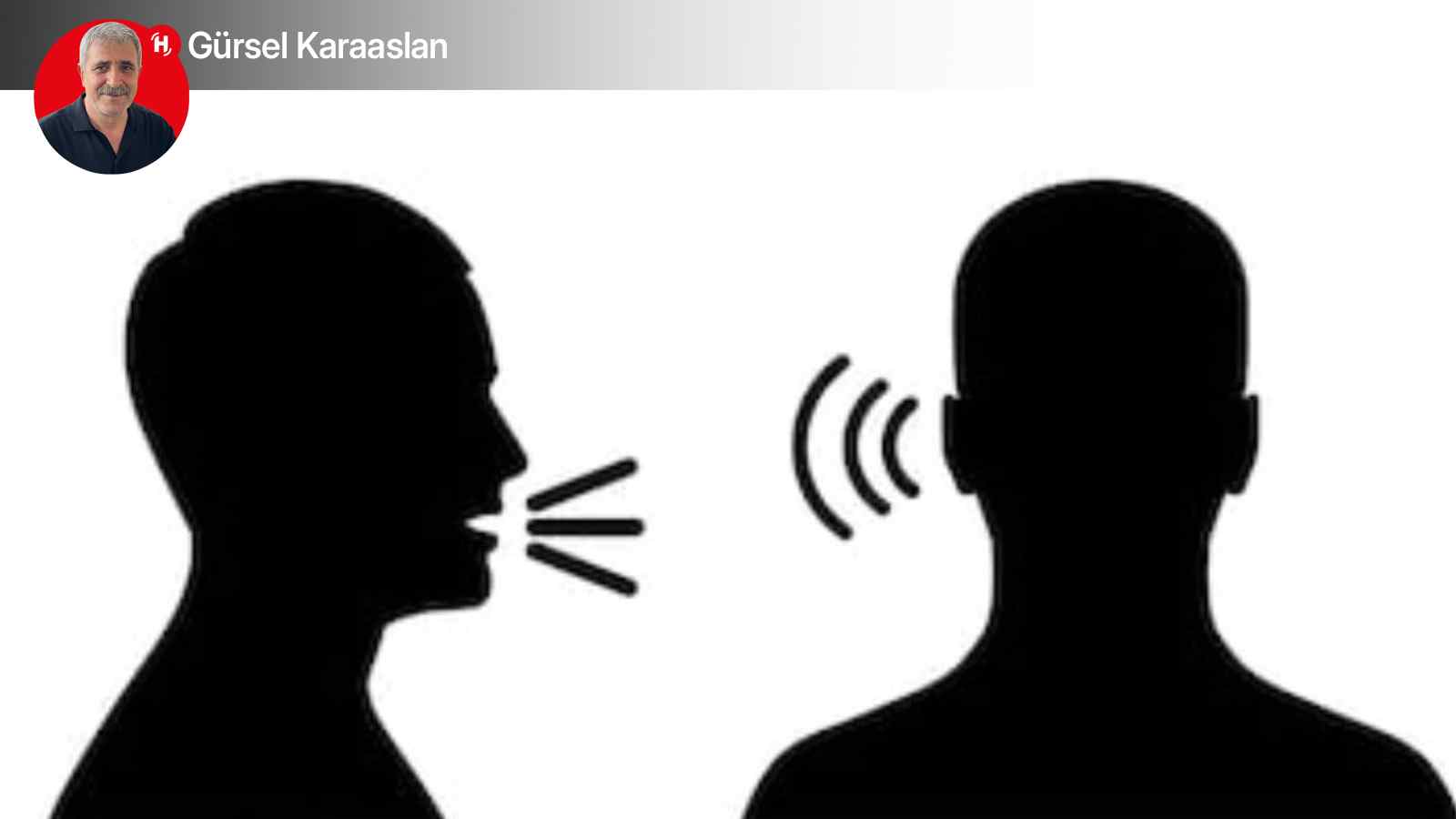
 Most of the time, when one thinks one is listening, one is actually busy confirming one's own inner voice. The distance between the beginning and the end of a sentence is sometimes only a few seconds, but those few seconds contain the most dangerous gap between meaning and judgment. A judgment made before the sentence is finished is not the product of truth, but of impatience. Because prejudice is a haste that interrupts listening; it rushes to judge, not to understand.
Every word taken out of its context carries a meaning stolen from its owner. It no longer serves the speaker, but the mind of the one who plucked it. Man is relieved when he hears what he wants to hear, because this is the shortest way to get rid of the trouble of thinking. But thinking requires patience. It requires waiting. It requires staying until the end of the sentence, sometimes even intuiting what is not said. Meaning is hidden not only in the words but also in the silence between words.
Misunderstanding is a human failing, but misrepresenting what you have misunderstood without knowing it, or even knowingly misrepresenting it, is a moral failing. Here the mistake is no longer innocent. Because the person has chosen to glorify his or her own assumption instead of seeking the truth. At this point, the word ceases to be a means of communication; it becomes a weapon. Theories are built on it, intentions are fabricated, meanings that do not exist are presented in the guise of certainty. And the most tragic thing is this: These theories often feed fear, not truth.
Prejudice is the comfort zone of a mind that has given up on understanding. When one tries to understand, one faces the possibility of change, whereas prejudice guarantees that one will remain unchanged. The person who judges without listening is actually defending his own fragility, not the other person. Because understanding expands the human being; judging narrows it. A narrow mind considers what is similar to itself as safe and what is different as a threat.
The most serious consequence of misunderstanding is that it drives people apart. Once the bond is broken, bridges fall silently. No one can “You didn't really listen to me” It is not shouted out loud; it is usually said inward and grows there. Over time it turns into distance, coldness and silence. People do not stay where they are not understood. Because being understood is not just a need, it is an existential affirmation.
Perhaps the real wisdom lies not in understanding immediately, but in being able to recognize that you don't understand. To be able to stand patiently between the beginning and the end of a sentence, to suspend one's own judgment, is the deepest respect for truth. One does not have to understand everything one hears, but one has to honestly admit that one does not understand. For truth does not approach those who are in a hurry, but those who know how to wait.
And perhaps the greatest lesson is this: Every judgment you make based on half-listening to a word takes you away from the truth, not away from someone else.