




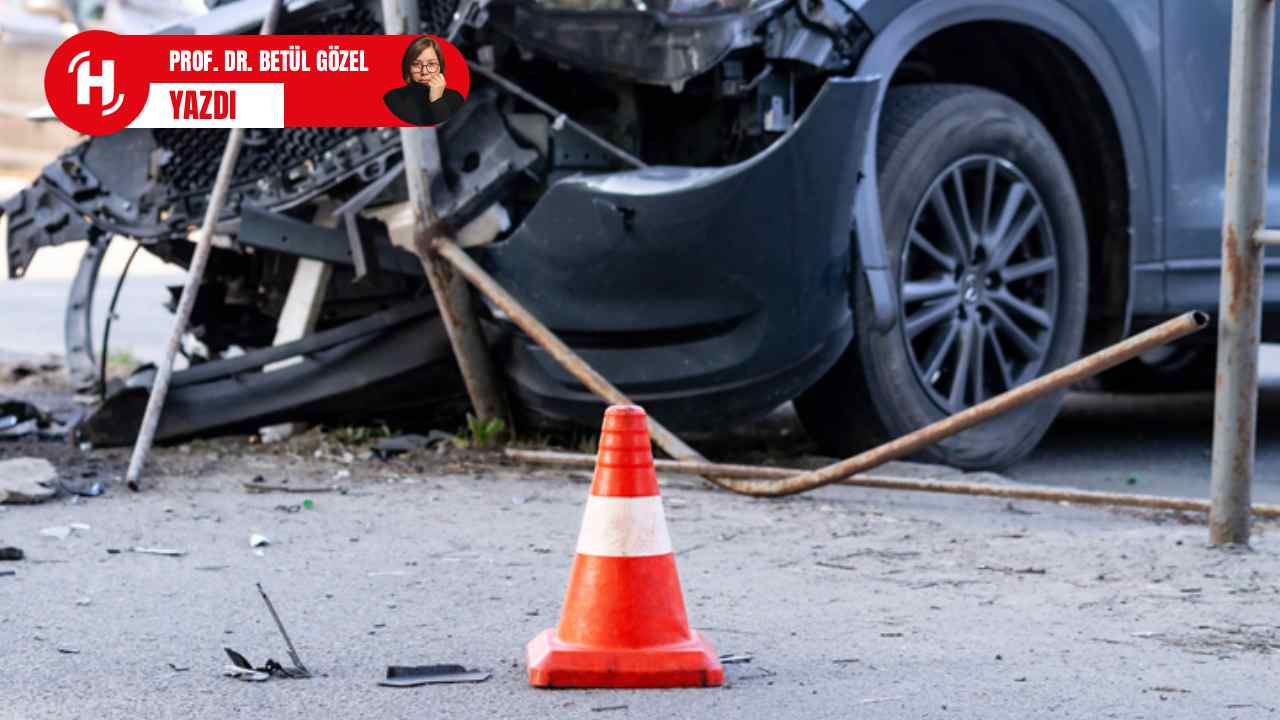
 My problem is not the car. My problem is: Why is it so hard to live safely in this country?
Today I look at the price of a car. I want it to be safe. I don't ask for much; I don't want it to split in two in an accident, I want the airbag to work, I don't want it to skid. When you look at the sticker, you realize that you are buying the public share rather than the car; the price of the vehicle takes a back seat.
We also need to look at the tax issue itself. Today, SCT rates on automobiles have long exceeded the limit of “taxing luxury consumption”. Depending on the engine volume and tax base, SCT rates on automobiles can start at around 70 percent and go up to 150-200 percent. Moreover, this is not enough; after the SCT is added, VAT is also charged. In other words, tax is collected from the tax, not from the vehicle. The picture that emerges is that the tax burden grows, not the vehicle itself. This turns security into an expensive, hard-to-access privilege.
We know how we got to this point. In the early 2000s, there were taxes on automobiles, but not like today. Rates increased over the years, tax bases were not updated. Tax brackets remained in place; as prices increased, the system turned into a machine that automatically deducted more taxes. It is still said that ’we tax luxury consumption“. However, for most people in Turkey, especially outside the big cities, a car is not a luxury; it is a means to get to work, to get to the hospital, to sustain life.
It is not just a matter of money here, it turns into a matter of life. Because there are still 20-30 year old vehicles in traffic. The body is tired, the safety equipment is almost non-existent. We see the results in serious accidents. But every time the same words come into circulation: speed, carelessness, fate. No one asks the question enough: Why do these people still have to drive these vehicles? The answer is simple: Because the safe vehicle is not accessible.
In Europe, this debate is already closed. Airbags, electronic stability systems, basic crash safety are not a matter of preference or “top package”; they are the legal standard. It is not the presence of safety that is being debated, but its level. In the second-hand market and when choosing a vehicle, people still ask “does this car have ESP (Electronic Stability Program)?” and “how many airbags does it have?”. While in Europe safety is accepted as a floor, in Turkey safety is still part of the bargain.
Moreover, safety standards introduced for new vehicles in Turkey are not applied retrospectively for older vehicles. In other words, the absence of modern safety systems in a 15-20 year old vehicle is not enough to ban that vehicle from traffic. What is looked at in the vehicle inspection is not whether the vehicle protects you in an accident, but whether it can walk on the road. If the brakes hold, the steering wheel turns and the seat belt is not broken, it passes the inspection. In other words, a vehicle that passes the inspection is not “safe”, it is only “legal”.
Here, it is necessary to talk about the issue a little bit from where I stand. I am a plastic surgeon and I am one of the physicians who meets facial trauma patients coming to the emergency room. In other words, I don't see the statistics of traffic accidents, I see the results. In accidents at similar speeds and under similar conditions, I clearly observe that there are significant differences in the severity of trauma between patients exiting a vehicle with a high level of safety and patients exiting an old and unsafe vehicle.
This difference is not luck, but the result of the vehicle's body engineering, its capacity to absorb crash energy and its basic safety systems.
Of course there will be taxes. I have no objection to that. But if tax policy forces people to live a riskier life, we are no longer just talking about economics. There is an ethical limit here. Living safely is not a privilege. It is not a luxury. It is a right.
If survival in traffic in this country still depends on so much money, it is not just driver error.
The issue is the gap between what is legal and what is safe.