




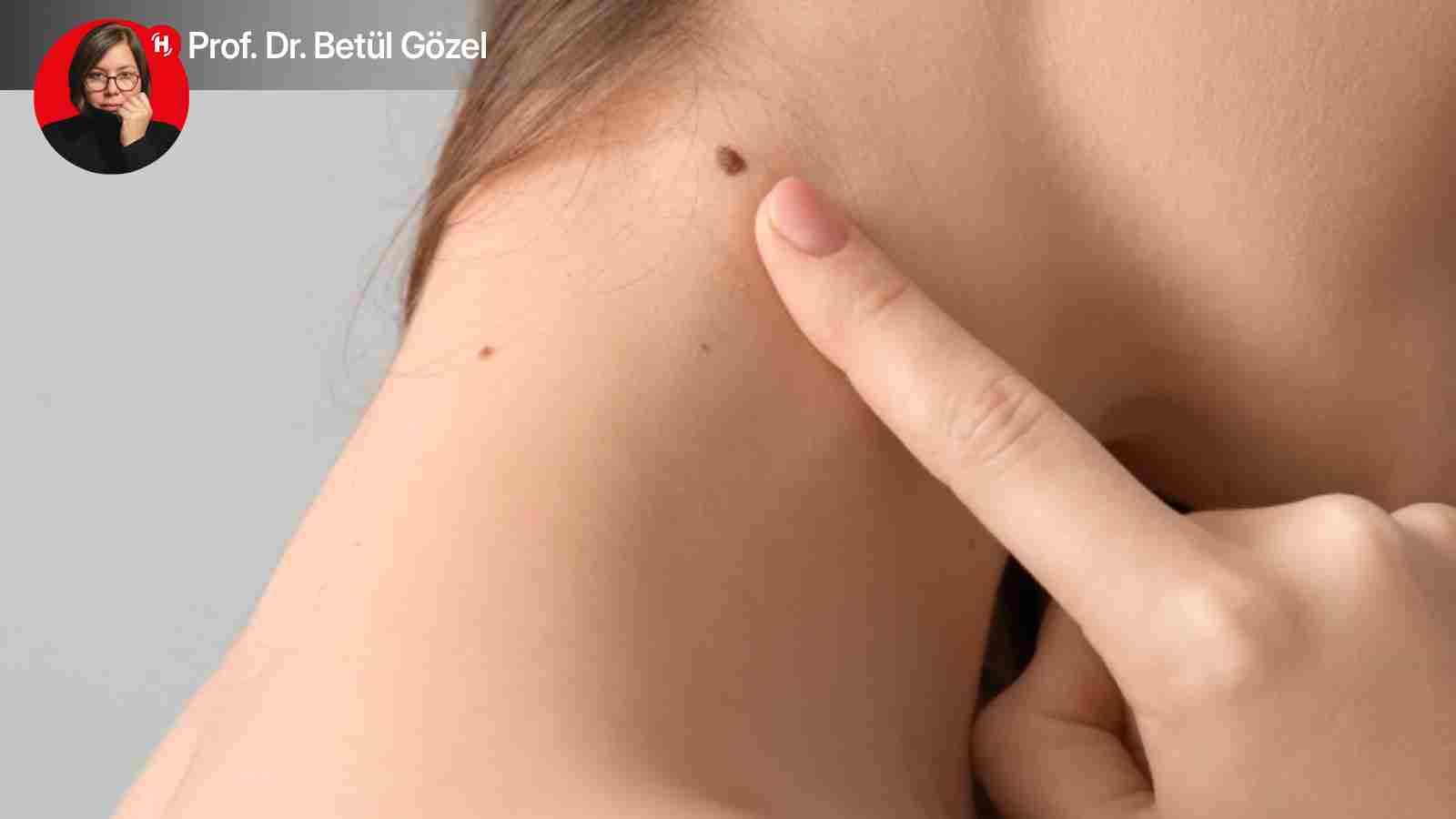
 It is not dangerous to touch moles, but to be late.
There are some misconceptions in medicine that seem innocent but have a heavy cost. “Moles are untouchable, if you remove them, it will turn them bad” is one of them.
I know patients who listened to the neighbor, not the doctor; they lost their lives.
This sentence is not only an urban legend. It is also a thought pattern that delays early diagnosis, complicates treatment and shortens life expectancy in some patients. Because the most critical factor in skin cancers is often not surgical technique, not medicine, but time.
One thing must be said clearly: Evaluating or removing a suspicious mole does not increase cancer. The real risk is that a suspicious lesion may persist for months or even years. “don't touch” is to postpone it.
Another common misconception in society is this: “He's from my mother, he'll be fine.”
However, congenital moles (congenital nevi) cannot be considered completely innocent. Some of these moles have a risk of malignant transformation early in life, even in childhood; this risk does not only end in childhood, but does not completely disappear throughout life. For this reason, congenital moles “don't touch” Complacency is not correct; the correct approach is physician evaluation and regular follow-up. Especially in children, moles that grow, change color, blister, bleed or act like wounds should be seen.
Malignant melanoma is one of the most dangerous skin cancers that develops from pigment cells (melanocytes) in the skin and has the potential to spread rapidly.
The first signs of malignant melanoma are often small and seemingly insignificant changes: a new spot on the skin, an existing mole that grows over time, darkens in color, has irregular edges...
The majority of moles are benign. But in the case of more aggressive conditions such as malignant melanoma, even a small change in appearance is important. A lesion caught at an early stage can often be safely treated with a minor intervention. Late-stage cases, on the other hand, mean much larger surgeries, higher risk and more complex treatment processes.
Moreover, malignant melanoma is not only seen on sun-exposed areas such as the face and nose. Areas such as the scalp, back, legs, soles of the feet and around the nails may also be missed. Therefore “no sun, no way” is misleading.
The best approach at this point is this: Show me if Ben is changing.
The diagnostic process is often not very complicated: examination, dermoscopic evaluation if necessary and biopsy of the suspicious lesion. This step is a “don't touch” but medical verification and, if necessary, life-saving early intervention.
Another fault of society is that misinformation “in good faith” circulation. Neighborly advice, relatives' experience or sentences heard on social media do not and cannot replace medicine/doctors.
Conclusion: The goal in skin cancers is not to create fear, but to create early awareness. “Don't touch your moles” approach is not protection; it is often a name for delay.
Epilogue:
Our neighbors are precious. They tell us in good faith. But if your mole is changing, consult a doctor, not a neighbor.
Because neighbors know a lot...
but they can't diagnose.
With misinformation, they can shorten your life.
Most Frequently Asked Questions About Moles
1) Will it cause cancer if the mole is removed?
No, it doesn't. Medical evaluation or removal of a suspicious mole does not “worsen” cancer. It prevents delay.
2) Is a congenital mole harmless? (It is called “that mole from the mother”)
No. Congenital moles may also have a risk of malignant transformation. Therefore, physician control and follow-up is required.
3) What should I pay attention to?
- growth
- color change
- edge irregularity
- bleeding/crusting
- don't pretend to be wounded
4) Is an itchy mole dangerous?
Not always. However, if itching is accompanied by growth, bleeding or change in shape, it should be evaluated.
5) Is it appropriate to remove moles with laser?
There may be some benign lesions. However, a suspicious lesion should first be evaluated by a physician.
6) Scab or sore that won't go away?
Recurrent crusting/bleeding lesions that do not close in 2-3 weeks must be seen.