



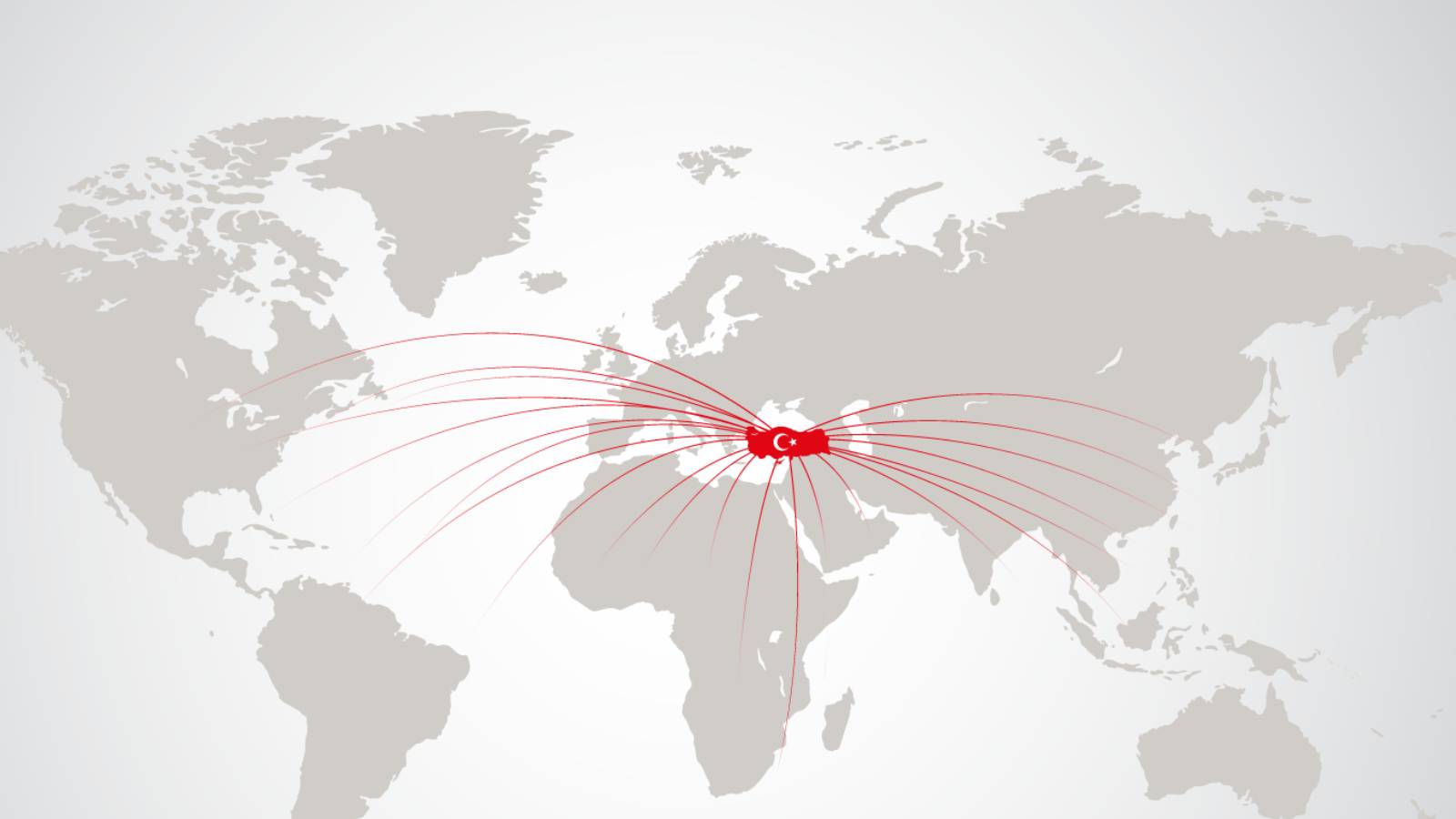
Emin Sirin - GUEST AUTHOR 2024 nominal GSYH ve dünya paylarına baktığımızda ABD (%26), Avrupa Birliği (%18) ve Çin (~%17) üç büyük ekonomik kütle olarak öne çıkıyor. Bu tablo sadece bir “wealth ranking” but also a background map of the capacity to produce technology, attract capital, trade networks and ultimately military deterrence.
Today, the world order is moving away from the era when a single center determined everything. The system is more competitive, more fragmented and more rigid. In such an environment, the right strategy for Turkey is “unconditional commitment” but to establish a multifaceted but clear-cut architecture of cooperation that serves its own development objectives.
My conviction is this:
Turkey's main axis should be deep economic and defense cooperation with Europe, maintaining a strategic balance with the US, and pursuing a selective and controlled economic pragmatism with China.
This is not being hostile to anyone. On the contrary, it is taking Turkey's interests seriously.
1) Military Power Map: Budget is Not Enough but a Start
Military power is not only about the number of tanks. It is a combination of money spent, industrial production capacity, alliance network, logistical access, nuclear deterrence, space-cyber capability, and sustainable personnel structure. Yet the barest comparison starts with the level of expenditure.
THE UNITED STATES: Owner of Global Power Projection
In 2024, the US military expenditure reached approximately 1 trillion dollars. This constitutes the largest portion of the world's military spending. US power is not just budgetary; it is a capacity for ’global reach“ sustained by a global network of bases, naval-air power superiority, a defense R&D ecosystem, and a financing capacity fueled by the dollar's status as a reserve currency.
In recent years, however, the economic reflex of the US has been more pronounced: the lines of attracting capital in, protecting industry and restricting imports have been strengthening. For countries like Turkey, this makes it difficult for economic proximity with the US to produce “easy capital inflows”.
European Union: Big Economy, Fragmented Security
EU countries are increasing their defense spending. This increase is a sign of Europe's “woke up” but Europe's main vulnerability is that for many years it has relied too much on the United States for security.
Nevertheless, the picture is clear: Europe has been forced to take more responsibility for its defense due to both the perceived threat from Russia and the fluctuations in US politics. This necessity opens a new window of strategic opportunity for Turkey: While Europe's security needs are increasing, Turkey's military capacity and defense industry capability are rising.
China: Giant Industry, Regional Military Weight
China's military spending is large and growing steadily. The source of China's power is not only its military budget, but also its massive manufacturing infrastructure, technology investments, supply chain dominance and its strategy to expand its regional sea and air capabilities.
However, China, like the United States, is a global security actor. “provider” is not. Rather, China generates influence through trade, production and selective investment. It is not easy for Turkey to sell high value-added goods to China due to its competitive structure.
Russia and Britain: Hard Power at Different Scales
Russia seeks to maintain its hard power through high military spending and high war economy costs. The UK, on the other hand, has a distinct position in European security with its qualified military capacity, intelligence capability and weight in NATO. For Turkey, the UK remains important both as a security and trade channel.
Turkey: Regional Power and Strategic Threshold Country
Turkey is not a superpower with a huge budget, but it is a country that can expand its influence thanks to its geography, operational experience, rising capacity in the defense industry and its role in alliance systems. Turkey's power “on show” but in the speed at which it grows sustainable capability.
2) Development Criteria: Where Does Capital Come From and Where Are Goods Sold?
At the heart of geopolitical debates are actually two questions:
Where can capital come to Turkey? Where can Turkey sell goods?
The picture is clear here:
Europe is Turkey's first market
For many years, the largest share of Turkey's exports has gone to Europe. Turkey's industry is integrated with Europe in terms of supply chains and production standards. This integration is not only a legacy of the past; it is also the most realistic basis for future growth plans.
Europe is Turkey's biggest source of capital
In terms of direct investments, Europe's weight is also evident. This is because European capital looks at three things the most in a country where it will invest:
legal security, institutionalization and predictability.
Once these three elements are in place, Europe will bring Turkey not only money but also technology and market connections.
Economic proximity with Europe is therefore a “diplomatic preference” is the mathematics of development.
3) With Which Group Should Turkey Cooperate More?
Turkey's right strategy is a “bloc politics” but to set an economic axis and maintain a security balance.
Relationship with the US: Necessary in security, limited in economy
Of course, the US is not an indispensable actor. The NATO umbrella, strategic deterrence and the technological dimension are important. But economically, it is difficult to expect large-scale capital inflows from the US. The US often attracts world capital. And when its reflex to protect its domestic market is heightened, it can limit the purchase of goods from abroad with tariff walls.
There is also another fact: The way the US reads Turkey is often not Europe-centered, but Middle East-centered.
Washington has often criticized Turkey “Greater Middle East” This perspective inevitably produces a political climate that forces Turkey into a line of alignment with Israel. However, Turkey has to determine its line of security and conscience not only within the regional equation, but also within a broader historical and state mindset.
Relations with China: Selective pragmatism, controlled dependence
The trade and investment channel with China is important, but China's foreign investment behavior is often “selective”is. Turkey's difficulty in entering China with high value-added products is also evident. Hence the relationship with China, “great expectations” not through well-chosen sectors and balanced trade targets.
Relationship with Europe: Market + capital + defense needs
Europe needs Turkey today more than ever for two reasons:
1. Weakness in defense capacity and the necessity of expansion
2. Supply chain security and the need for production in close geography
Turkey is both an economic and strategic complement for Europe. This is Turkey's most precious opportunity.
4) Turkey's Strategic Direction: Geography is a Matter of Choice, Not Destiny
Turkey is geographically neighboring the Middle East, but in terms of its strategic identity it is not a Middle Eastern country. This distinction is vital. This is because, despite its rich resources, the Middle East has long been a breeding ground of disorder, instability, civil wars and regime crises. Since democracy, rule of law, institutionalization and predictability have not become the rule rather than the exception in this geography, the region has been living in a vicious circle.
This is precisely why it is Turkey's great strategic goal, “A permanent player in the Middle East” It is not to be a country that is stuck in the Middle East; it is to be a country that manages the crises of this geography, limits its risks and uses its influence rationally. Otherwise, instead of making a development move, Turkey will turn into a country that is constantly drawn into crises and consumes its energy. This would be a fate we do not deserve as a nation.
Turkey's direction should be towards Western civilization, as it has been for centuries, without losing its core values:
Rule of law, institutionalized state order, science and education, economic rationality, freedom and civic consciousness...
These are not necessary “because someone else wants it” but for Turkey to remain strong, prosperous and independent.
Hence the issue, “East vs. West” but a matter of development and state capacity. Turkey cannot remain insensitive to the problems of the Middle East; however, Turkey's destiny cannot be to join the insular governance culture of the Middle East. Turkey's goal is not to get stuck in a geography of crisis, but to rise to the standard of a country that establishes order, sets rules and sets an example.
5) Formula for the New Era: Proximity with Europe, Multilateral Balance
Turkey's best strategy is to strike a balance without antagonizing anyone:
- With Europe: Customs Union update, defense industry cooperation, green transformation alignment, access to technology and finance
- With the United States: NATO umbrella, strategic deterrence, contact in critical technologies, but balance, not dependence
- With China: Selective investment, logistics and trade lines, but without creating dependency on one side
The key phrase here is:
Turkey's axis should be Europe, but without closing the door to others.
6) Concrete topics that Europeans will also say “This Turkey is good to do business with”
Turkey sees cooperation with Europe not as a wish, but as a necessity “program” if he can make it so, he's rewarded:
1. Law and predictability: The biggest incentive for investors is an environment of trust.
2. Modernization of the Customs Union: Including digital trade, services, agriculture and public procurement.
3. Defense industry co-production: Europe's deficit can be filled by Turkey's rising capability.
4. Energy and logistics corridors: Turkey is an indispensable gateway for Europe's security of supply.
5. Green transformation compliance: The industry standard is essential for sales to Europe to remain sustainable.
6. Human mobility: Visa facilitation for business directly increases the pace of trade
Conclusion: Turkey's Way Out Is Not to Choose a Side, but to Determine an Axis
The US remains the main pillar of global security. China is shaping the game with its manufacturing power. Europe is entering a new era with its economic size and restructured security needs.
At the intersection of these three, Turkey stands at a place that can be a “key country” both economically and geopolitically. Therefore, the most rational route is this:
Turkey, without joining the European Union, but by internalizing European legal standards, in the economy and defense “strategic partnership” intensive and institutionalized cooperation at all levels.
This would make it easier for Turkey to attract capital, increase its exports and boost its defense capacity.
Without excluding other countries, without provoking anyone unnecessarily, but with Turkey's interests at the center.
Neighborhood can be destiny. But direction is choice.