




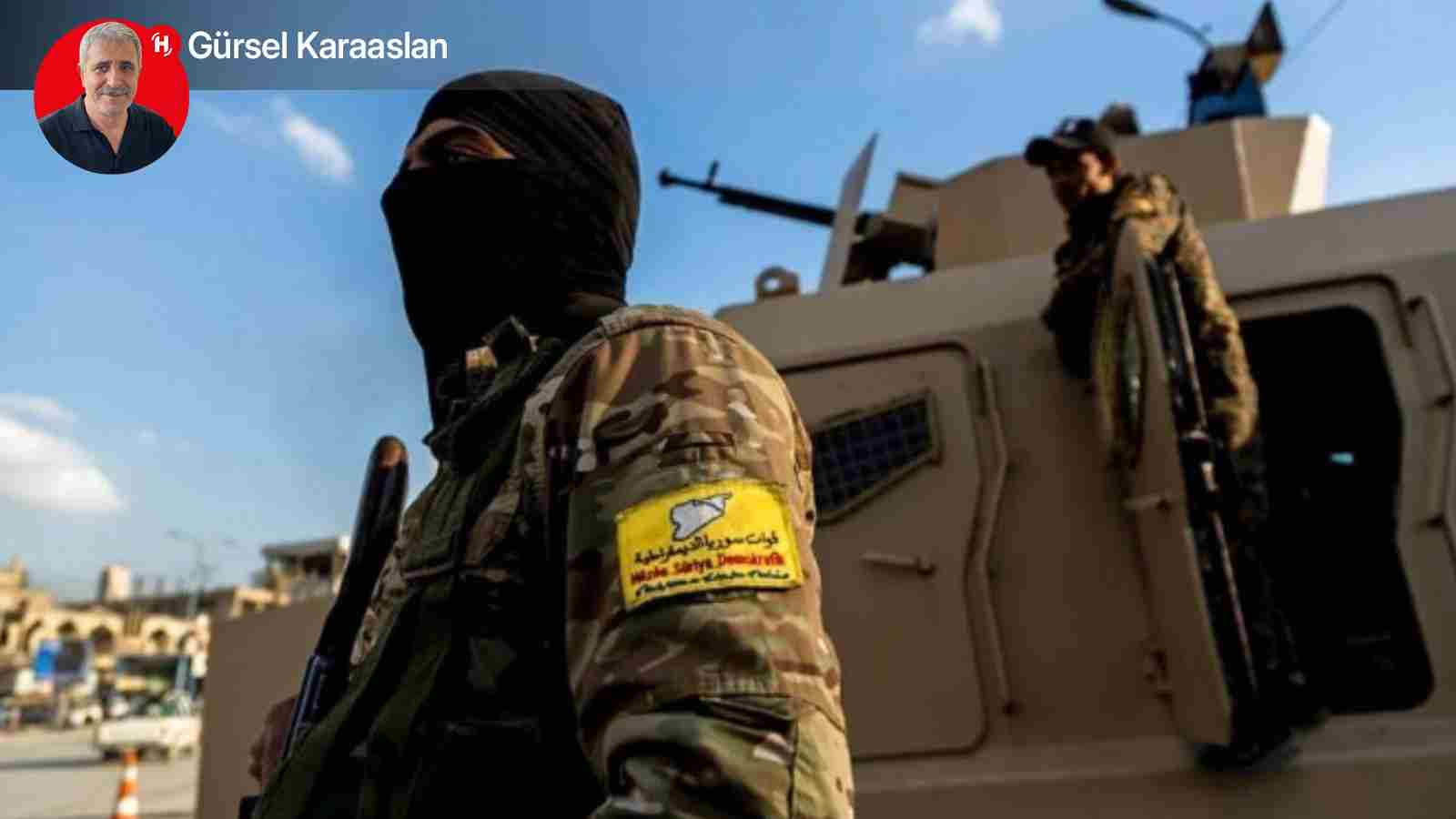
 The recent escalation of attacks in Rojava is not coincidental or “security” These attacks are not developments that can be explained with justifications. These attacks are part of a systematic policy of destruction directed against the peoples' will to live together, the women's liberation struggle and the effort to build an alternative social order in the Middle East. It is not only military points that are targeted; it is the daily lives of the people directly through energy infrastructures, living spaces, health and civilian institutions.
Rojava has been trying to survive under heavy embargoes, political siege and military threats for years. Despite this, the self-governance model established with the common will of the peoples; with its structure based on ethnic, religious and gender-based equality, it poses a serious challenge to the dominant powers in the region. “threat” as a repressive state model. Because the reality of Rojava concretely shows that peoples are not necessarily doomed to oppressive state models.
Today's counter-gang attacks against Rojava, such as the Htş, are the result of ignoring the will of the peoples in the process of redesigning the regional balance of power. The silence, sometimes even open approval, of the international powers paves the way for these attacks. “Terror”, “stability” and “security” These policies, which are tried to be legitimized with rhetoric, in reality aim to liquidate the gains of the peoples.
These attacks are also directed against the women's liberation struggle. The leading role of women in social and political life in Rojava is unacceptable for patriarchal and authoritarian systems. For this reason, every bomb is also thrown at women's claim for an equal and free life.
The silence of most of the international public opinion in the face of what is happening in Rojava serves as an open encouragement for the contra gang forces such as the HTS, who carried out the attacks. However, to remain silent today is not only to watch what is happening; it is to indirectly participate in this policy of destruction. There is no such thing as neutrality when it comes to the peoples' struggle for freedom.
Speaking out against the attacks on Rojava is not just a reflex of solidarity; it is a historical responsibility in the name of justice, freedom and human dignity. Because what is being destroyed in Rojava is not just a region, but the possibility of peoples living together and equally.
History has repeatedly shown that the will of peoples cannot be destroyed by bombs. What is resisting in Rojava is not just a military force; it is a social will defending life. To protect this will today is to protect the future. Rojava is not alone; the policies targeting it are doomed to be defeated sooner or later in the face of the common struggle of the peoples.