




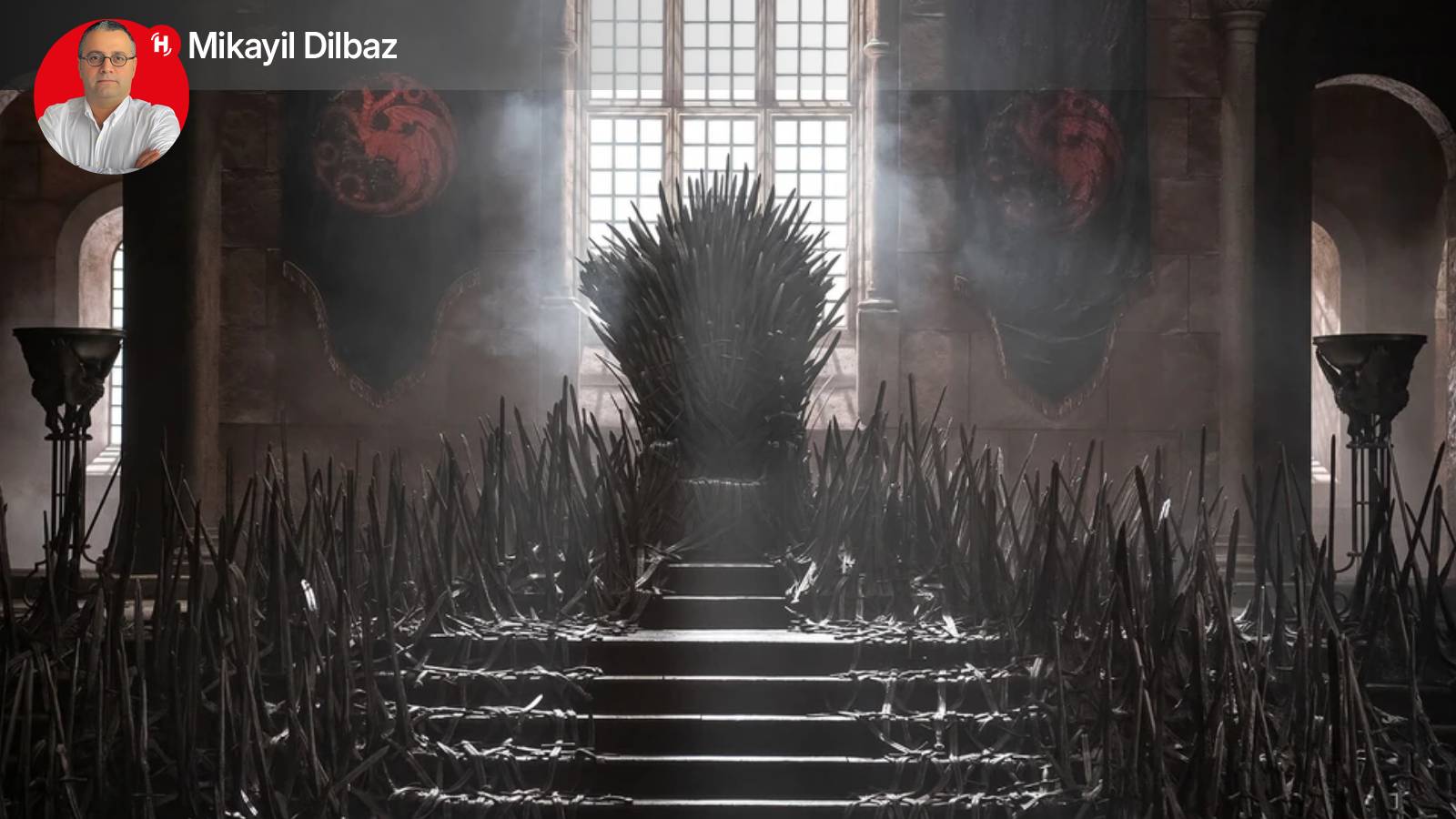
 History often records the names of kings, but it is often not kings who build states. England's modernization adventure is one of the most striking examples of this. On the one hand, Henry VIII, the symbol of arbitrary power, and on the other, Thomas Cromwell, the architect of cool-headed state reason... The question seems simple, but the answer is profound: Who was right?
This question does not belong only to 16th century England. We face the same tension today as we debate the future of politics, law and the state: personal power or institutional reason?
However, the discussion of this question in Turkey is not limited to the preferences of the government. How and to what extent the opposition engages in this debate is at least as decisive as the government.
A Divorce Crisis or a State Revolution?
On the surface, the issue is simple: Henry VIII wants to divorce his wife; the Pope does not allow it. However, this “private life” In Cromwell's hands, the crisis becomes a state revolution.
Thomas Cromwell reads Henry's request as a question of sovereignty, not just a question of marriage. For Cromwell, the Pope's exercise of authority over the King of England was not only a theological but also a political invasion.
“An England without the Pope is possible.”
The Act of Supremacy of 1534 is the product of this idea. The Church of England was separated from Rome and the king was declared the head of the church. However, the real break is not here, but behind the scenes: the centralization of the state through religion.
Similarly in Turkey today, the question of whether the steps taken on the grounds of sovereignty, security or survival strengthen institutions or reinforce personal power cannot be asked boldly enough. Moreover, this silence does not only belong to the government.
Cromwell: Rational, Not Religious
Cromwell was not a reformer; he was not an ideologue. He is neither as devout as Luther nor as dogmatic as Calvin. Cromwell's compass is clear: the interest of the state.
The dissolution of the monasteries, the transfer of church property to the state, the absorption of the parliament into the system... None of these were done for moral reasons. These were conscious choices that established the financial, legal and administrative infrastructure of the modern state.
This is where Cromwell's real crime begins: The state becomes more powerful than the king.
Today, when it is necessary to defend institutions, it is a serious shortcoming that the opposition is often content with rhetoric that saves the day instead of a principle-based vision of the state. Defending institutions is not only about opposing the government; it is necessary to clearly articulate what kind of state is desired.
Henry: A King Who Loves Power, Cannot Carry the State
Henry VIII is a powerful figure but not a strong statesman. When solving problems, he prefers anger, not principle; execution, not law. He uses his advisors and then destroys them.
This is why he cannot accept the rise of Cromwell. Because Cromwell narrows the king's arbitrary space. There is law, there is parliament, there is a system. Henry wants absolute will.
A marriage crisis is used as an excuse. Palace intrigues are put into action. And the architect of the state is executed in the name of the state.
In 1540, Cromwell was beheaded. But the order he had established survived.
There is a similar picture in Turkey. Bureaucrats who gain power, technocrats who come to the fore are either purged or neutralized. The opposition, on the other hand, often reads this process through personal stories, whereas the issue is the weakening of institutions, not individuals.
The Opposition's Cromwell Problem
The main dilemma of the opposition in Turkey is this: Not being Cromwell while criticizing Henry.
It says it defends institutions but does not explain how they will function. It wants a parliamentary system but does not put parliament at the center of politics. It talks about law, but cannot present it to society as a concrete promise for the future.
However, what made Cromwell a historical figure was not his opposition to Henry, but his ability to establish the idea of a state independent of Henry.
Who Has History Vindicated?
When Henry died, he left behind a court ruled by fear and a legacy of arbitrary power. When Cromwell died, he left a national church, a strengthened parliament and the nucleus of the modern state.
History seems to love kings, but it keeps systems alive.
Note for Today
This story reminds us: The state is not built by the ambition of individuals, nor by opposition rhetoric alone. The state requires wisdom, courage and institutional design.
The question for the government is this: Does it want to perpetuate power or the state?
For the opposition, there is a more difficult question: If the government changes, will there really be another state, or just another Henry?
England answered this question with Cromwell. He paid the price but won.
Turkey's response is still waiting to be written.