




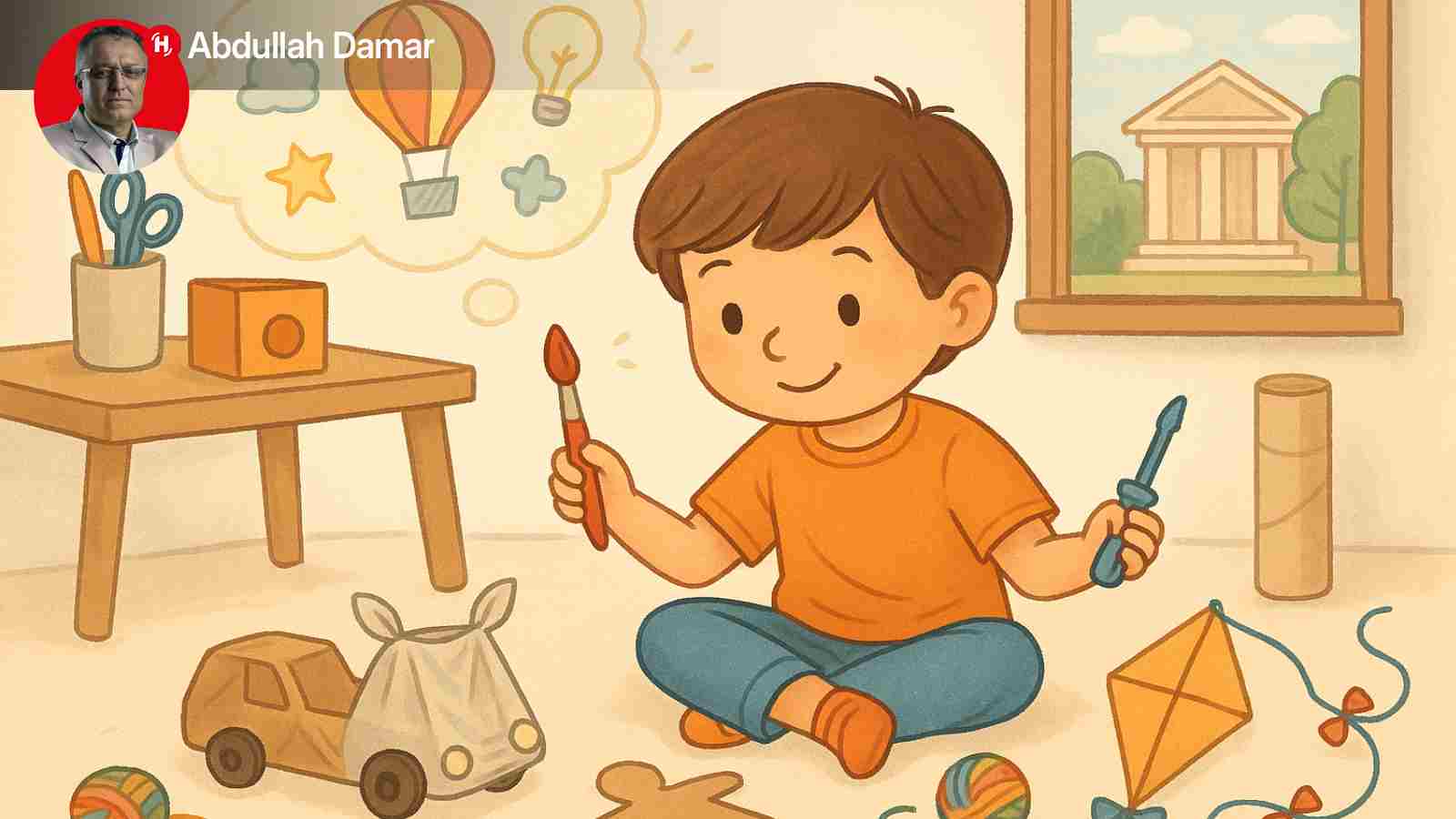
 Curiosity and creativity, which are among social and emotional skills, are among the characteristics expressed as 21st century skills in education. Education experts state that due to increasing automation and artificial intelligence technologies in the labor market, routine production and service processes will decrease, while processes based on creativity and innovation will become more important.
In this context, creativity and curiosity are recognized as important skills that students should acquire. In addition, curiosity is considered a skill that is directly related to academic achievement and is the basis for creativity, as shown earlier.
Empathy, Tolerance, Cooperation, Responsibility
Creativity and curiosity are among the social and emotional skills that feed each other. In this sense, students with high levels of creativity and curiosity also have high levels of empathy, tolerance, cooperation and responsibility. The findings indicate that students who can put themselves in the other person's shoes, understand and correctly interpret their feelings and thoughts, approach different ideas and situations positively, take care to fulfill their responsibilities and work in harmony with the people around them tend to be more curious and creative.
Cultural, Artistic and Sporting Activities
One of the recommended ways to increase students' curiosity and creativity is to participate in artistic and sportive activities. Studies in the literature show that participating in extra-curricular activities, as well as structuring educational processes in a way to support empathy, tolerance, cooperation and responsibility, make significant contributions to students' curiosity and creativity. The results of the research also support these findings. Moreover, participation in cultural, artistic and sportive activities is not affected by the socioeconomic status of parents and the gender of children, provided that it is within the integrity of the school.
Empathy, tolerance, cooperation and responsibility are behaviors that are acquired through lifelong experiences in family and social life as well as in school. Similarly, cultural, artistic and sporting activities are activities that involve both the family and the school, but such activities that take place within the school and classroom have a very important function in developing children's friendships, tolerance, the habit of working together and their sense of responsibility.
Examples of cultural, artistic and sporting activities include sports activities organized within the school as a whole, chess tournaments, brain teasers, debates, theater days, folk dances, choral activities, small concerts, in addition to the activities in the classroom. Outside the school, activities such as class participation in cinemas and theaters, trips to historical sites, visits to museums, and participation in out-of-school sports tournaments can be listed.
It is a reality that participation in in-school and out-of-school cultural, artistic and sporting activities within the classroom integrity develops children's sense of curiosity and creativity. In this sense, it is important that all our colleagues allocate sufficient time for such activities in addition to academic studies.
This is because such activities act as an antidote to the development of creativity and curiosity in children.