




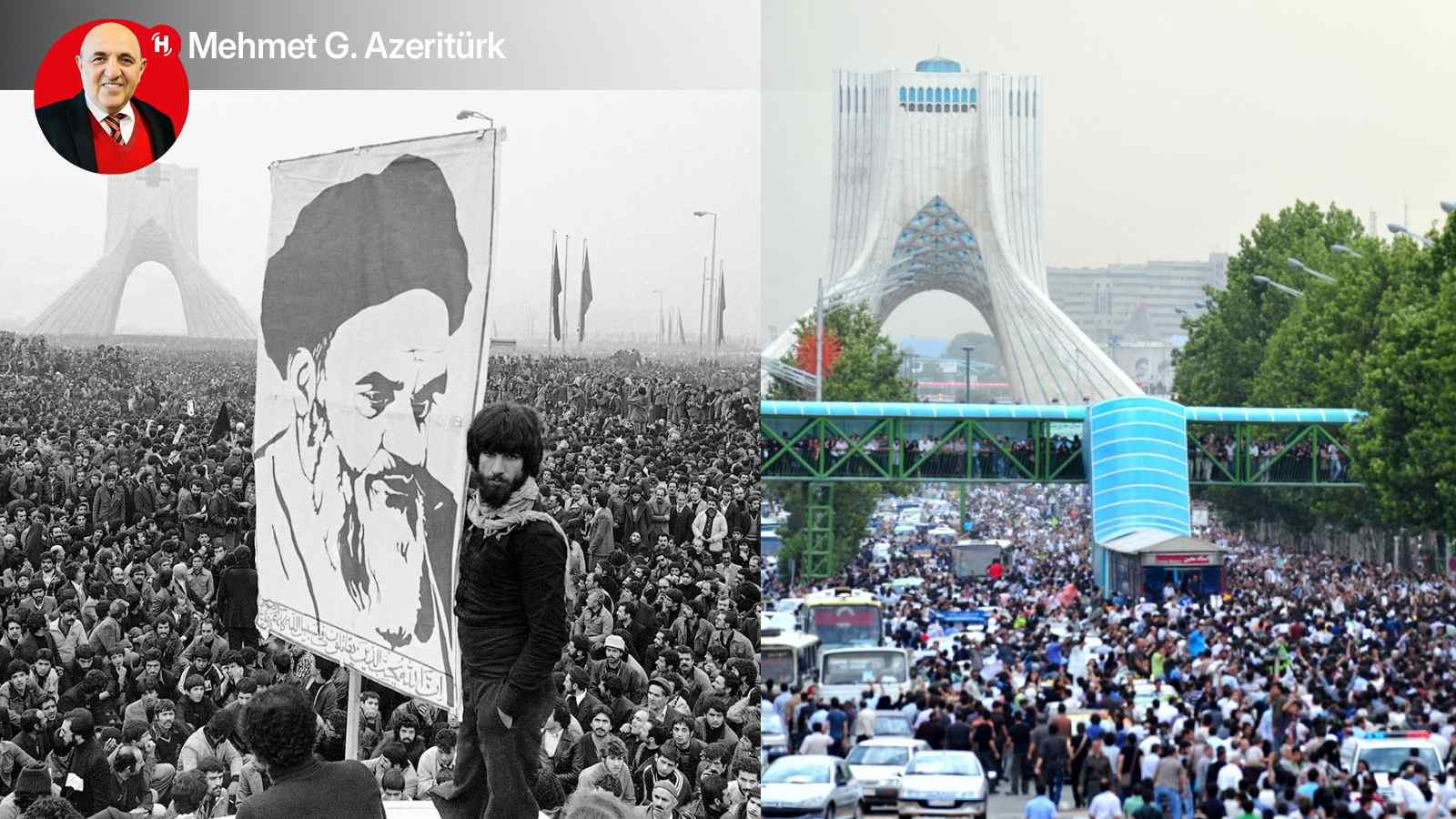
 When we look at Tehran today, we are actually trying to read not the streets of a city, but the memory of a huge geography and the reflections of that memory today. Because Iran is not just a single-layered geography dominated by Persian culture. Turks have been one of the founding elements of political power, state tradition and central authority in this land for centuries. The rise and capitalization of Tehran is a concrete result of this historical continuity.
From Rey to Tehran: From the Shadow of History to the Capital
To understand Tehran, one must know Rey. The heart of the region from antiquity until the Seljuk period, Rey fell apart with the Mongol invasions in the 13th century, and the small northern settlement of Tehran came to the fore. When Aga Mohammad Khan Qajar, the founder of the Qajar dynasty, made it the capital in 1796, it was not just a choice; it was state engineering with the aim of reestablishing central authority. Blending Turkish military genius with Persian bureaucratic tradition in a ’policy of balance“, the Qajar era transformed Tehran into a modern metropolis.
However, the rigid centralist and Persian nationalism-centered administrative approach that began with the Pahlavi era after 1925 ignored this multi-layered sociology of Iran and shook the historical balance. And today, in the hazy winter of January 2026, this historical rupture is being put to one of its harshest tests.
2026: Rational Appeal on the Street and the “South” Wind
With a population of 15-16 million, Tehran is the sociological summary of Iran today. The protest in the streets is not based on ethnic identities, but on the cost of living, injustice and the collapsing energy economy. The fact that Iran, which has the world's giant reserves, will not be able to support its own industry by the beginning of 2026 and that the wheels will stop turning in more than 20 regions has been the last straw that broke the street's patience.
The shadows hovering over this rational appeal are complex. While the exiled Reza Pahlavi's call resonates in Tehran, the Turkish part of the country - that is, the ancient cities of Tabriz, Ardabil and Urmia - views it with historical distance. For the Turks, the founding element of this land, the Pahlavi name represents a period when the common state mind was destroyed and replaced with an exclusionary centralism. The voice rising from Tabriz seeks a “third way” that prioritizes its own democratic and national rights, rather than joining the dreams of monarchy.
Baku and Cross-Border Risks: The PJAK Factor
In this equation, Baku is an “existential mirror” for Tehran, while on its western borders the situation is evolving into a harsh security dilemma. While Azerbaijan's self-confidence after its victory in Karabakh and its insistence on the Zangezur Corridor are mobilizing the region, in the west, PJAK, the Iranian branch of the terrorist organization PKK, is seeking to carve out space out of chaos.
While the presence of PJAK is a tool for the Tehran regime to brand the protests as “foreign-sponsored separatist activity”, the situation is much more serious for Turkey. The filling of the authority vacuum just across the border by terrorist organizations is an unacceptable red line for Ankara. While Turkey understands the process in its neighbor, it has the wisdom of a state that will never tolerate its transformation into a “terror corridor”.
“Will they bring us freedom?”
The Iranian people have too strong a sense of statehood to outsource their quarrel with the regime. The cry of a woman on the street summarizes this situation: “Didn't you see what they did to Iraq and Afghanistan? Do you think the US and Israel are going to come here and bring us freedom? Will those who threw missiles at us yesterday now give us handfuls of dollars?” This cry is proof of the ancient defense reflex of this land against foreign intervention. Iran is not Yugoslavia because it is a resilient society that, thanks to its strong centralized state tradition, has always managed to make a new way out from under the fallen dynasties.
Final Word: The Emotion of the People, the Wisdom of the State
2026 cannot be just a year of observation for Turkey. From natural gas contracts that expire in July to border security and trade on the Van-Tebriz line, paralyzed by the loss of the Riyal, every issue is on the table. Ankara and Baku must pursue a cautious policy that blends the historical and cultural affinity of peoples with the national interest and rational perspective of states.
In conclusion, Tehran's mirror is smoky today. Behind this smoke, either a new Iran will emerge that embraces all its layers, or the millennia-old state tradition will survive this shake-up and move on. What is certain is that Iran is on the threshold of a future that is too multilingual, too multi-identitarian and too dependent on the voices of its constituent elements to be governed solely by the “Persian” narrative.