



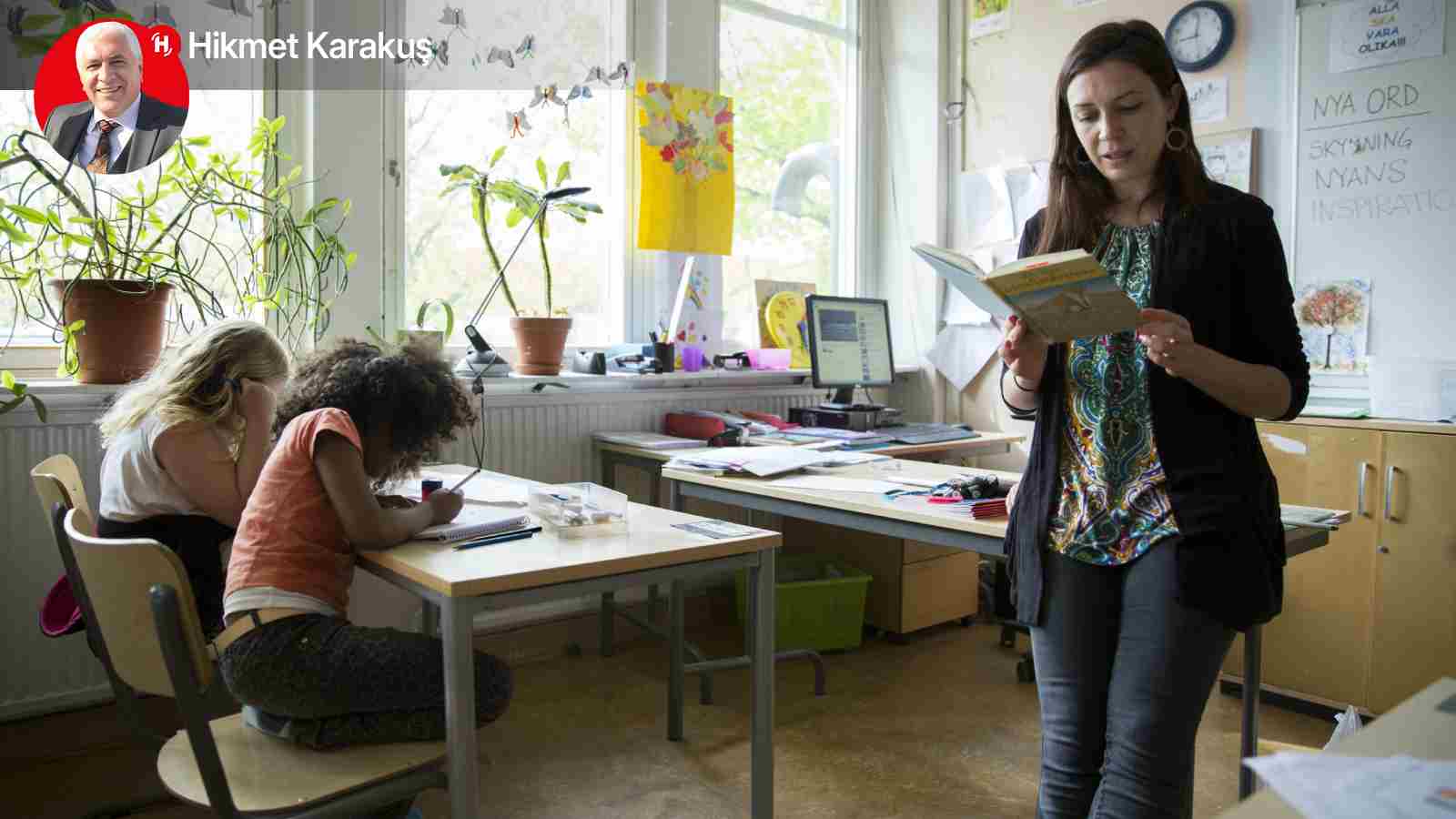
In recent years, the Swedish government has made a radical policy shift in the education system, limiting the excessive use of digital tools and returning to the traditional methods of printed books, handwriting and writing. This process, led by Minister of Education Lotta Edholm, is not only a change in methodology, but also a pedagogical stand against digital hegemony.
1-Cognitive Depth and “Deep Reading”:
PIRLS data show that Swedish fourth graders’ reading scores have declined from 555 (2016) to 544 (2021). At the root of this decline is the habit of ’superficial scanning“ created by screen-oriented reading. While paper reading and handwriting neuroscientifically trigger analytical thinking and memory retention, digital tools increase distraction. As the Karolinska Institute points out, screens hinder rather than enhance learning.
2-Techno-Feudalism and Data Hegemony:
Uncontrolled digitalization in education risks turning schools into data mining sites for tech giants. Sweden's return to analogue methods is a move to protect children from this “surveillance capitalism”. The surrender of educational processes to the algorithms of “Big Tech” companies undermines the sovereignty of the state and the cognitive independence of the individual. This move is a setback to the feudal-like hegemony of technology companies over education.
3-Digital Divide and Social Inequality:
The promise of “equal opportunities” of digital tools has turned out to be an illusion in practice. The Swedish government's SEK 685 million budget for textbooks aims to ensure that every student has physical access to quality information. This is because digitalization condemns children with low cultural capital to screen addiction, while printed resources and teacher-centered education restore quality equality in public education.
4-Development and Protection in the Early Years:
The government abolished the requirement for digital tools in the preschool curriculum from July 1, 2025. For the under-3 age group, fully analog tools have been adopted. This is an approach in harmony with nature, based on the fact that basic skills (reading, writing, arithmetic) should be acquired in the analogue cycle.
Conclusion;
Sweden's choice is not to completely exclude technology, but to limit it to a supportive and controllable role. This strategy has historical significance as a reminder of the state's duty to protect the cognitive development of its citizens (and future children) from capital-oriented technological impositions, as I emphasized in my thesis “The Hegemony of Capital and Technology over States”.
In Turkey, it would be an important practice in terms of the future and digital security if the state not only takes measures to ensure membership on social media with a real identity, but also limits it in education.