




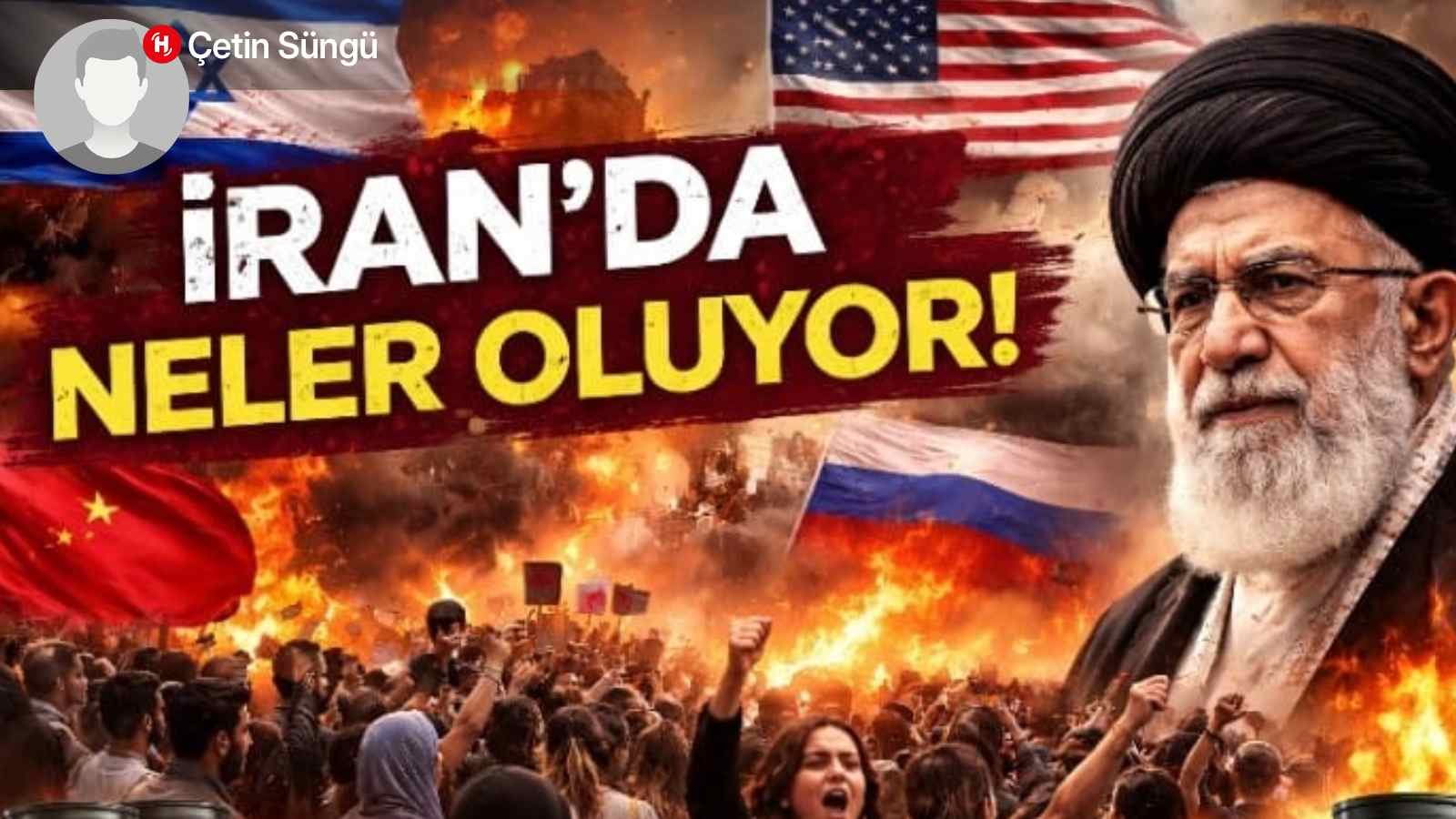
 The protests on the streets of Iran in the winter of 2025-2026 represent a historical turning point. This movement is no longer just an economic reaction; it is the visible explosion of the social, political and ideological cracks that have accumulated since the 1979 revolution.
From urban centers to university campuses, from small towns to big city streets, the anger is not just against price hikes, inflation or difficulties in accessing basic consumer goods, but against the regime's own raison d'être, the erosion of the social contract and the legitimacy of its governance.
The fact that the middle class and young university students have taken to the streets shows that the protests are no longer limited to livelihood issues, but have become a show of political will to confront the regime. It also reveals how false and self-interested the West's “export of democracy” rhetoric is, and how the imperialist powers' designs on Iran have backfired on the streets.
İran ekonomisi yıllardır süregelen yaptırımlar, petrol ambargoları ve yanlış ekonomik politikalar nedeniyle ciddi bir kriz içerisinde. Riyalin değer kaybı, %60’a yaklaşan enflasyon ve temel ihtiyaç maddelerinin fiyatlarındaki astronomik artışlar, bireysel yoksulluğun ötesinde toplumsal bir çöküşün işaretlerini veriyor. Ancak ekonomik kriz tek başına toplumsal hareket yaratmaz; halkın sokaklara dökülmesi için politik bilinç, tarihsel birikim ve örgütlü direniş gerekir.
At this point, the role of women and the middle class is decisive. With their ongoing resistance against the headscarf law, women embody on the streets today the historical accumulation and symbolic power created by the Mahsa Amini events. They are not only the visible face of economic or political demands, but also the catalyst of the movement, the symbol of the social message and a force that attracts international attention. This is putting a visible brake on the plans of the imperialist powers to intervene and destroy Iran from within; the real power in the streets is frustrating the plans of Western interests.
The regime has deployed repressive apparatuses to quell this social explosion, but internet blackouts, mass arrests and the presence of militias are insufficient to restore public confidence. Each harsh measure feeds popular anger and the state's claim to control becomes a fragile spectacle in the face of a legitimacy deficit. Today, Iran stands on the stage of history as a regime caught between domestic anger and the threat of foreign intervention; no matter how strong it appears, it can no longer hide its fragility.
The provocative policies of the US and Israel are a clear indication of the West's hegemonic calculations over Iran. Trump's threats and “We are ready to rescue Iranian protesters” such statements not only intimidate the Tehran leadership, but also turn into a propaganda tool to manipulate the domestic social movement for its own interests. Israel's nuclear program and regional balance of power policies put additional pressure on Tehran. They want to use the protests as a geopolitical trump card, but the Iranian people are mobilizing in the streets to determine their own destiny, and this is frustrating Western dreams of intervention. The anger in the street represents a clear collapse of imperialist plans and the West's false “export democracy” Their rhetoric loses its meaning in the face of real popular resistance.
In this crisis environment, Iran has sought strategic partners, and the most critical relationship is undoubtedly the comprehensive strategic partnership with Russia. However, Moscow's support is limited and pragmatic; loud rhetoric of ideological support does not guarantee an automatic military or economic rescue on the ground. The Kremlin uses Iran as a counterweight to the West, but it lacks the capacity to address the regime's internal collapse. Russia's rhetoric is little more than an ideological trump card; domestic social demands and women's leadership remain a reality that cannot be suppressed by external intervention. This underscores Iran's geopolitical independence and the will of its people to make history; Iran's resistance on the ground against the machinations of foreign powers is rising as the most concrete example of an anti-imperialist resistance.
The possible consequences of the social explosion in Iran are critical and uncertain. If the protests continue for a prolonged period, the cracks within the regime will deepen and the current stability will become unsustainable, leading to either an escalation of harsh repression and social violence or a limited search for stability with partial concessions. If economic reform and inclusive political mechanisms are not put in place, anger could turn into a demand for lasting social transformation, seriously undermining the regime's long-term legitimacy. International interventions or external support on the ground, strategic pressure from the United States and Israel, and limited support from Russia could narrow the regime's room for maneuver and exacerbate both internal and external conflicts. Iran is at a “critical threshold” and the direction of its movement will depend on economic reform, social dialogue and the stabilization of external relations.
Security-oriented approaches provide short-term respite; a lasting solution is possible through economic reforms, inclusive political participation and social dialogue. The regime needs a strategic transformation both to meet domestic demands and to reduce the risk of foreign intervention. Otherwise, the crisis will deepen and the social explosion will reach uncontrollable proportions.
The social explosion in Iran is not just an economic crisis; it is a systematic search for social and political transformation. The leadership of women, the active participation of the middle class and the possibility of intervention by international actors are squeezing the regime between internal and external pressures. Russia's pragmatic rhetoric of support, coupled with the provocative policies of the US and Israel, is moving Iran's fate onto a geopolitical chessboard that transcends national borders. External support cannot rebuild a collapsing domestic legitimacy; real transformation will only be possible through an inclusive and radical political restructuring of social demands.
Iran stands at a critical threshold in history as a fragile state and regime under pressure from both internal and external dynamics. The coming years will be a test of the regime's capacity to survive against the demands for social transformation. The rising anger in the streets, the bravery of women, the defiant presence of the middle class and the maneuvering of global powers have transformed Iran from a country in crisis into a stage for self-determination against imperialist games and geopolitical calculations. The West's dreams of intervention are being dashed by the resistance on the streets of Tehran; the Iranian people are writing their own history, and this history is rising as an example of anti-imperialist resistance that can never be shaped by the interests of foreign powers.