




 In the modern era, “we have progressed” In a world we call Afghanistan, what is being talked about again in Afghanistan is today described in more technical terms: the caste system, legal classes, new penal arrangements.
But the simplest name for it is slavery.
In caste systems, a person is destined at the moment of birth.
He is judged not by his guilt, goodness or badness, but by who he is. This is exactly what is happening in Afghanistan today: People are judged by their class, not by their deeds. Some are saved by admonition, others are flogged. Some are untouchable, some are expendable.
And the claim that all this is being done in the name of Islam... This is where the real shame begins.
Because Islam, in the age in which it emerged, was a rebellion against exactly this. In a world where girls were buried alive, slaves were tortured and class distinctions were considered divine, Prophet Muhammad (PBUH) came out and said:
“People are equal.”
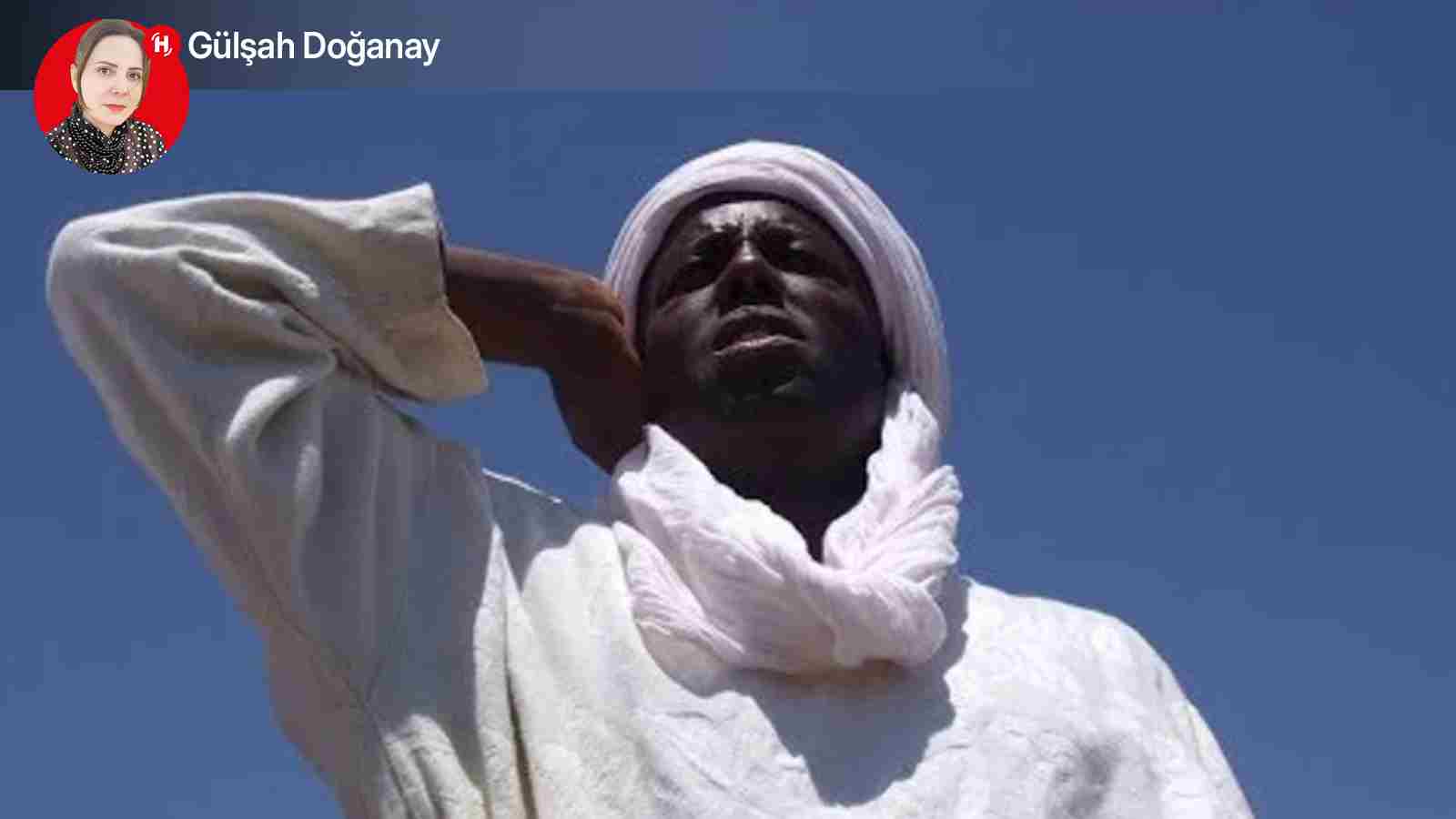
Today, even those who have forgotten its name know its scenes by heart since childhood. You know, a slave who was tortured... Bilal-i Habeshi.
“Ehad” who said, "I am a slave...
Sometimes a word is enough. A word heavier than the stones on a man's back. Like the word that came out of Bilal's mouth:
Ehad.
The word that expresses that Allah is one and only one.
Bilal was a slave in the desert, under the sun, with stones on his back. He was at the bottom of the caste system. He was a slave because of his skin color, his status, his birthplace. “human” was one of those who didn't count.
And right there, Muhammad's revolution begins.
What Muhammad did was not just to free a slave. He turns a world upside down. He declares that a person's worth should not be derived from his lineage, his power, his class, but from the fact that he is a human being.
He embraces Bilal. He sets him free. Not enough... He takes him out and says:
“Let him call the call to prayer.”
It is not just a choice. It's a choice against slavery, against class distinction, “top” and “alt” is an open challenge to the very idea of the idea.
That is why the word Ehad is so important. It means “one”. But it whispers not only the oneness of God, but the oneness of humanity.
When we look at what is happening in Afghanistan today, we see how this word has been forgotten. People are divided into classes. Crime is weighed not according to the act, but according to who it belongs to.
Whatever you call it, whether it's “new law”, wants “religious order” it is the return of slavery.
And the most painful thing is this: There is not a strong enough voice against what is happening in Afghanistan to women, to children, to people who are pushed into the lower class.
But this silence is not only political; it is a moral silence. A system in which women are erased from public life, children are cut off from education, and people are divided into classes is oppression.
And those who remain silent against oppression have always stood in the same place in history.
It is interesting Prophet Muhammad “a great revolutionary” as the revolution he brought about, the same minds that shed tears today can look at the reversal of the revolution he brought about and remain silent.
A faith that was born against slavery can be silent on the reproduction of slavery.
Yet silence is not always innocent.
Sometimes it is the greatest partnership.
The one who sheds tears while watching the movie "The Call" or reading the life of his prophet; Bilal's “Ehad” It is worrying that those whose throats tighten at the word, today remain silent in the face of the evisceration of this word.
Because Ehad is not just a statement of belief.
It is a call for morality.
It is unity.
It is equality.
It is to reject the servitude of man to man.
And history has shown us time and again:
Slavery starts at a distance.
Then it normalizes.
Then it grows in silence. This growing evil comes to our doorstep without us realizing it...
That is why, in fact, the stones on Bilal's back are still there.
They just switched places.
And the question is:
Bilal is at it again today “Ehad” would we stand with those who liberated him, or would we be lost in the crowd carrying the stones?