




 PART I - THE BIRTH OF THE CENTER
(Politics of Image - “Reasonable Figure” - Family Memory - ANAP Spirit - Beylikdüzü Silence)
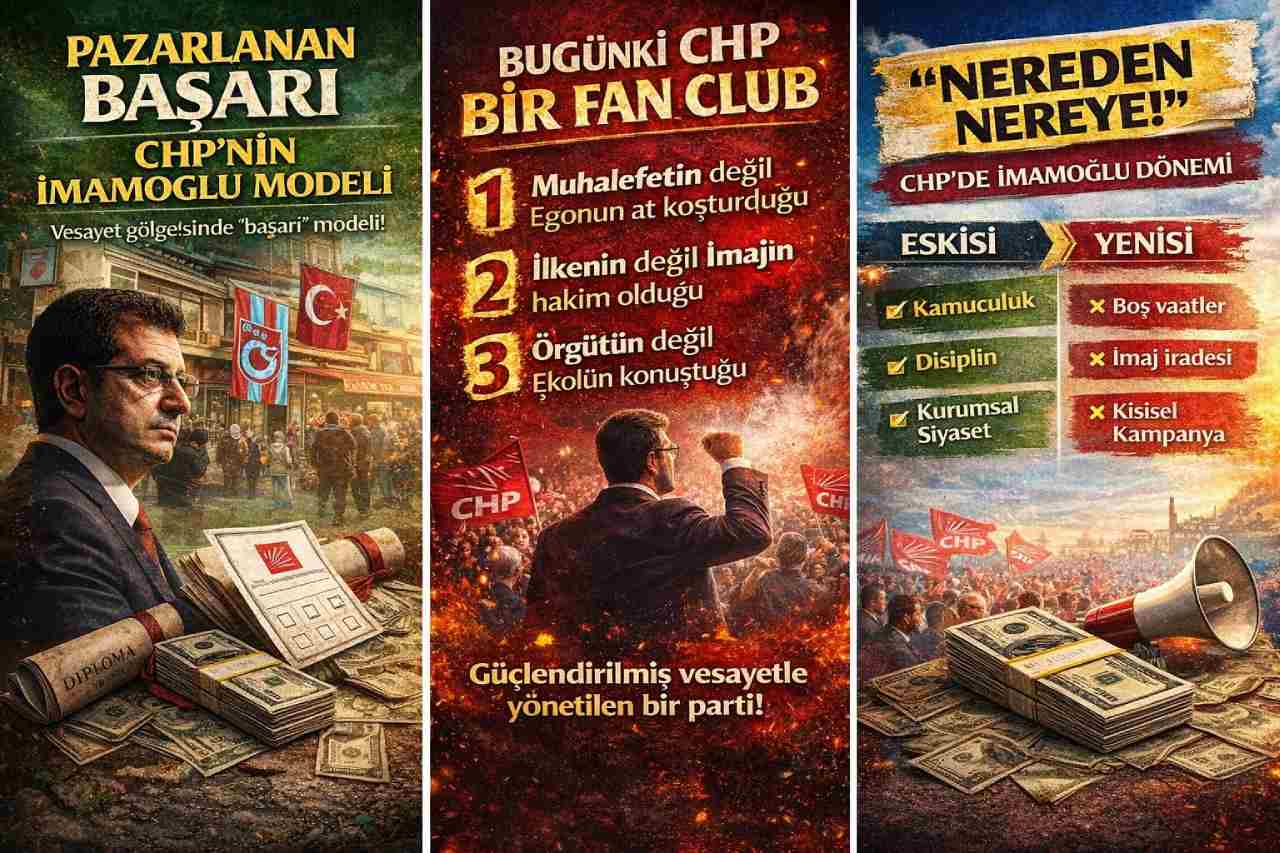
There are some figures in Turkish politics who grow not by what they do, but by how they are carried. Such actors rise not through action but through narrative. They do not take risks, they do not account, they do not establish programs, but they manage to become the center. Once they become the center, politics is no longer about ideas and projects, but about degrees of proximity to that center. Competition is shaped not between ideas, but over the capacity to contact the center. This erodes the institutional basis of politics, weakens the party structure and blurs accountability.
Ekrem Imamoglu is the current and most prominent example of this typology. Imamoğlu is not a leader; he is a center. Leadership requires taking risks, establishing programs and accountability. Being a center is free from these burdens. The center manages those around it, but is not itself supervised. In countries with institutionalization problems, this kind of center politics always produces the same result: institutions weaken, politics becomes personalized, responsibility is dispersed.
It is important to emphasize at this point: There is no personal animosity or character analysis here. What is under discussion is a political model. The issue is not İmamoğlu's intentions; it is the understanding of politics that he represents, carries and has solidified over time. And this understanding has a historical institutional claim Republican People's Party’s dysfunctionalization.
For a long time, İmamoğlu's politics was marketed with adjectives such as “new”, “fresh”, “change-maker”. However, these adjectives are a marketing language, not a description of content. There is very little that is really new. This style of politics has its roots in the center-right climate of the 1980s, especially in Motherland Party tradition. Under the name of ideological flexibility, ideological vacuity, under the name of social consensus, political uncertainty, and under the name of managerial pragmatism, unaccountability have been produced. This tradition avoids conflict, but quietly holds the spheres of power. It is based not on organized politics but on leader-centered governance.
The political memory of the İmamoğlu family is important for understanding this continuity. His father's well-publicized statement “My life was spent fighting communism” is not a simple personal anecdote. This sentence summarizes a worldview that distances itself from left-wing politics, sees publicism as a threat, and defines the state as an element of balance compatible with the market.
For many years in Turkey “center” This line, which was marketed as a leftist line, de facto represented a center-right line. This line does not establish a leftist program, but it does not hesitate to carry a leftist showcase.
For this reason, the reflex of “photographing with everyone”, “talking to everyone”, “avoiding sharpness”, which is frequently encountered in Ekrem İmamoğlu's politics, is not a simple communication tactic. It is the natural result of an inherited political habit. Administrative reasonableness, technocratic balance and harmony with the market are the main axis of this politics. Class politics, publicism and the fight against inequality remain secondary and vague topics in this framework.
The first concrete construction site of this model is Beylikdüzü. The Beylikdüzü years are often described as a “calm”, “harmonious” and “conflict-free” period. However, this calmness is not a virtue, but a conscious strategy of non-politicization. This period, in which national politics is deliberately avoided and visibility is limited in a controlled manner, is a period of accumulating cadres, stabilizing relationships and keeping decisions in a narrow circle. In this period, politics is not practiced; the ground is prepared for politics.
Silence here is not a vacuum; it is a means of buying time. Loyalty grows comfortably where there is no criticism. Where there is no accountability, the center is quietly established. It is precisely in this silence that the structure called the “ecosystem” is shaped. This structure is accustomed to functioning through personal loyalty rather than institutional control. Therefore, this is not a story of success; it is a story of lack of control.
This is the precursor phase to all the crises that will follow. There is no corruption, no trial, no investigation yet, but the political ground that makes it all possible has been laid in silence. Center politics does not produce crisis; it makes crisis possible. This center established in Beylikdüzü will act with the same reflexes when it scales up in the following stages; however, this time the results will become unconcealable.
Then the picture becomes clear:
The center is built, not the leadership.
Not the program, but the image.
Not politics, but non-politics has become a strategy.
This is the starting point of the story.
2019 FRACTURE AND THE POLITICIZATION OF VICTIMIZATION
(Election Cancellation - Victimization - Moving the Center to National Scale)
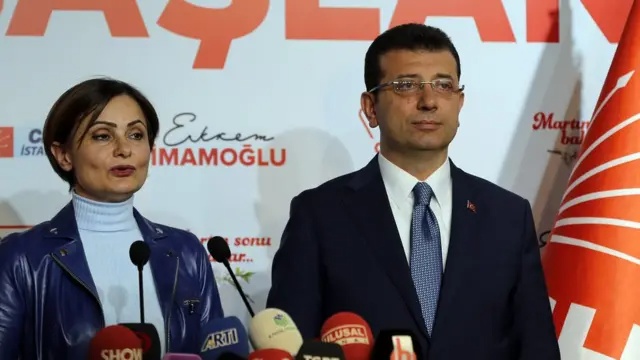
The annulment of the 2019 Istanbul elections is the breaking moment that took Ekrem İmamoğlu from being a local actor to the center of national politics. This transition is not a political ascension in the classical sense. What is decisive here is not the execution, program or ideological claim, but the event itself. Victimization has come into play as one of the most powerful accelerators of politics.
At this point, a critical choice has been made. Legitimacy is linked not to the work done, but to the treatment suffered. From this stage onwards, Imamoğlu's politics started to be constructed not through action, but through the narrative of being prevented. Rather than what was done, the discourse that what was done was not allowed was put into circulation. The story was magnified; performance was systematically postponed.
This choice pays off in the short term. Because victimization generates social empathy, rapidly enlarges the figure and provides sudden leaps in politics. In the medium term, however, it creates an extremely fragile ground. Any narrative that is not reinforced by action will sooner or later be tested by the files. The bigger the narrative, the higher the expectation; the higher the expectation, the more visible the gap becomes.
The main distinction to be underlined here is this:
Victimization is a springboard, not a ground.
And the longer one stays on this board, the harder the fall.
What is being built after 2019 is not a leadership. What is being built is a center inherited from the ANAP tradition, grown with silence in Beylikdüzü and accelerated with victimization in 2019. As this center grows, everything around it - including the party - becomes subordinate to it. The party program is withdrawn, institutional discussions are suspended, politics is locked around the protection of the figure.
At this stage, if victimization had been managed correctly, leadership could have been produced. Leadership would have required a leap that transcended victimization and replaced it with a program. However, this was not the preferred path. Victimization was transformed from a temporary narrative into a permanent political identity. This situation did not move politics forward; it confined it to a permanent defense position.
The 2019 break is therefore as much a trap as it is an opportunity. A figure that grows out of victimization has difficulty carrying its own weight when it is not reinforced by action. Each new debate is a continuation of the previous one. Politics does not progress; it expands but does not deepen. This expansion is typical of center politics: it enlarges the periphery and narrows the content.
From this point on, the direction of politics has become clear. The debate starts to take shape not around the question “what will be done?” but around the concern “will the figure be damaged?”. Criticism is coded as a threat, not a contribution. Programmatic discussion is postponed on the grounds that “it is not the time”. Politics turns into a circle of protection around the figure.
Thus, 2019 will not be a date for the construction of a leadership, but for the consolidation of center politics on a national scale. This consolidation produces a strong image in the short term. However, since it does not produce content, it requires more defense at each new stage. As defense increases, politics hardens; as it hardens, fragility deepens.
This fragility will become clearly visible in municipal practice in the next phase. Because the center, which grew up with victimization, has to produce management, not stories, when it enters the field of execution. And at this point, habits established through silence become undisguisable in a large-scale institution.
The 2019 fracture is thus not just an electoral story, but a catalyst for future institutional and political crises.
CENTER ESTABLISHED AT IBB
(Transition to IBB - Centralization - Technical Files - Image swallowing the Program)
The center established in silence in Beylikdüzü changes scale with the Istanbul Metropolitan Municipality after 2019. What appears to be a “harmonious” and “conflict-free” style of governance at the district level becomes a political model at the metropolitan scale. This is exactly where the problem begins. Because as the scale grows, the cost of centralization increases, mistakes become visible, and lack of oversight cannot be hidden.
The IBB period is not a showcase; it is a testing ground. Governing a large metropolis is not a job to be carried out in silence and with narrow staff. It requires institutional memory, open decision-making processes and multi-layered oversight. But the preferred model is the opposite. Decision-making is concentrated in a narrow circle. Consultants and close circles supersede institutional units. “Speed” and “practicality” are substituted for oversight.
The question at this point is simple:
Speed for whom and at what cost?
As institutional memory recedes, the center swells. As the center swells, decisions narrow. Narrower decisions produce mistakes. Since these mistakes are not filtered through an institutional filter, they are written directly on the political register. The municipality ceases to be an area of public responsibility; it turns into a stage of power revolving around a figure. This is not a management choice, but a political habit. And this habit is an updated version of the leader-centered reflex we have seen in the ANAP tradition in the past.
The biggest mistake of center politics is to devalue supervision with the rhetoric of “we are fast”. However, supervision does not slow down; it catches mistakes early. Speed without oversight only increases the likelihood of collision. This is exactly what we see in the practice of IBB: decisions are taken quickly, but they do not generate institutional legitimacy.
In this process, technical files are systematically minimized. Discussions on education and diplomas, internal appointments within the municipality, tender processes and questions about managerial preferences are coded as “details”. The assumption is that time passes and they are forgotten. However, in Turkish politics, technical issues quickly turn into political wounds when mismanaged. When not managed correctly, the technical evolves into the harshest area of politics.
The preferred method here is not persuasion; it is postponement. However, every file that is postponed is not closed; it accumulates. And every file that accumulates is a political lever on the threshold of power. Every topic that is not discussed today will be at the center of politics tomorrow. Moreover, this does not only happen with the attack of the government. As the center grows, the structure that cannot bear its own weight begins to crack from within. Technical files are the first visible forms of this crack.
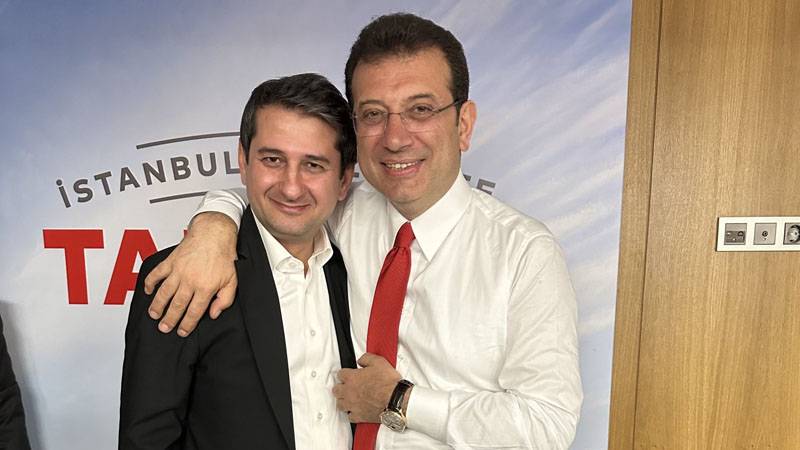
During the IBB era, image rapidly replaces political content. The narrative of “one of us”, warm images, visits to shopkeepers, round and risk-free sentences become the main language of politics. These may be auxiliary elements of politics, but when they become politics itself, they produce a serious vacuum. Because it does not manage images, solve crises or build programs.
In this period, there was no coherent political framework on topics such as economy, welfare state, public administration reform, urban poverty and class inequality. Instead, the narrative of the “reasonable figure”, the “soft style”, the “leader who can talk to everyone” was put into circulation. This narrative may be functional for a campaign, but it is inadequate for governing the country.
Politics is not the sum of personal qualities. Politics is program, principle and institutional capacity. When these are withdrawn, only a polished figure is left. The figure grows; the content shrinks. Image politics is a short-term doping for the opposition marching to power. However, this doping creates addiction. After a certain point, politics cannot produce content, so it only tries to protect the image. This opens the door to defense politics.
The practice of IBB thus becomes a clear example of how central politics erodes institutional capacity rather than a “success story”. The centralization that is tolerated in the municipality will be destructive in the party in the next phase. Because the municipality produces services; the party produces politics. Service requires speed, politics requires plurality. When this distinction is lost, party reflexes are paralyzed.
At this stage the picture is clear:
The center has grown, supervision has weakened,
The image came to the fore and the program retreated,
Technical files have been postponed,
And politics has gradually drifted to the line of defense.
In the next phase, this model will transcend municipal boundaries and move directly to the party.
DISEASE CARRIED TO THE PARTY
(Conventions - Zoom Politics - Recruitment - Kılıçdaroğlu's Liquidation - Akşener Line)
After a certain point, the center politics established in IBB transcends the municipal borders and moves directly into the party sphere. This transition is not made with a clear declaration of leadership. On the contrary, it is carried forward through vague but effective concepts such as “winnability”, “social response”, “natural center”. Thus, the center is no longer a political option to be discussed; it is presented as inevitability. Intra-party politics is no longer between ideas and programs, but between degrees of closeness to the center.
At this stage, congresses play a decisive role. The congresses are marketed to the public with the discourse of “change”. However, what happens inside is not a political confrontation; it is a controlled transfer of power. The reasons for the electoral defeat are not discussed in front of the organization. There is no programmatic accounting. “Where did we go wrong?” is not asked. Instead, closed agreements, list engineering and alignment mechanisms are activated. The congress does not draw a direction; it distributes positions. This is not a renewal, but a dysfunctionalization of the party.
The distinctive feature of the congresses is the staff preferences. Names coming from the organization, ideological continuity and party labor are systematically withdrawn. They are replaced by largely recruited, technocratic cadres who have no political background limited to the CHP and who are selected on the basis of technocratic or personal loyalty. Parliamentary lists, the Party Assembly and the MYK are designed with this approach. The criterion is not political experience; it is unquestioning loyalty to the center. Intraparty recruitment is the insurance of center politics. When cadres are formed not on merit but on loyalty, obedience is produced, not politics.
One of the most striking elements of this process is the Zoom meetings, which effectively bypass party organs. These meetings are not a simple coordination convenience; they are a means of delegitimizing politics. Who will be purged, who will be protected and who will remain silent is determined on these closed screens. When politics is conducted not in the congress halls but in closed meetings, the organization is disabled. When the organization is out of the picture, only a center that demands loyalty remains.
This closed-circuit politics always produces the same results: it is unaccountable, unaccountable, unaccountable and antagonizes opposition. Zoom politics is the digital form of center politics. It does not need a physical space, because politics has already ceased to be public. Intra-party democracy may not be legally suspended, but it is rendered de facto inoperative.
Against this backdrop Kemal Kilicdaroglu’s liquidation takes place. This is not just a change of leader. It is the liquidation of the CHP's tradition of accountability after defeat. There is no open discussion, no appearing before the organization, no collective sharing of responsibility. The defeat is written on a single name. However, a significant part of the moves that weakened the nomination process, eroded legitimacy and cracked the alliance from within are the product of this central politics.
Every purge without confrontation leaves a crack in the party memory that is difficult to repair. There is no guarantee that what is done to a general chairman today will not be done to another actor tomorrow. Party memory records this. And memory lives longer than the ballot box.
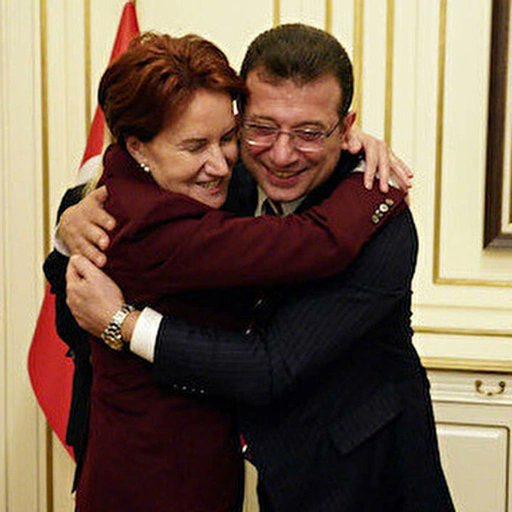
Another critical dimension of this period is the background politics extending from IBB to the presidential candidacy. Ekrem İmamoğlu prefers to conduct the candidacy debate through closed relations rather than through open and collective mechanisms within the party. At the center of these relations Meral Akşener and the contacts established with them. Contact itself is not the problem here. Contact is normal in politics. The problem is when these contacts are used to expand the scope of personal candidacy without the knowledge and approval of the party.
Instead of strengthening Kılıçdaroğlu's candidacy, this line makes it constantly controversial, fragile and open to negotiation. Instead of strengthening the joint candidate of the Table of Six, the candidacy is weakened by keeping it in circulation. The most corrosive move in politics is not the one against the opponent, but the one that erodes the legitimacy of one's own candidate. This is not political competition; it is a gross violation of collective politics.
Over time, the discourse of “winnability” ceases to be an analytical assessment; it becomes a clear tool of repression. Talking about alternatives is coded as harm. Intra-party debate is suppressed. This is not a legal but a de facto suspension. The party is silent, the center speaks. The party waits, the center imposes.
At this stage, the table is now complete:
Center established in the municipality,
fortified by congresses,
It was shut down by Zoom politics,
The cadre is insured by recruitment,
and the collective wisdom of the party has been disabled.
In the next phase, this closed and centralized structure will inevitably hit the hard ground of politics. Files, investigations and defense politics will emerge on this ground.

MARCH 19 FRACTURE
(Investigations - Politics of Defense - Rallies - Removal of Candidacy)
Once the threshold of the congresses has been crossed, there is no turning back. The party is locked around a single center; the program, the organization and the collective mind have systematically retreated. What happened after this point is not an “operation”, a “surprise” or an unexpected intervention. March 19 is the natural result of political mistakes accumulated over a long period of time.
The March 19 investigations and allegations centered on the Istanbul Metropolitan Municipality cannot be read as singular files. This date is the political impact of the closed-circuit and uncontrolled management approach that was established with silence in Beylikdüzü, grew with centralization in IBB, and was carried to the party through congresses. The question is not “what happened?”. The real question is this: Why did it happen so easily?
Because institutional filters were disabled. Decisions were made in a narrow center, control mechanisms were rendered dysfunctional, and the party and municipal apparatus was reduced to an extension of the center. In such a structure, files may be delayed, but they are inevitable. A crisis does not erupt at once; it is prepared for a long time. March 19 is the date when this accumulation became visible.
A significant number of the actors mentioned in the allegations do not come from the historical cadres of the Republican People's Party. They are names derived not from ideological continuity or organizational labor, but from managerial proximity and loyalty to the center. This picture has produced a strong political perception that the allegations are fed not by an institutional party tradition, but by personalized and closed administrative networks. In politics, perception is as decisive as the legal outcome. Rightness alone is not enough; persuasion is required.
The preferred political line at this stage is clear: defense. Instead of open reckoning, constant victimization is employed; instead of persuasion, constant mobilization is activated. Criticism is suppressed; those who ask questions are accused of “timing”, “bad intentions” or “speaking the language of power”. Thus, politics turns into a structure that defends itself against itself.
The discourse of “15 million votes” and “25 million signatures” circulated at this stage functions more as a numerical legitimacy substitute than a political claim. Numbers are substituted for the program, signatures for political direction, and vote counts for institutional capacity. However, numbers alone do not make politics. Numbers gain meaning only to the extent that they are supported by which program, which institutional mind and which understanding of governance. Here, numbers have turned into a tool not for claiming to govern the country, but for consolidating the immunity of the center. Candidacy ceases to be a political goal; it is reduced to a defense line woven with numbers. This line does not generate power, it only prolongs time. And every politics whose time is extended, at some point, faces a heavier political bill.
The party pays the heaviest price. Instead of discussing the country's economic crisis, the problem of justice, poverty and the regime, the CHP becomes a defender of the file. The party ceases to be an opposition that challenges the government; it turns into a defense apparatus that manages the crises of its own center. This is not only a political but also a moral erosion. The party is pushed into the position of carrying claims, not distributing them. The opposition on the defensive cannot set an agenda. It only responds to the agenda. And politics that responds cannot produce an alternative to power.
The rallies after March 19 are a continuation of this picture. These rallies are not a march for power. They are damage control rituals. Street politics is not used to produce programs; it is used to suppress existing debates. Files are not closed; they are tried to be covered up with noise. Noise does not produce content. Applause does not build governance.
This method may keep the base alive in the short term. But in the medium term it sterilizes politics. It creates a state of constant mobilization, constant defense. Politics does not march forward; it counts in place. Rallies are meaningful if they march towards a goal. If they cover a damage, they do not grow politics; they consume it.
At this stage, the discourse on presidential candidacy ceases to be a political goal. It becomes a de facto protection shield. As criticism is suppressed, the candidacy is defended more aggressively. As the defense hardens, the candidacy becomes more fragile. The question society is asking is clear: Is this candidacy the product of a vision to govern the country, or is it a shield to create a sense of impunity in the face of ongoing debates?
As long as this question remains unanswered, center politics collapses. Because vision feeds on reticence and the shield feeds on constant defense. At some point, the two become indistinguishable. The candidacy ceases to be subject to the party; the party is condemned to the candidacy. The program is not discussed, the organization is not discussed, the political direction is not discussed. All that is discussed is timing, image and protection.
This completes the table:
The center has become unable to manage crises;
The party is locked in a defensive reflex;
The street has ceased to be a march for power;
Candidacy has served as a shield, not a vision.
(Nomination Guardianship - Central Crisis - Blockage of the Model - Final Verdict)
This whole chronology leads to one point: A leadership has not been built here. A crisis of the center was produced. The center has grown, the party has shrunk. The story has expanded, the program has contracted. The defense has hardened, the legitimacy debate has deepened. Politics starts to run out the moment it loses the difference between winning and governing.
Therefore, the equation is now clear: he can win but he cannot govern. Winning elections is possible with a narrative. Governing a country is possible with institutions, principles and programs. A centralized, closed-circuit, uncontrolled and personalized structure, which has produced problems even in the municipality, turns into a disaster on a state scale. It is assumed that as the figure grows, the problems will shrink. But the opposite happens. As the figure grows, the party shrinks, institutions weaken and balance mechanisms collapse.
At this stage, candidacy ceases to be a political goal; it becomes the center's locking point. The candidacy is not subordinated to the party; the party is subordinated to the candidacy. The party is condemned to candidacy with the rhetoric that “without candidacy the party will suffer”. However, the political reality is the opposite: If the party becomes incapable of carrying the candidacy, it cannot govern even if it wins the nomination. Because governing is not based on personal defense reflexes, but on institutional wisdom.
This deadlock sucks all the energy out of politics. There is no talk of program, no talk of organization, no talk of economy. All that is discussed is image, timing and protection. Instead of discussing the future of a country, the party is run like a machine to secure the political future of one person. This is a waste of energy. The organization is reduced to cheering. Cadres are measured by loyalty, not merit. Criticism is suppressed, alternatives are labeled. Internal party democracy is de facto suspended.
At this stage politics breaks away from the program and becomes fan behavior. There is applause; there is no accounting. There is defense; there is no accountability. Crises are not solved; they are carried. Questions are not closed; they are postponed. Every postponed accounting comes back as a heavier bill. Centers that do not account turn into centers that are held to account at some point.
The issue here is not Ekrem İmamoğlu's intentions. The issue is the political model built around him and gradually solidifying. This model has reduced the Republican People's Party from a subject to a carrier; it has transformed the party into a logistical device of a candidacy, away from being a country alternative. Unless this transformation is stopped, the result will not only be an electoral loss but a long-term political collapse.
CHP is not a candidate-selection machine. CHP is not a figure marketing agency. CHP is the carrier of publicism, secularism, social justice and organized politics in Turkey. Founding roots are not nostalgia. Founding roots are the principles that make politics independent of the individual. Substituting image for program, the center for organization, discipline for debate does not strengthen the party; it empties it from within.
Today's crisis is no coincidence. This crisis is the natural result of a political model that was established with silence in Beylikdüzü, accelerated with victimization in 2019, deepened with centralization in IBB and carried to the party with congresses. The model is blocked. Because central politics produces noise in the short term and burnout in the long term.
The final judgment is therefore harsh but political:
Figures can be polished; institutions cannot.
Stories can win elections; the state is not governed by stories.
The Republican People's Party is not the party of a figure, but of a country. It is not the organization of a center, but of a people. As long as this reality is shrouded in fog, neither the party can breathe nor a credible alternative to power can be established for the country. Until this fog dissipates, it is impossible to move forward with this model.
It is no longer about criticism. Warning.
And the warning is clear: It is not the person; it is the model.