



There is no need to rely on long theories to understand the Middle East. Sometimes a single development reveals the grand plan behind it.
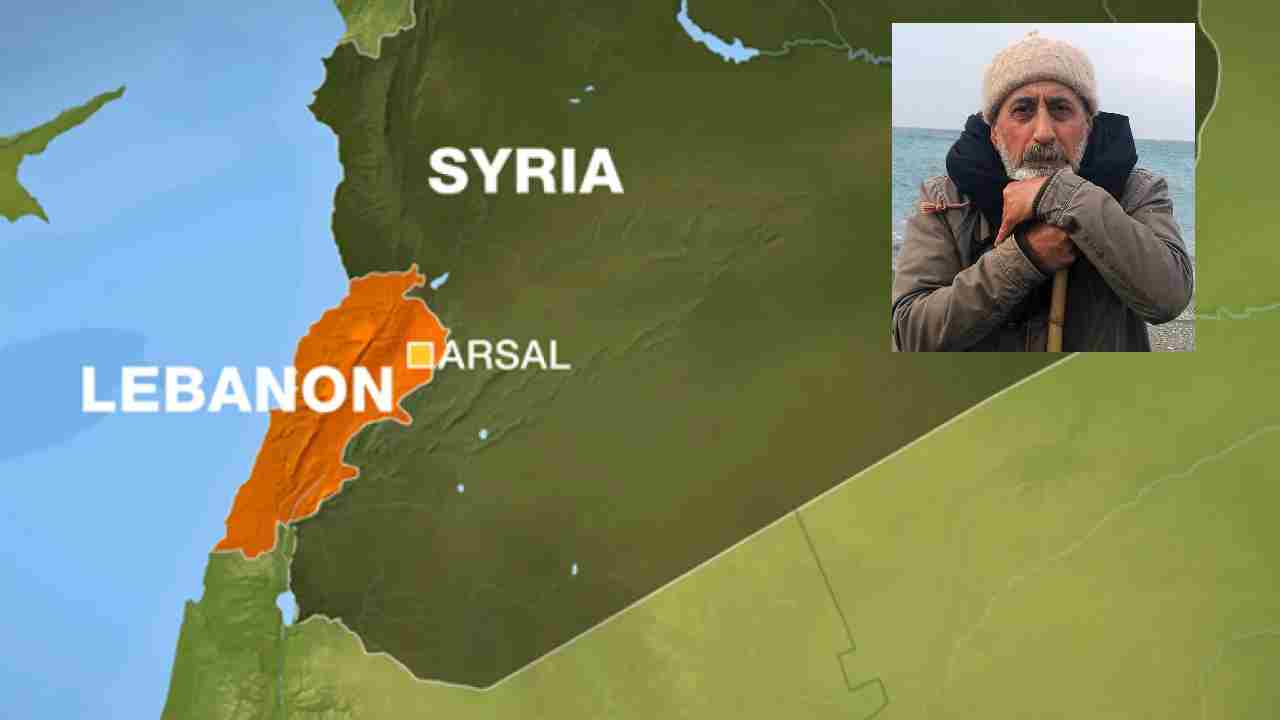
The issue being discussed today is this: The US wants to redirect Syria to Lebanon and confront Hezbollah directly on the ground. In other words, it wants to restore the balance of power in the region, but it wants to do it through the hands of others.
The Syrian side is distant from this call. Because it is not only a question of entering Lebanon. There is the Iranian deterrent. More importantly, there are fault lines that can be triggered domestically. In other words, the step to be taken has the potential to shake domestic balances more than foreign policy.
Let us pause here and look at Turkey.
Considering Turkey's influence over Syria, especially its initiative over some groups on the ground, it is not easy for Turkey to “stay on the sidelines” in this equation. On the contrary, in such a scenario, it is highly likely that Turkey will be indirectly drawn into the process.
This turns Turkey into an instrument in someone else's plan, rather than an actor in its own game.
In other words, a “trustee power” with responsibility but no direction...
At this point, MHP leader Devlet Bahçeli's statement that “Lebanon should join Syria” should be evaluated separately.
At first glance, such proposals may seem extreme or maximalist. However, in the practice of the Middle East, such rhetoric is often a translation of plans on the ground into political language. In other words, it is a sign of orientation rather than a statement of opinion.
Let me put it more clearly: The idea of Lebanon's annexation to Syria is very much in line with the scenarios of foreign intervention aimed at breaking Hezbollah's influence and redesigning the region. This shows that this exit is not independent from the regional reality.
What will happen if something happens along this line? The Lebanon-Syria-Turkey line would become a corridor of tension. Sectarian balances would be shaken sharply. New waves of migration would become inevitable. And Turkey would not be the founder of this process, but one of the countries exposed to its consequences.
The US objective is clear: To realign the stones in the region in order to guarantee its own strategic interests.
But the weakness of the plan is also evident: Syria's hesitation, the Iranian factor and internal social balances show that this process will not go as smoothly as expected.
Turkey's indirect inclusion in this picture is not only a regional move; it also constitutes the most fragile link in the chain of risks. Every step taken in the Middle East is not limited to the border lines; it also has a domino effect on the domestic arena. When the internal balances of Syria or Lebanon are shaken, Turkey's internal security and economic balances are directly affected.
The most tangible reflection of this situation could be a new wave of migration. Civilians fleeing the edge of war could suddenly flood Turkey's border gates, triggering new crises in infrastructure, health and housing. Migration pressure not only increases social costs, but also political tensions.
On the other hand, if regional actors such as Iran show resistance and do not back down on the ground, Turkey would have to reconsider its security and defense strategies. Defense expenditures would increase, new armament needs would arise, which would mean the diversion of economic resources from other areas. Not only militarily, but also diplomatically and economically, Turkey may have to pay a higher price.
In conclusion, being an indirect actor in the complex equation in the Middle East means a much deeper and more costly responsibility than meets the eye. Those who made the plan can easily back off, but the effects within Turkey's borders will continue to be felt for a long time.
In short, in this geography, the cost of being involved in someone else's plan is always heavier than the planners.