



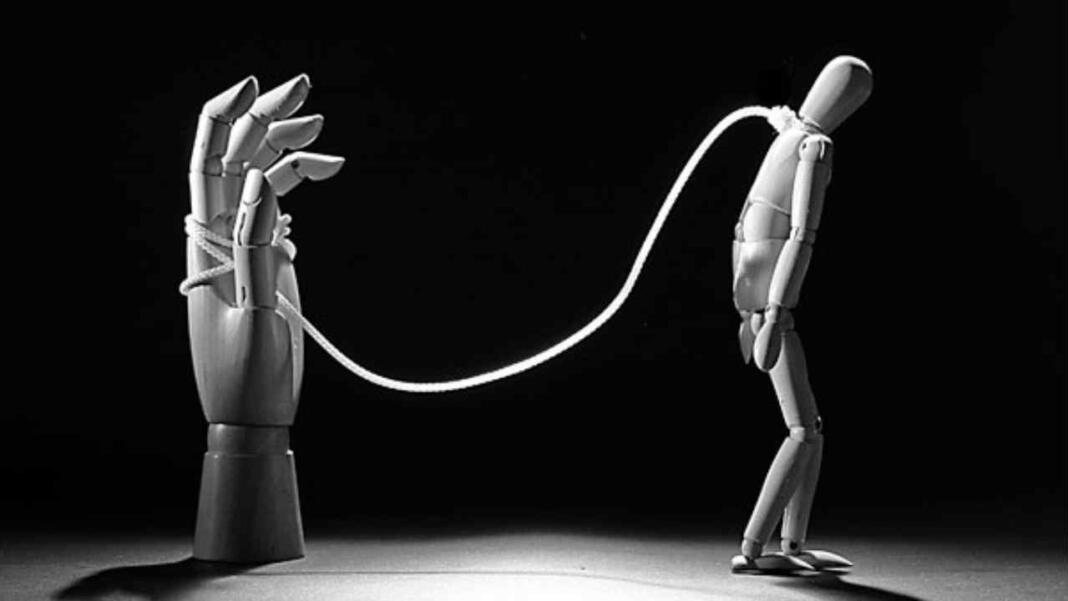
Culture is both the carrier and the constitutive element of human historical existence. Language, art, sports, forms of belief and gender roles bear the material and immaterial traces of human communities' relationship with nature, with each other and with themselves. However, in the modern era, culture has been detached from this constitutive characteristic and transformed into a managed, planned and directed sphere. This transformation is not only an aesthetic or symbolic rupture, but also a political, epistemological and ontological problem.
Today, it is inevitable to ask the following question: Is culture still society's way of expressing itself, or is society being reconstructed through culture?
Modern forms of power have gone beyond the classical apparatuses of repression and coercion and have discovered culture as a fundamental site of domination. This is why fields with a high capacity for universal language-making, such as art, cinema and sports, acquire a special significance. These fields are no longer merely aesthetic or bodily activities; they are strategic channels through which emotions, desires and identities are managed.
Cinema defines normality with its storytelling power; art decides which sensibility is “progressive” and which is “regressive”; sports reproduces the ideology of competition, discipline and success through bodies. Thus, culture ceases to be a field that produces meaning; it turns into a system that encodes and distributes meaning.
At this point, a philosophical break occurs: Man thinks he is experiencing culture, when in fact he is being experienced by culture.
The issue of gender is one of the most sensitive and deepest areas of cultural imperialism. The body is the ground that modern power has the most direct contact with. Gender has been turned into a cultural, political and economic discourse rather than a biological reality. Although at first glance this is presented as a liberating discourse, a closer look reveals new norms, new oppressions and new exclusions.
The fundamental contradiction here is this: Do gender politics, which are presented with the discourse of freedom, really liberate the individual, or do they imprison him/her in another normative framework?
The modern system often establishes gender freedom through the alienation of the individual from his/her own body. The body is no longer a lived reality; it becomes a project that must be constantly redefined, transformed and exhibited. This makes freedom an external performance rather than an internal truth.
As Foucault points out, power is no longer “prohibiting” but “producing”. It produces identities, desires and even forms of opposition. The discourse on gender freedom is not outside this mechanism of production. Freedom is acceptable to the extent that it is defined by the system, and invisible or marginalized to the extent that it goes beyond this definition.
Nation-states and the global capitalist structure treat culture not as a natural habitat but as a raw material that can be processed. Art is determined by funds, sports by sponsors, cinema by box office and algorithms. Thus, culture is shaped not by its own internal logic, but by the logic of the market and ideology.
In this process, the natural cultural reflexes of society are eroded. The local becomes obscured in the name of the universal, the original becomes standardized for the sake of being “accessible”. Instead of producing its own values, society is reduced to a mass consuming the packages offered to it.
Here cultural imperialism has a much deeper impact than military or economic occupation. Because it invades minds and bodies. People begin to mistake desires that do not belong to them as their own.
In this context, freedom becomes one of the most used but least questioned concepts of modern society. While the proliferation of options is presented as freedom, it is overlooked who determines these options and in what interests.
True freedom is not only being able to choose, but also to question the conditions of choice.
Cultural imperialism detaches people from their own world of meaning and makes them dependent on ready-made meanings. This leads to a deep alienation at the individual and social level. Man begins to look at his own body, his own culture and his own thought from the outside.
Cultural imperialism operates not by force but by consent; not by coercion but by habit; not by prohibition but by desire. Therefore, the resistance against it must be intellectual, not superficial.
The way to re-liberate culture is to treat it not as a product to be consumed, but as a space to be questioned. Only on this ground of questioning can all identity debates, including gender, carry a real potential for freedom.
Because culture is human only to the extent that it does not alienate people from themselves.
Gürsel Karaaslan