



Turkey's economic collapse, deepening poverty, poor quality education, a marketized health system and a judiciary that has eroded trust are not the product of simple administrative mistakes but of a systematic political choice. This picture is not accidental. On the contrary, it is the result of an order shaped by the conscious choices of the political power and reinforced by the passivity of the opposition.
While the government has kept the masses in debt, aid and dependency relations through policies that perpetuate economic fragility, it has weakened institutional control mechanisms and effectively eliminated accountability. The injustice and lack of transparency in the distribution of public resources is not only a problem of governance, but a means of generating political loyalty. In this system, poverty is not an outcome but a form of governance.
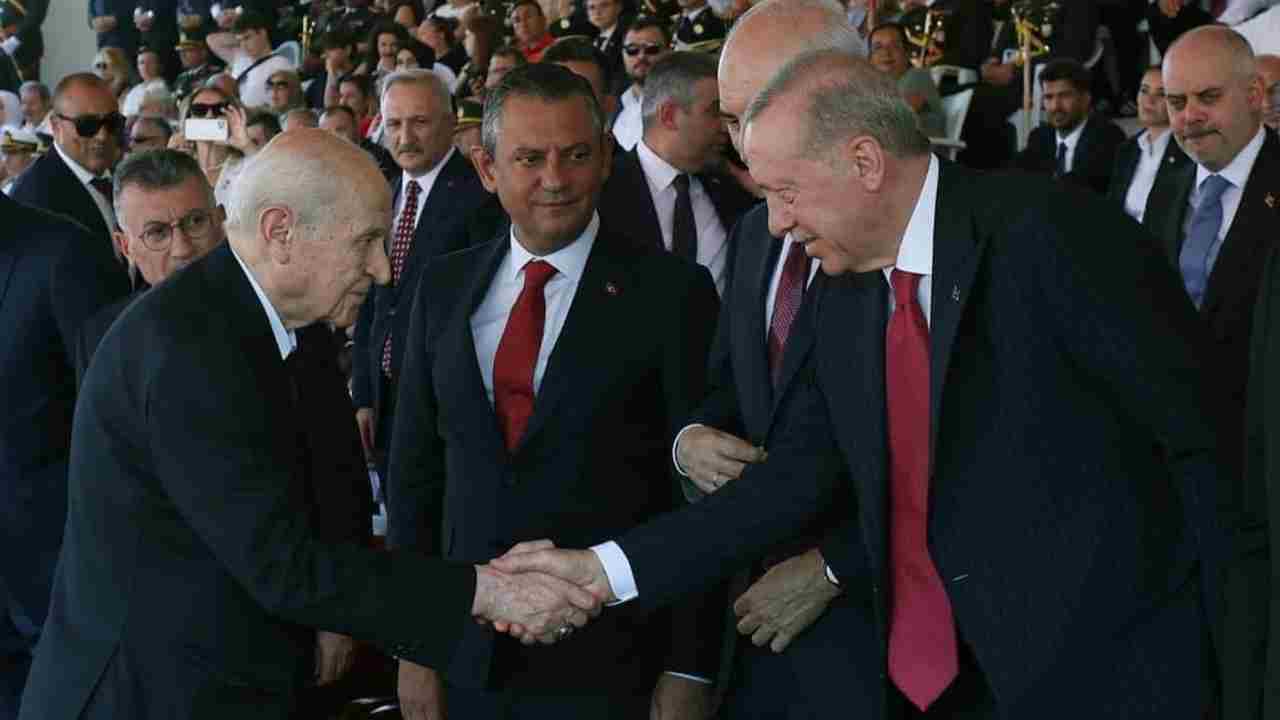
Instead of putting forward a program to radically transform this structure, the opposition prefers to exist in a controlled field of opposition. An opposition practice that is limited to harsh rhetoric but does not touch the economic and geopolitical orientations of the system prevents the order from facing a real alternative. Thus, politics ceases to be a ground for producing solutions; it is reduced to a means of consolidating voters through mutual polarization.
This order cannot be explained solely by domestic dynamics. Turkey's regional positioning, security-oriented policies and asymmetrical relations with global power centers allow the current structure to function in a framework compatible with the imperial system. Economic dependency, a fragile growth model based on foreign financing and geopolitical negotiations produce a two-way mechanism that deepens authoritarianism at home and dependency abroad. In this sense, the emerging picture is not only a crisis on a national scale, but also a political economic order articulated with global power balances.
The government gains power from this structure, while the opposition does not show the will to break with it in a real way. The losers are the broad sections of the people. Minor crises and identity-based tensions render invisible the daily struggle for livelihood of millions; anger is channeled into partisanship rather than structural transformation.
Unless this wheel is broken, that is, unless both the government's practice of governance and the opposition's politics of comfortable opposition are radically questioned, social welfare and democratization are not possible.
The problem is not only the change of power; it is the holistic overcoming of this political-economic order intertwined with imperial dependency relations.
Ahmet Kilic