




 Every new border drawn for freedom in Iran produces a new barricade in Tehran.
To understand Iran, it is important not to reduce it to a foreign policy crisis. Today, Iran is being talked about in terms of its nuclear program, the regional balance of power and sanctions. But the real issue is much deeper: Iran's problem is not only external tensions, but also an internal order of life in which freedom is being limited step by step.
Iran has one of the region's strongest cultural reservoirs. The domes of Isfahan, the gardens of Shiraz, the language of ancient cities... These are not just aesthetics; they are a shared memory that reminds Iranians “who are we?”. But today this rich accumulation cannot breathe in the shrinking daily life. Culture no longer lives on the street; it is becoming something spoken but not lived.
In Iran, poetry is not literature; it is identity. And sometimes a single verse can best describe a country:
“Cho Irân nabâshad, tan-e man mabâd.” (Firdavsi)
I mean: If Iran doesn't exist, I don't exist.
This verse is a sentence of deep love for Iran, a homeland where one is not only born, but where one lives, connects and embraces with one's heart.
It would be incomplete to explain this picture only by economics or external pressure. The real break begins with the change in the state's relationship with society.
In Iran after 1979, it was not only the government, “normal life” was also redefined. The state established a control order that drew the boundaries of life. Women's visibility, clothing, public behavior, the language of the youth... Over time, many elements of daily life ceased to be a social issue and turned into a security issue.
The most obvious impact of this approach was seen in art and culture. Because the human mind and spirit create when they are free. As the space narrowed, the question for the artist changed: “What should I tell you?” This discouraged not only criticism but also the courage to tell about ordinary life. Culture did not disappear, but it took two different paths: On the one hand, the authorized official language, and on the other, an indirect and symbolic language of expression that conveys the real feelings of the people.
The most powerful part of oppression is often the invisible; the barricade is built not on the street, but in people's minds. As the fear of being labeled grows, people become more afraid of consequences than punishment, public space shrinks, and culture tries to protect itself with phrases that will not cause trouble, that will not target anyone, instead of speaking openly.
Here “culture” I don't mean concerts or exhibitions; I mean people being able to talk, dress, laugh and come together freely on the street.
The economic squeeze aggravates the picture. Sanctions are effective, but so are unpredictability, institutional gridlock and lack of transparency. The economy is not just about prices; it is about “tomorrow” is a feeling. As confidence in tomorrow decreases, fragility increases. As the society is forced, the government “threat and control” language. As this language increases, normal life is restricted. People start to live more careful about what they say, what they share, where they are.
At the center of this pressure is Iran's youth. They are an educated, urban, world-observant generation. Their demands are not primarily political, but humanitarian: a more normal life, less fear, more space. But when even “normal” is considered a risk, tension becomes inevitable. Because society, whose living space is being narrowed a little more every day, eventually speaks not by keeping silent but by reacting.
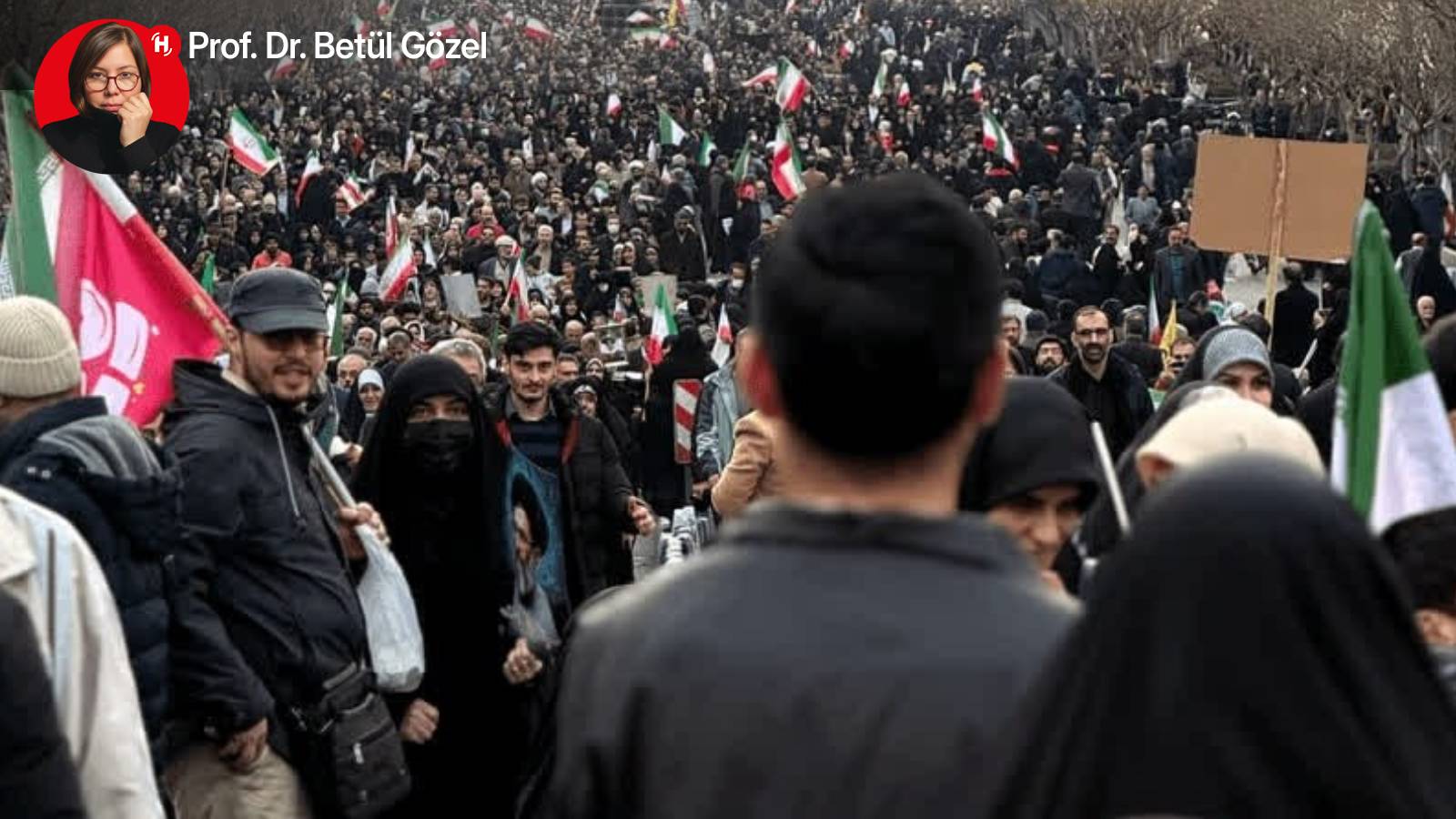
In recent weeks, the street in Iran has become active again. Demonstrations are now “single event” but into a continuous line of social tension that has spread across the country. With the harsh intervention of the security forces, the balance sheet is getting heavier: according to data compiled by human rights networks, 2,571 deaths have been confirmed, 779 more deaths are under investigation, and the number of detentions and arrests has exceeded 18,000. This picture shows not only a wave of protests, but also that the accumulated pressure inside the country is now visible on the streets.
External tension adds a new layer to this internal pressure. The risk grows when the military option is discussed more loudly on the US-Iran line. This tension is exacerbated by the Israel-Iran line, because every mutual move in the region affects not only the two countries, but all the balances in the region. In such tensions, the risk grows step by step with the mutual moves of the parties. Each new move increases the tension and aggravates the internal pressure.
The possibilities for Iran are many. But the most corrosive possibility is the quiet one: a further contraction of freedom at home while external pressure continues. It may not make headlines, but the country will be squeezed and tired from the inside and reach the point of explosion.
Iran's story is a lesson from the past to the future:
The longer freedom is postponed, the higher the price.