




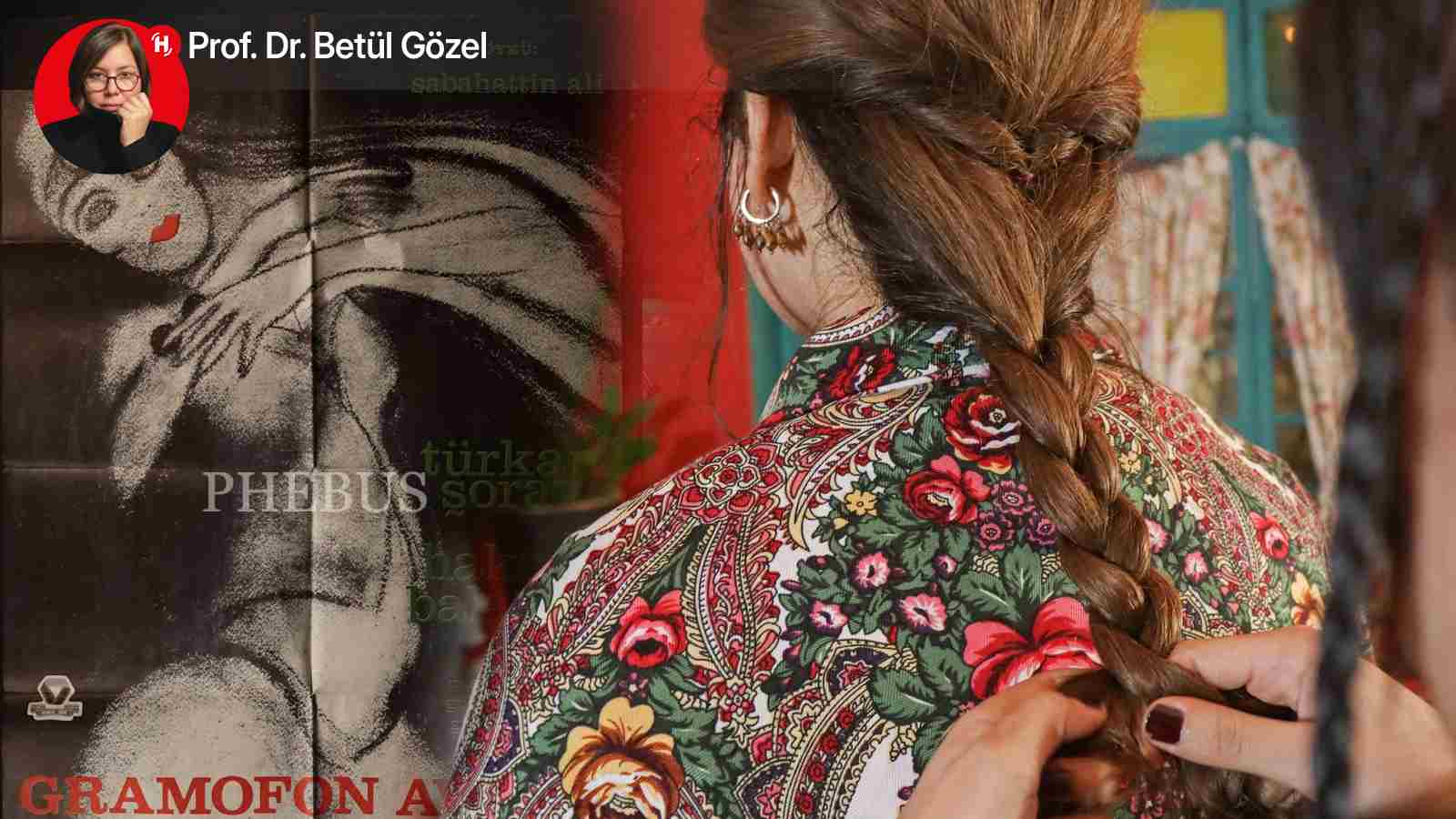
 Sabahattin Ali's “Gramophone Lady” there's a woman in the story. We don't know her name. She lives with a nickname given to her by men. She has a beautiful voice, but she becomes someone else's entertainment. She is seen as an object, not as a human being; she is on the stage, but she does not own the story. Gramophone Avrat sings, but she does not have her own feelings and thoughts in that discourse; she is not herself in her voice.
Sabahattin Ali describes poverty. He shows helplessness. He puts male domination in front of our eyes. He conveys in simple language how the female body is turned into a means of livelihood.
Almost a hundred years have passed.
Today in Rojava, women are braiding their hair against the insult against a woman fighter's braided hair. No banners, no slogans. It's a silent reaction. There is only “I'm here” to say.
The aftermath is familiar.
Women who braid hair are abused. They are humiliated. “PKK” It's called.
As soon as you show solidarity, the tag comes. The discussion ends before it starts.
But we need to stop here and make a distinction.
The de facto structure in Rojava is in an effort to establish a de facto state-like order that challenges the unitary integrity of Syria and extends to areas where the Arab population lives. If this becomes permanent, it would pose a security risk for Turkey. It is not realistic to ignore this concern.
States are not interested in symbols, but in structures on the ground. The establishment of a structure with ties to the PKK across the border, which has established its own administration, is worrisome not only for Ankara but also for everyone who cares about the integrity of this country and the will to live together. Because such a formation right on our border would make the already fragile social balances inside even more sensitive, feed identity tensions and weaken the idea of a common future. This is not only a security risk, but also a risk of social disintegration.
But that is not what we are talking about today.
What we are talking about today is a silent reaction to the humiliation of a woman's hair.
When you put these two in the same file, you neither strengthen security nor calm society. You will only exacerbate the issue.
Women in Rojava are not symbols. She is in the field. Political. Organized.
Perhaps this is where the real discomfort begins.
Today, not only women who braid hair, but every woman who speaks out, builds solidarity, and protects her body faces similar oppression. They are labeled, targeted and silenced.
This is not a new situation.
The Gramophone Woman was the story of the commodification and neglect of women in the past.
The braid is a simple expression of defending women's existence, dignity and right to stand together.
One tells of a life singing songs chosen by someone else.
The other is women in search of their own voice.
And that's exactly why it bothers me.
Because it is not the organization that is feared here.
The fear is that women will start talking together.
The Gramophone Lady has gone silent.
Today's women do not shut up.
And this change is not going to be easily reversed.