




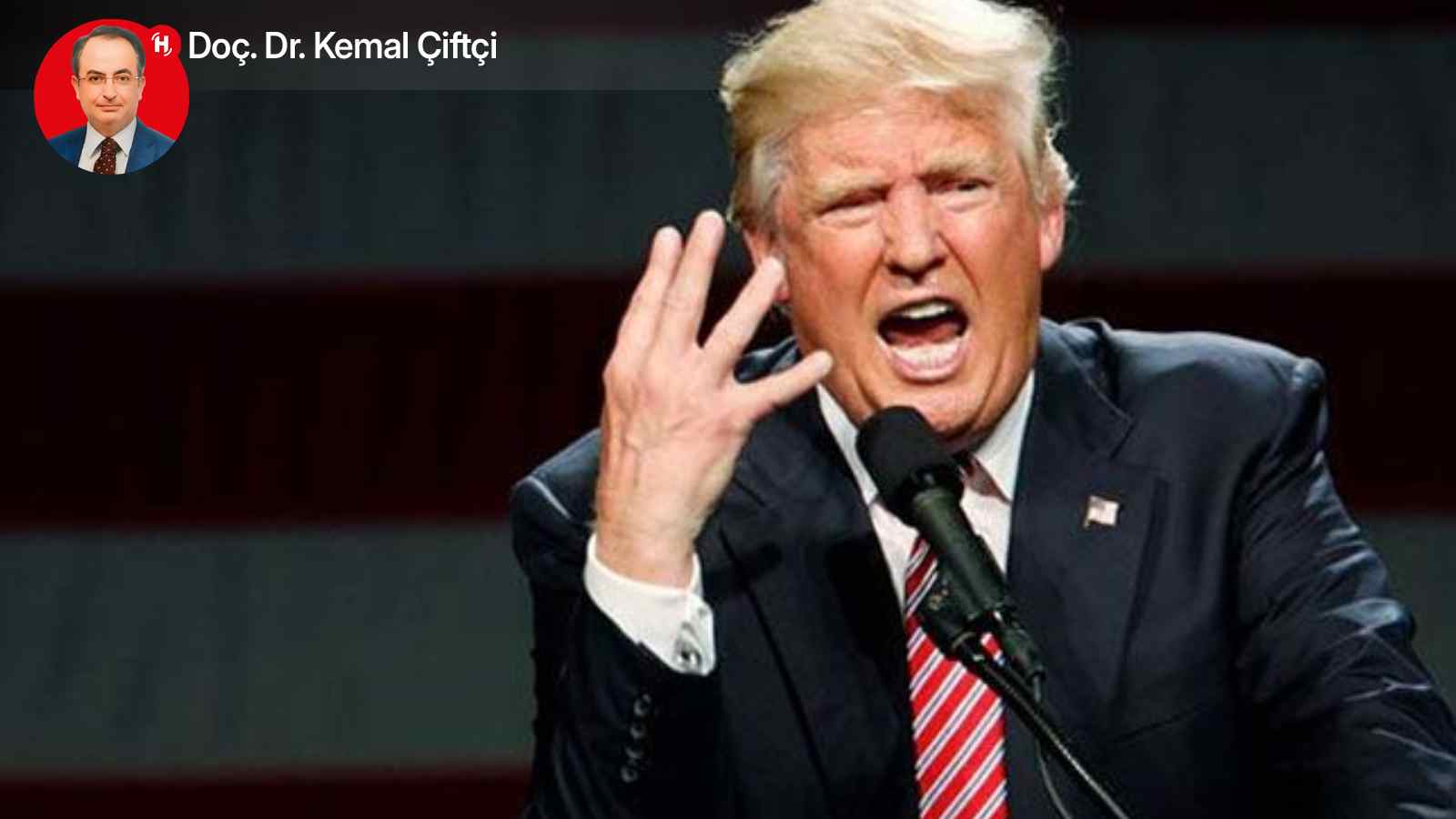
 The modern system of states aims to produce security by limiting power. US President Donald Trump’s foreign policy reverses the founding wisdom of this system.
Since the Treaties of Westphalia in 1648, international politics has been built on a certain rationality. At the center of this rationality are sovereignty, mutual recognition, diplomacy and the balance of power. The aim is not to absolutize peace, but to make conflict manageable, predictable and limited. The modern system of states is based on the assumption that security can be achieved not by multiplying threats but by balancing them.
For this reason, most theories of international relations - realism in particular - explain alliances in terms of the perception of a common threat rather than ideological affinity. Power is not an unlimited tool here, but a cost that must be carefully calculated. Excessive use of force activates balancing reflexes instead of producing security.
Today we are witnessing a period in which this founding rationale is being systematically eroded. Entering his second presidential term Trump, Trump is moving US foreign policy away from the logic of balance of power and alliance and towards an unregulated and reactive line. Trump's main problem is not toughness; it is that he envisions a foreign policy that threatens multiple actors at the same time.
The Trump administration has simultaneously identified Russia and China as existential threats to the United States, while simultaneously threatening NATO allies. “load” Canada as a province of the United States, demand Greenland from Denmark, and openly target countries like Cuba and Venezuela. In this approach, international law and organizations have ceased to be sources of legitimacy and have become secondary elements that can be ignored when necessary.
At this point, it is important to remember the fundamental caveat of realism theory: Power politics is not the art of generating unlimited threats. Rather, it is the ability to selectively and prioritize threats. History clearly shows how the system reacts when this skill is lost.
The European equilibrium of the 19th century is a classic example of this. Germany, Otto von Bismarck period, it has pursued a foreign policy that knows how to limit its power, carefully manages threat perceptions and takes care not to confront great powers at the same time. However, Germany, Britain, France and Russia after Bismarck’s simultaneous threat to the United States of America. The consequence of this is that these three powers have suspended their Germany and plunged the country into strategic isolation.
Trump's United States is on a similar path today. Being strong is not about challenging everyone. In the modern system, power is not only the capacity to generate threats but also the wisdom to manage them. When this wisdom is lost, balancing mechanisms come into play. The rapprochement between Russia and China “strategic autonomy” The strengthening of the debate and the increase in non-US regional cooperation are concrete indicators of this balancing reflex.
Trump's policies cannot be explained in a realist framework alone. As constructivist theories point out, state behavior is shaped not only by material power but also by identities, discourses and norms. Trump's rhetoric is a way of characterizing the United States in terms of its long-standing “consent-generating”, “order-building and order-protecting” It distances him from his identity; it transforms him into an actor who does not follow the rules but expects everyone else to do so. This transformation of identity, accelerates normative disintegration in the international system.
As critical international relations theory emphasizes, the vacuum that emerges when law and institutions are weakened is not equality; produces domination. The more international law is reduced to the arbitrary use of the powerful, the more uncertainty, the risk of more armaments and more crises.
Trumpism often Fascism Although the main problem here is not a one-to-one correspondence with historical fascism. The problem is the hostility to institutions, the instrumentalization of law, the leader-centered understanding of legitimacy and with the constant production of external enemies is the establishment of an authoritarian-populist foreign policy practice. This line is not about conservatism; can be explained by an anti-systemic understanding of power.
History has repeatedly shown that those who threaten everyone at the same time are eventually balanced by everyone else. Power produces security when it is measured, prioritized and used wisely, not by shouting.
In conclusion, Trump's authoritarian-populist foreign policy will not make the US safer, stronger or more influential. On the contrary, it erodes the distinction between hegemony and naked power, eroding the US's long-standing capacity to generate consent in the international system.
In Gramscian terms, hegemony is sustained not only by military and economic superiority, but also by consent produced through norms, institutions and legitimacy. At the point where consent is replaced by force or domination, the hegemonic order begins to unravel and is replaced by balancing reflexes. Trump's foreign policy accelerates precisely this process, transforming the US into an actor that is balanced by more and more opposing alliances, risking its existing material power superiority as it loses legitimacy.