



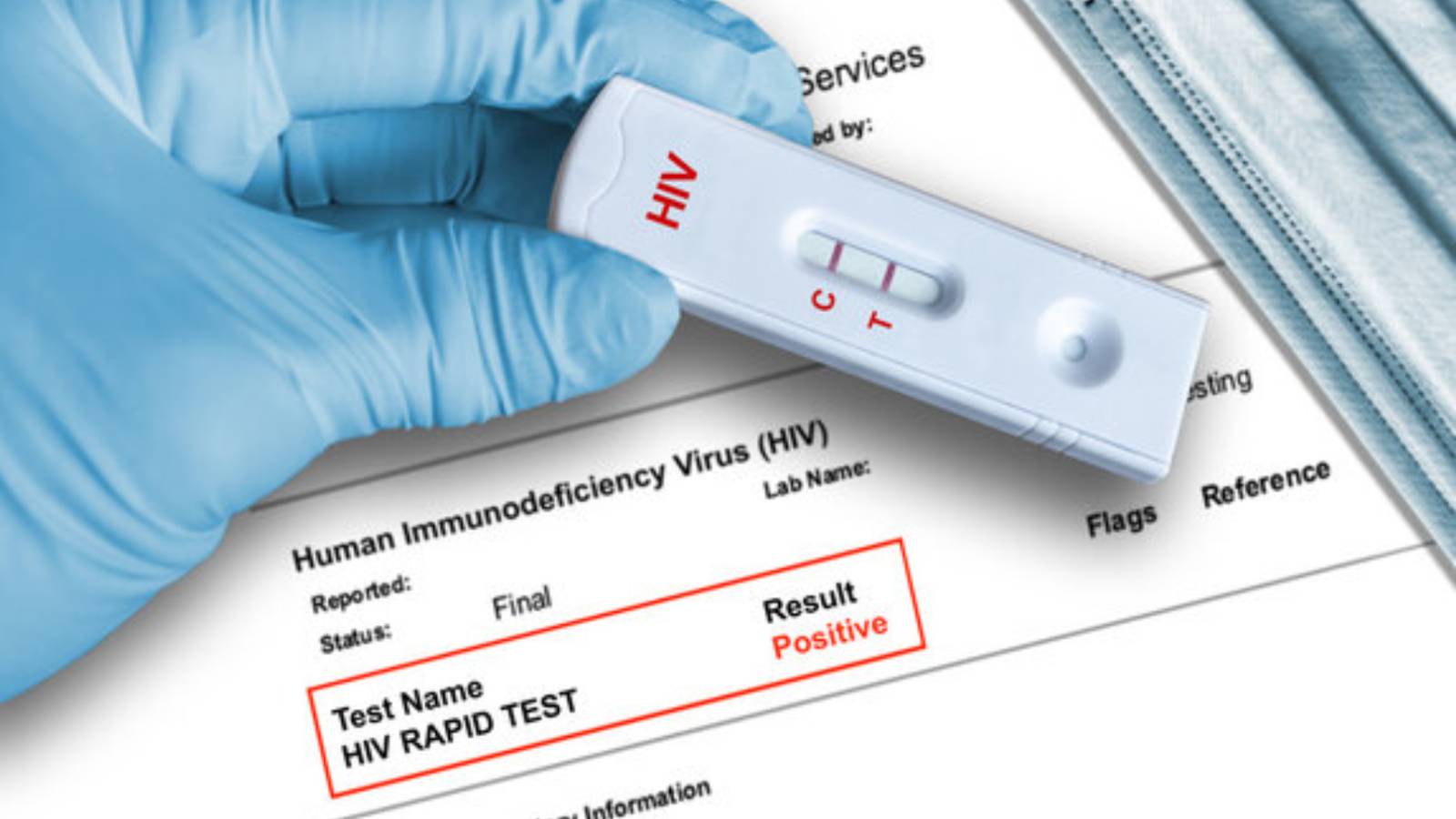
 HIV diagnoses are increasing in Turkey. Prof. Dr. Betül Gözel says, “I don't see this as just a graphical rise, because HIV is a social indicator as well as a medical one: it shows our prevention culture, our habit of getting tested, our health literacy and most importantly... what we cannot talk about.”.
How is HIV most commonly transmitted?
Prof. Gözel answers the most frequently asked question ‘how it is transmitted’ as follows:
“The medical answer is clear. The most common way of transmission is unprotected sexual contact. This fact should not be hidden. But the most critical mistake when talking about it is this: Describing HIV as an issue of “one group”, “one identity” or “one lifestyle”. This approach increases people's fear of being labeled. And this fear leads to the most dangerous outcome for HIV: people avoid getting tested. Testing is delayed. Diagnosis is delayed. And the chain of transmission lengthens.”
Prof. Dr. Betül Gözel, who categorizes the transmission routes of HIV under three main headings, points out that these are “sexual contact, mother-to-baby transmission and blood-borne transmission” and draws attention to the risks of transmission:
“When we talk about blood-borne transmission, most people only think of a shared syringe. However, the healthcare environment is also included in this topic. Realism, not panic, is needed here. Widespread transmission of HIV is not expected in a hospital setting; sterilization, disposable materials and universal precautions greatly reduce the risk. But the health system is safe in practice, not just in protocol. Sharps injuries, needle sticks, waste management negligence are serious risk areas not only for HIV but also for HBV/HCV. It is precisely in these details that trust is built.”
Pointing to the increase in social contact, forms and speed of establishing relationships in Turkey, Gözel said, “People are meeting faster, making contact faster and establishing relationships faster. Digital platforms magnify this. But there is one thing that is not increasing at the same rate: the rate of getting tested.”.
Stating that the real risk starts here, Prof. Dr. Betül Gözel said:
“If the rate of contact increases but testing does not increase at the same rate, HIV diagnosis is delayed. If the diagnosis is delayed, the chain of transmission lengthens. HIV's favorite thing is not ignorance; it is delay.”
Prof. Dr. Betül Gözel continued her warnings against the danger of HIV as follows:
“This is why “total number of cases” should not be the only criterion when comparing Turkey with the US and Europe. There is a more valuable indicator in public health: the slope of increase. In other words, the rate of increase. A rapid increase in a country with low prevalence indicates that the system's prevention and testing reflexes are weakening. To call this “disturbing data” is an understatement; it is an alarm.
According to assessments based on data from the Ministry of Health, the total number of HIV cases reported between the 1980s and November 2024 reached 45,835, while the number of AIDS cases reached 2,438. These numbers are of course important. But what is more important is this: Every delayed diagnosis is not just an individual delay; it is a prolonged chain of transmission for society.
The role of social media is critical here. On the one hand, it can raise awareness. On the other hand, it can also produce poison through misinformation, fear, insinuation and exclusionary language. Because social media amplifies reaction, not “information”. What algorithms reward is not calm, balanced and scientific content. Anger, fear, shame and panic are watched more, shared more and spread faster. This is why some of the content produced about HIV makes people uneasy instead of guiding them, and silences them instead of informing them.
Let me put it more clearly: People don't avoid HIV testing, or “giving blood”, because they are afraid. People are afraid of what they will experience after getting tested. They think they will be labeled if the result is positive. “Will they judge me?”, “Will the physician treat me badly?”, “Will my privacy be protected?”, “Will someone get this information?” concerns grow. As this anxiety grows, the test is delayed. As the test is delayed, the diagnosis is delayed. As the diagnosis is delayed, the infection spreads to a wider area.
At this point, the LGBT issue must also be addressed honestly. The perception that HIV is only associated with LGBT people is both scientifically incomplete and harmful to public health. Yes, the risk may be higher in certain communities in many countries around the world, because dynamics such as unprotected contact, multiple partners, late testing may be more intense in some groups. But this should be discussed in terms of risk behavior and access to health services, not “identity”.
Moreover, the reservations, exclusionary language and fear of discrimination experienced by LGBT people in accessing healthcare services touches the most sensitive point in HIV: delayed testing. In a country, if people cannot trust a physician because of their identity, if they do not believe that their privacy will be protected, they will avoid testing. This is not only an issue for that person; it extends the chain of transmission to society. If we are going to talk about HIV with LGBT people, we should not talk about it by creating “labels”; on the contrary, we should talk about it by reducing stigmatization, increasing access to safe and confidential testing, targeted education and inclusive healthcare. In public health, the result is clear: as exclusionary language grows, testing decreases; as testing decreases, HIV grows.
And here we need to ask a difficult but necessary question for Turkey: Is public health information and education sufficient?

Let's be clear: No, it is not enough. If it were enough, HIV would not still be a topic of hushed conversation. If it were enough, testing would not be a “concern” but a “routine”. If it were enough, prevention would not be confined to a moral debate. Public service ads, school-based education, the right content reaching young people, counseling at the family medicine level, anonymous test access... These are the basic tools of public health. In our case, these tools do not seem to be on a scale to balance the rate of increase, both in terms of continuity and coverage.
So what can be done?
First, education. Not in the language of intimidation, but in the language of real life. Without shame, without accusation, without insinuation. An education where people can ask questions, where young people feel safe.
The second is testing. The test should be accessible, but more importantly it should be safe and confidential. People should not have to worry about “will I get in trouble?” when getting tested. Because public health is based on trust.
The third is a culture of prevention. Condom use, recognizing risky contact, taking the right precaution at the right time... These are medical issues, not moral ones. Protection is not something to be ashamed of; it is a smart behavior.
Fourth is healthcare safety. Universal precautions, sharps injury management, waste system, training, supervision... These are the backbone of the healthcare system not only for HIV but for all blood-borne infections.
I would like to make the last sentence clear as a physician:
HIV is a medically manageable disease today. But as a society, we still cannot manage the “delay”. If testing does not increase while contact accelerates, diagnosis is delayed. If diagnosis is delayed, transmission increases. The way to break this chain is not to generate fear, but to generate knowledge, access and trust.
Final point: The biggest barrier to HIV is not the virus, but delayed testing for fear of being labeled.