



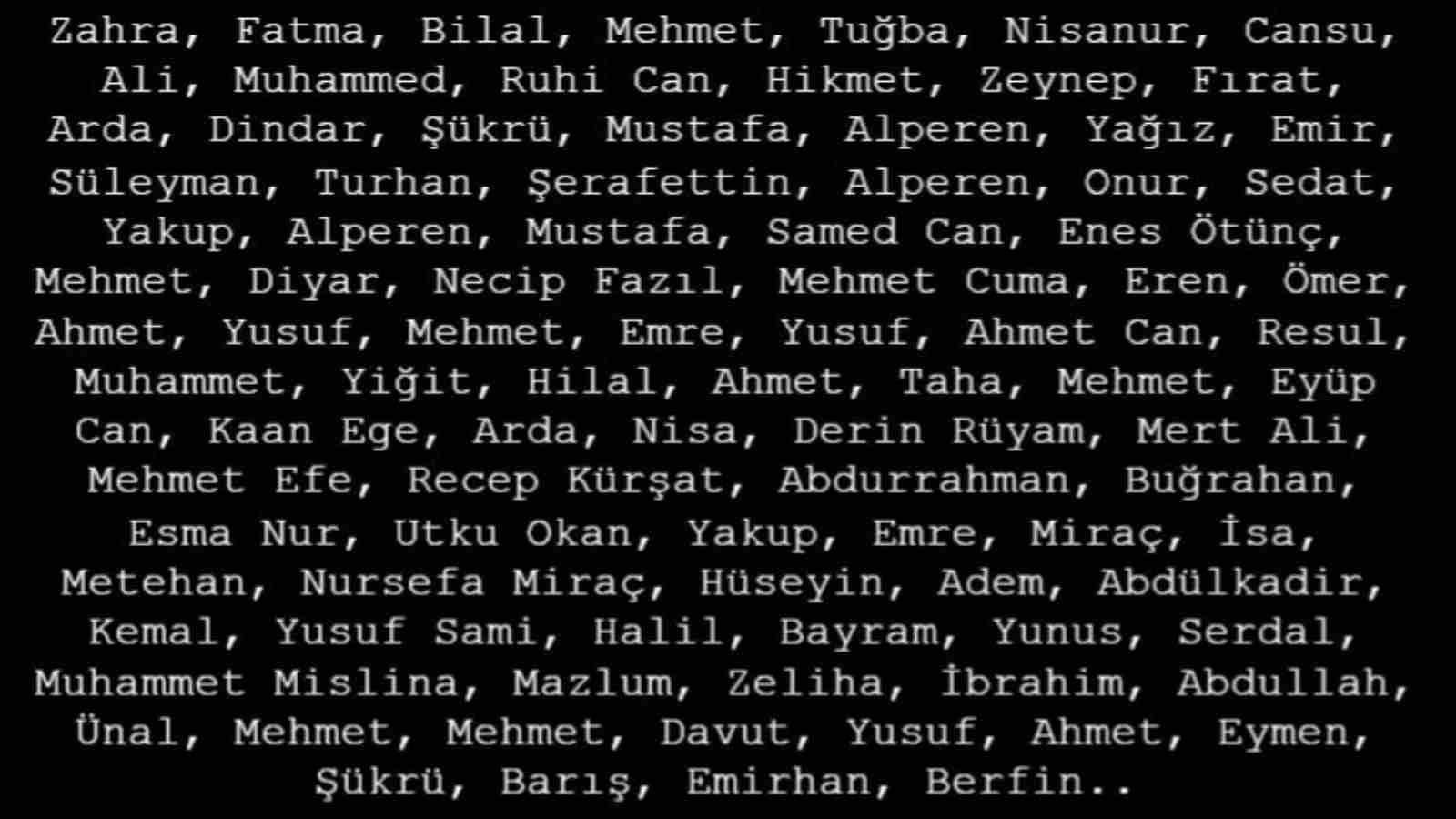
Worker Health and Worker Safety Assembly (ISIG) published the report on child labor murders in 2025. According to the report, at least 94 child workers lost their lives during the year. Of the children who died, 26 were 14 years old or younger and 68 were between the ages of 15-17. Of those who lost their lives, 13 were girls and 81 were boys. Five children were migrants.
The OHS Assembly states that 71 percent of the data was gathered from the national press, while 29 percent was gathered from children's families, coworkers and local press.
“Official figures and realities do not match”
In the report, the ISIG Assembly drew attention to the fact that child worker deaths have been rendered invisible for years. While it is reminded that the data of the Ministry of Labor and Social Security shows 13-14 child worker deaths every year, according to the 13-year records of the ISIG Assembly, an average of 63-64 children die every year while working in Turkey.
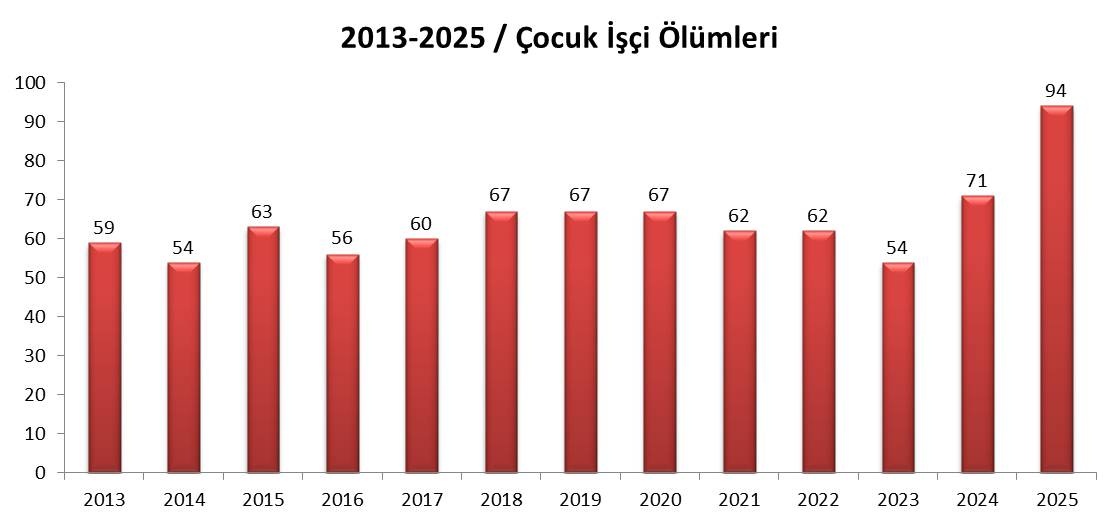
According to the ISIG Assembly, the increase in the number of child worker deaths from 71 in 2024 to 94 in 2025 reveals the point where child labor has reached.
Most deaths in agriculture, but rising rapidly in cities
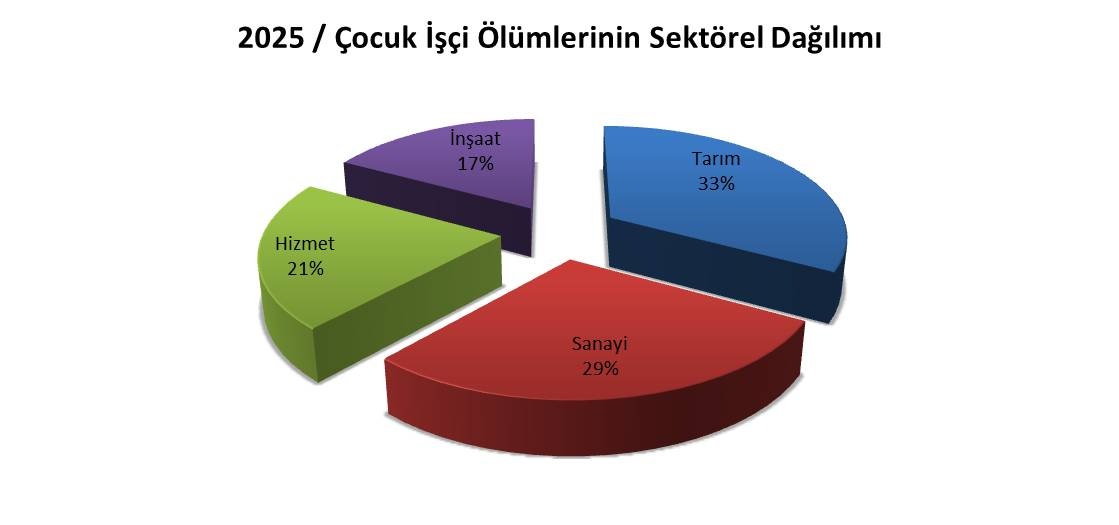
In 2025, child labor deaths were distributed by sector as follows:
Agriculture: 31 children
Industry: 27 children
Service: 20 children
Construction: 16 children
Although the agricultural sector still ranks first, the report points to a shift in the center of gravity of child labor from rural to urban areas. In 2014, 39 percent of child labor deaths occurred in urban areas, rising to 67 percent in 2025.
According to the OHS Assembly, behind this change are policies of impoverishment, the transformation of the education system, the spread of OIZs across Anatolia and the pushing of children into the workforce at an early age. The OHS Assembly made the following note in the report:
“In the first 12 years we started keeping records, we were seeing the deaths of seasonal agricultural worker children intensely in the period between May and September. From another perspective, we can say that agricultural worker children leave school in May but return to school in October after the opening of the semester.
However, a change in this picture began in 2024, and this change became even more pronounced in 2025. In the period between October and April, child labor fatalities increased significantly. The reason for this is the mass increase in the number of child workers in urban areas and, as a result, the rapid increase in child labor murders in urban areas while they continue in rural areas.’
In addition, of the 31 children who died in agriculture, 19 were workers and 12 were farmers, that is, children working unpaid with their families.
The children who died in the industrial sector were working in the food, mining, chemical, textile, wood, cement, metal, energy, transportation and general works sectors. Four children working in the trade, metal, energy and general works sectors were working with self-employed family members to learn how to work.
Causes of death Traffic accidents, crushing, falls, drowning
According to the report, the main causes of child labor deaths are as follows:
Traffic and service accidents: Especially in seasonal agricultural labor
Crushing and falling from a height: Industry and construction sectors
Drowning In water channels and streams in agricultural areas
Explosions and burns: During night work in factories
Violence: In agriculture, on the streets and in workplaces
MESEMs: “Labor under the name of education”
In the report, Vocational Education Centers (MESEM) are discussed under a special heading. In 2025, 6 children who lost their lives while working in MESEMs were identified. Since September 2023, 18 children have died while working in MESEMs.
The OHS Assembly defines MESEMs as “one of the worst forms of work for urban children”. It is emphasized that hundreds of thousands of children work in workplaces for 10-12 hours four or five days a week, and that their wages are covered by the Unemployment Insurance Fund.
According to data from the Ministry of National Education, approximately 2 million children are in the process of being made workers under the name of vocational training. The ISIG Assembly made the following comment in the report:
“The objective basis of child labor, which is concentrated in MESEMs, is the policies of impoverishment and exclusion from the education system. Hundreds of thousands of children go to school one day and work four days under the name of education. In the workplaces, work is increased to 5-6 days and 10-12 hours and ‘learning the job is realized by working as a worker’. The salaries of 7 to 12 thousand liras are paid from the Unemployment Fund. The most that comes out of the boss's pocket is the food or allowance (if he wants). In other words, MESEM is a ‘free labor source' for the bosses.
Children from families with poor financial situation go to MESEM. Thus, they will receive a high school diploma on the one hand, and on the other hand, they will work and get a diploma, journeyman's and master's certificate (having a profession and wearing a gold bracelet on their arm) and have dreams of opening a workplace. In reality, however, the future offered to these children is to become intermediate workers in OIZs, in sectors such as food, metal and chemistry, or to become service sector workers. On the other hand, they will leave their health, childhood and youth at their workplaces...”
“Vocational education age is being lowered to 10-11’
ISIG also draws attention to the fact that the regulation published on January 17, 2025 paves the way for middle school children to be directed to vocational training. Accordingly, the age of labor under the name of vocational training is reduced to 10-11 years old.
The report emphasizes that these policies are shaped in line with the needs of capitalist organizations and perpetuate child labor.
ISIG's demands
In the report, the OHS Assembly stated that the only way for Turkish industry to survive in world markets, especially in the EU market, is to export cheap labor. At this point, child labor is seen as essential for capital.
He put forward the following three main demands against child labor:
- Child labor should be banned, vocational education should be public and appropriate for child development
- Education should be free at all levels
- Children's living spaces must be free from drugs, gangs and violence
In the report, the OHS Assembly said, “Child labor can only be eliminated by the management of those who produce” and called for organization and struggle.