




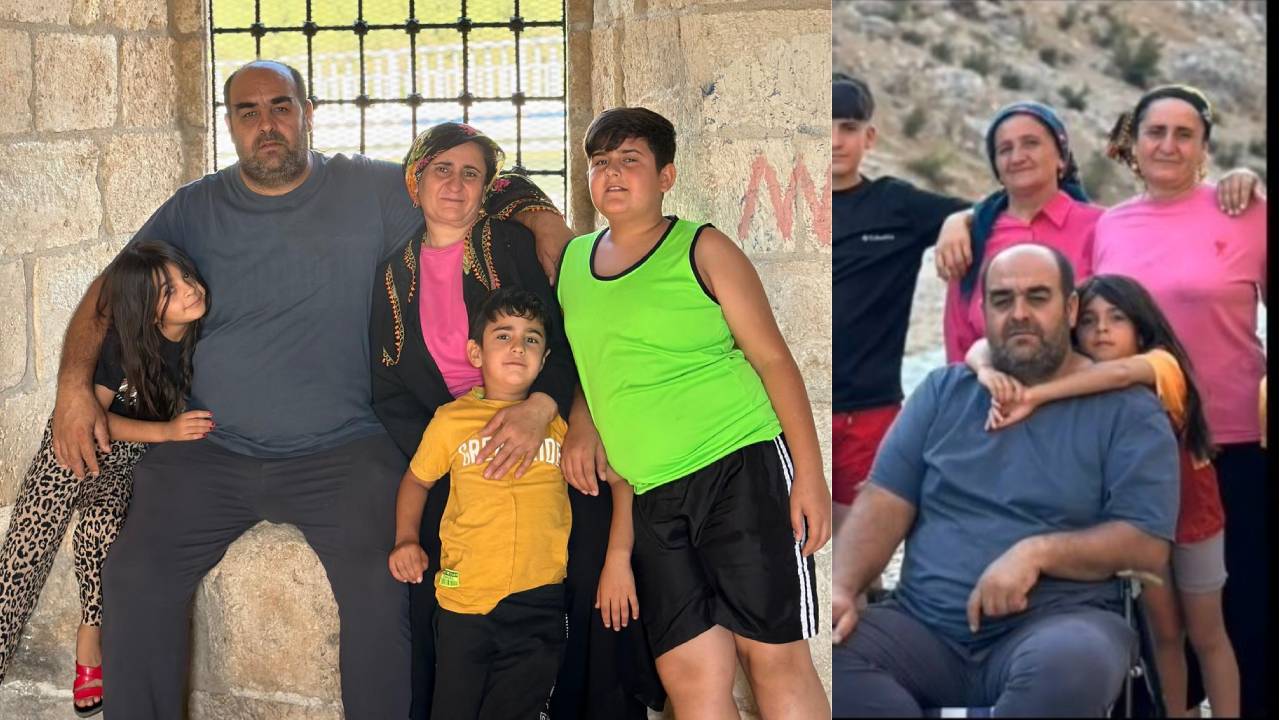
 In the first article, I said that the first mistake that shaped the investigation in the Narin Güran case was the misjudgment of the time of the incident. This mistake made that day shaped the rest of the case step by step. The erroneous answer to the question “when?” fell on the other questions as if by its own weight; it distorted the question “where?”, blurred the questions “how?” and “why?”, and imposed a rewritten scenario on the questions “who?” or “by whom?”. When we look back today, we see that this was the first link in the chain that obscured all the elements of the crime.
Critical Time Periods
Narin had asked for permission to play with her cousins after leaving the course, and it was only three to four hours later that her family realized she was missing. Taking this delay into account, four distinct time frames became critical to the investigation: the time before the incident, the time of the incident, the time until the family realized that the child was missing, and the time after the realization.
All the data available today - communication activity, message content, voice recordings, phone activity from the images, and testimonies - show that in the first three time periods, family members went about their normal lives, and from the moment the disappearance was discovered, they began to search frantically. Even Nevzat Bahtiyar's relatives witnessed this panic.
On the evening of the incident, the first official call was made by the elder brother Baran Güran at 20.43, but before that, at 20.16, the uncle Salim Güran, who was the headman, had contacted the gendarmerie commander on his personal line and asked him to send a team. Therefore, although the call was made about an hour after the disappearance was discovered, there was no delay.
However, during both the investigation and the trial, through a flawless mechanism of prejudice, even the most ordinary behaviors were presented as extraordinary, and the available data was distorted step by step. To analyze this picture in its entirety would require a book-length study in itself, and unless we are able to do so, it seems unlikely that we will be able to break the entrenched perceptions about this case. Nevertheless, it is still possible to trace the basic misconceptions that determined the course of the trial without digressing.
Before the incident, routine matters such as Yüksel Güran's washing the dirty clothes in his sister-in-law Hediye Güran's washing machine because the washing program of her own washing machine was broken, and his father's sending travel money to Enes, who did not receive his salary, were distorted and reflected in the press during the investigation process. Although the press speculated on these small details, fortunately there was not enough ground for distortion at this stage.
As I detailed in the first article, there is clear evidence against Salim Güran regarding the time of the incident that leaves no room for doubt: charging data, phone activity and pedometer records. Moreover, it has been revealed that the recordings of the aftermath of the incident, which were presented in the initial stages as “recovered WhatsApp conversations” and which were cited as the basis for some of the suspicions against Salim Güran, were nothing more than a copy of Güran's conversations on his regular line, two hours and thirty-eight minutes later. The evidence based on the video recording of an unidentified vehicle and the ’Darbaz‘ report that Güran was exploring the creek at 22.47 on the night of the incident was refuted by the audio recording of a phone call belonging to Güran; both pieces of evidence were not included in the verdict.
Salim Güran, along with many other witnesses, recounted a routine day; he sent photos of the wormy cotton to his brother after the incident, recorded the moments when he cooked with his workers in the field, and had an ordinary day with routine text messages... However, the content of a conversation with one of his workers was mistranslated several times: first, the word “undead” was included in the dialog where it never appears, then the word “fountain” was translated as ‘something that belongs to you’, creating the perception of a cryptic communication and making the two workers look like criminals. I should add that this conversation coincided with the wrong and hypothetical time of the incident.
The data on the mother Yüksel Güran and the older brother Enes Güran, who stated that they were asleep at home at the time of the incident, were also in line with the statements. The mother's phone was used to monitor the children's gaming activities and at one point was found to be connected to Enes' Wi-Fi network. In addition, Enes Güran's phone had a record of a call that woke him up. As for the mother's usual behavior after the incident, there were mostly testimonies from relatives.
A candle for Narin Guran II: One Blind Faith, One Invisible Suspect, Three Stories
Enes Güran, on the other hand, had spent time with four friends in the vicinity of the grocery store and the fountain from 16.00, encountered different people and spent time with three friends in the barn behind their house after 18.00. Although this period was after the incident, it covered the phase when the child was not yet recognized as missing. The narratives were basically consistent and in line with the ordinary course of life. His friends reported that Enes, who would later become a suspect due to some marks on his body, was as cheerful as ever that day and that they did not see any marks on his body. Enes had apparently used up his extra quota by watching a lot of videos during this period, while his biggest ’crime’ that day seemed to be shirking his duty to help his grandmother load hay.
From the moment Narin's disappearance was discovered, the mother's call records showed that she called the people she could have called. There were also audio recordings of a conversation with her daughter who informed Salim Güran, who was in the fields, that Narin was missing, and of Salim Güran reporting the disappearance to the gendarmerie. All the testimonies made it clear that from that moment on, the family began frantically searching for the child.
But let's face it, not everything was so clear at the beginning. For nineteen days Nevzat Bahtiyar was not captured and it was not clear that the time of the incident was between 15.11 and 15.41. Although Bahtiyar's capture provided a new and definitive answer to the question “when?”, Bahtiyar's fate, the assumptions created by this initial misunderstanding and his “confession”, a ”gift’ from the media, did not change the answers to the other elements of the crime.
The conditioned suspicions against the family were not compromised; Nevzat Bahtiyar did not gain the status of a serious murder suspect in this process. “How dare he” must have been thought!
The trial of Yüksel Güran, the mother, and Enes Güran, the older brother, for participating in the deliberate murder of the child was made possible by Nevzat Bahtiyar's third story and the miraculous “Darbaz” discovery with its mysterious experts.
The First Mediatic Milestone: Crime Scene and the Shaping of the Final Scenario
When we look at the history of the deeply entrenched assertive scenario of the uncle, mother and brother as joint perpetrators, we encounter a media turning point.
Five days after Narin's disappearance, the mother Yüksel Güran appeared on a daytime talk show, where a scenario that had sprouted during the investigation became public and branched out. Repeating her previous narratives, the mother said, “This is the first time I am saying this here,” and described the incident in which her son Enes spent time with his peers behind the house in the evening. This statement was perceived as if she was revealing new and critical information about the case. The words of a woman whose daughter was missing, whose family and herself were under suspicion, and who was worried in every way, in her inadequate Turkish, became a sensation, showing that even a small sentence can have repercussions.
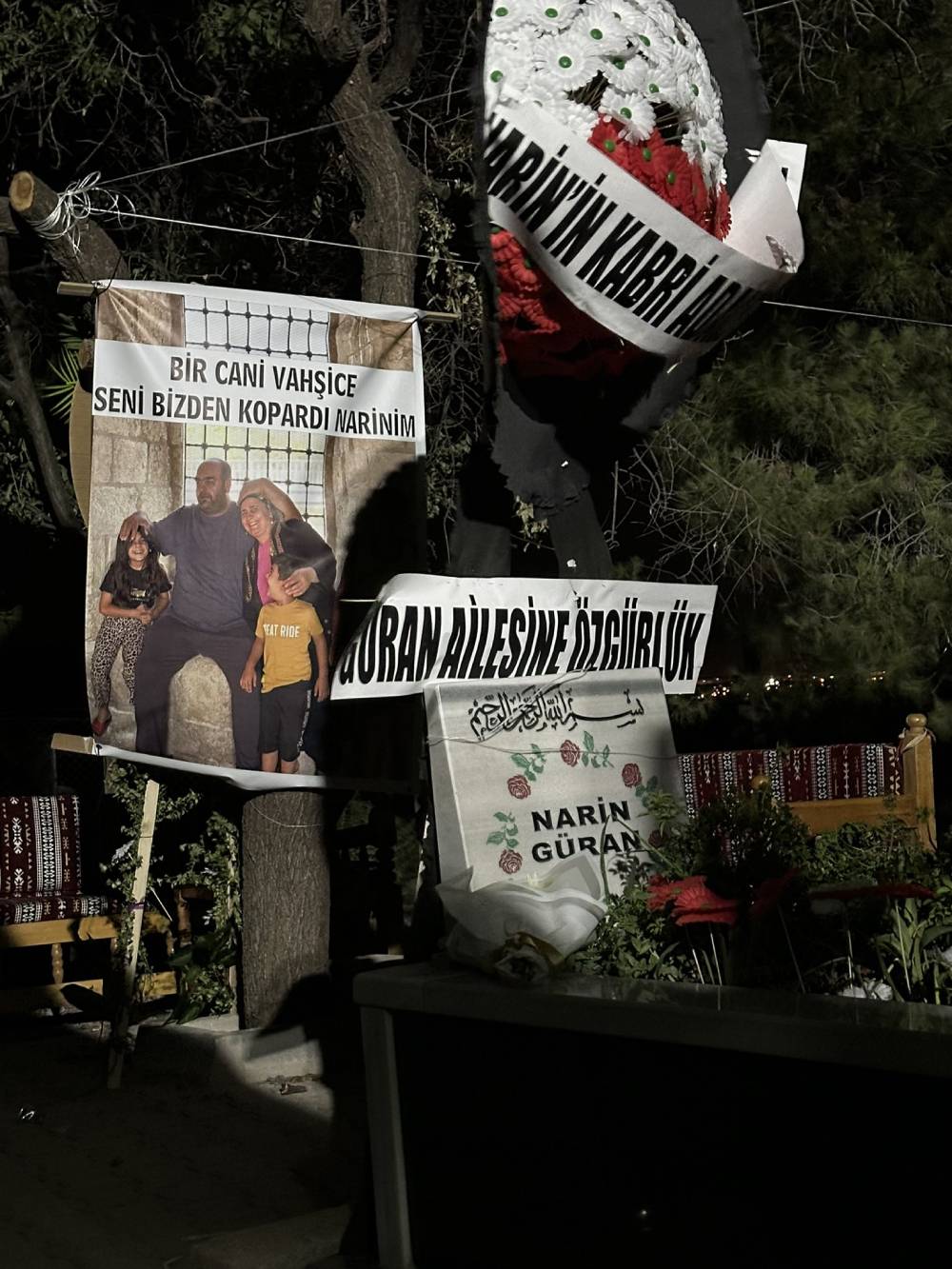
In the media and social media, the mother's words started to be deciphered like a “code”. The mother mentioned Enes; Enes was declared a possible perpetrator. The expression “barn” was shown as a possible crime scene. The word “dog” caused Enes to be associated with animal abuse. The word “tobacco” turned into allegations that he was addicted to drugs. Thus, a single live broadcast connection created a perception framework that would affect the course of the investigation with assumptions built on the words coming out of the mother's mouth.
The incident the mother was referring to was quite ordinary, contrary to the scenarios created on social media. Yüksel Güran had asked his son to help him close a window that was difficult to close because a dog had eaten one of the turkeys he was feeding in the barn. In the meantime, he had warned his son's young friends who were smoking on the hill where the barn was located. Enes' share was only the chase of a dog he was afraid of.
Two days after this broadcast, we see Yüksel Güran being questioned as a suspect for the first time. He was facing questions focused on his son Enes and himself. One of the questions was particularly striking:
“In the statement you made in the news on social media, it is seen that you mentioned an issue that you had not previously shared with the law enforcement. Are there any other issues or topics that you have not shared with law enforcement? If yes, what are they?”
However, even though Yüksel Güran said on air that he was “revealing it for the first time”, the information he conveyed was in fact already available in the minutes of his previous testimony.
The incident narrated by the mother coincided with what the police assumed to be the time of the incident. By focusing on the time between the statement of the last witness, a 16-year-old girl who said she saw Narin, “around 18.00” and the CCTV footage showing uncle Salim Güran's car leaving the village at 18.55, the scenario already emphasized by the police gained strength with the support of the media.
As the CCTV footage shows, before leaving the village at 18.55, uncle Salim Güran had spent some time in front of his other uncle's house, which Narin had visited before going to the course. I mentioned in the second article that the assumption that Narin ’saw something she shouldn't have seen‘ based on her hectic behavior on her way to the course makes this house suspicious as well. At this point, we understand that even the acceptance of the motive for the crime is again based on the wrong answer to the question ’when?“.
Today, we see that the investigation was primarily focused on members of the Güran family and their relatives. In fact, those who were included in the fictitious organization under the heading of “favoring the guilty” with forced interpretations were initially different suspects in different scenarios. In their statements to the media, some family members stated that even they were looking for a killer within themselves due to the guidance of the police. A look at the minutes of the testimonies and events such as the “women's argument” and “Çoban Ahmet's interrogation”, which were distorted by attributing different meanings to them, reveals a picture in which the situation for the family members was uncertain and everyone looked at each other with suspicion. After the broadcast in question, we notice that suspicions are ”narrowed” against the mother and the brother.
Meanwhile, a minor witness added to the plot seems to have raised suspicions with an innocent lie: A 6-year-old boy, identified on the school camera at 18:43, said he had seen Narin near the hill in front of the barn. Moreover, this little boy had other little witnesses; they had heard him calling out for Narin.
These children, who were initially accepted as witnesses against the family, would be deemed to have been dragged into the crime by “the family that even used children for organized evil” as the time of the incident became clear; even though the suspicion was completely focused on the family!
After that, until Narin was found and Nevzat Bahtiyar was captured, we started to see headlines in the media such as “Special team racing against time, chasing after 12 minutes of mystery”, “Search for Narin continues: missing 12 minutes being investigated”.
All the discussions on television revolved around the scenarios around Arif Güran's barn. A retired homicide bureau chief, based on media and social media inferences, built a story based on the mother's transmission, which had nothing to do with the time of the incident, and told it channel by channel, and still continues to tell it. The same person also claimed that Nevzat Bahtiyar would take responsibility for the murder in exchange for money. As a guarantee for his prophecy, he resorted to those “magical” expressions: “I worked in that region, I know it!”
Family members had to account for “passwords” such as “dog, tobacco” during the trial. Hoping to shed light on the incident, they had waited until the indictment was drafted to have the footage from a military base's surveillance camera clarified. In the end, they had to face raw footage that seemed inconclusive. After the first hearing, the footage was submitted to the ICC for enhancement at the request of Arif Güran and simultaneously circulated on social media.
On social media, evidence was searched for at this speculative crime scene, which will be referred to as a “house, barn or its annexes” in the reasoned verdict, through broken camera footage. A social media account, which had deduced “lairs, djinns”, “naked men”, “women in burqas” from these images, would boast of inspiring the blackout that the ICC had identified in front of the barn and identified as Narin, and of its share in Nevzat Bahtiyar's acquittal.
The institution represented by a lawyer whose interactions with the investigating prosecutors during the trial were no secret, and who even vouched for them at every opportunity, became a participant. The comment of the lawyer, whose contributions to a fair trial are difficult to fit into this article, based on the blood stain that did not belong to Narin near the barn and the ICD report, darkened the ‘how' of the incident this time, despite the clear determination of the forensic medicine report. Our scenario now included a struggle starting from the barn and continuing all the way to the house.
At the appeal stage, Tuncay Beşikçi submitted a report stating that no definitive conclusion could be reached regarding the images and that the blackout could not be Narin considering the time and location. Dirk Labudde, on the other hand, pointed to similar limitations, but this time assessed that the blackout at another point on the path could be Narin.
According to the BFI Report submitted at the Supreme Court stage, where the best improvements were made, about half a minute after Narin was seen on the school camera at 15.11, he appeared on the Daran-2 camera as a small figure on the path close to Nevzat Bahtiyar's house. In the image, there was a large shadow blocking his path on the path. The enhanced footage provided a breakdown in which the two shadows, large and small, met and moved towards Bahtiyar's barn. The report also evaluated the reports prepared by the ICU and Professor Dirk Labudde of Germany, noting that the technical analysis of the original images had revealed errors and that the reliability of these reports was weak. In the report, it was determined that there was no activity in the vicinity of Arif Güran's house and barn as stated in the UKB report.
In sum, while an undeniably clear answer to the question ‘when’ has been reached, the answers to the questions ‘by whom or whom’, ‘why’, ‘how’ and ‘where’ have been obscured under the stubborn shadow of preconceptions.
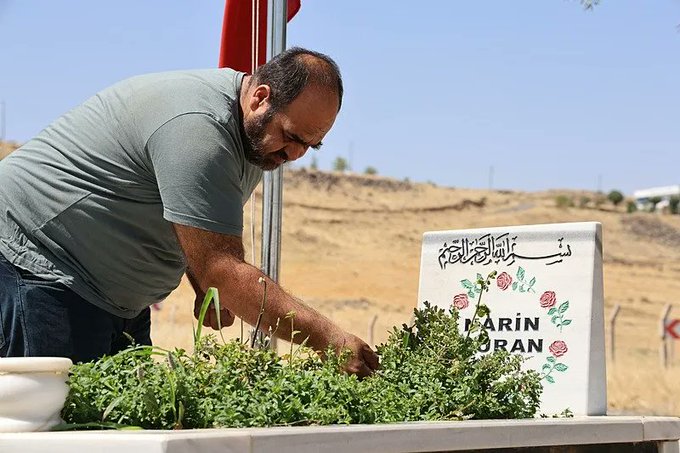
Conspiracy and Social Stigmatization
As Francis Bacon pointed out when he said: ‘Once a man believes in something, he sees everything that supports it; what opposes it he either does not notice or despises’, early convictions vaporized the truth in front of his eyes.
The Narin Güran case has almost turned into a conspiracy case due to cognitive prejudices, despite the quantifiable effort to find her and to find the perpetrator.
Despite the community's mostly sincere interest and sorrow, social identity-based prejudices turned the case into a process of social stigmatization.
Tradition, family council, omertà; ethnic-based prejudices manifested through labels such as ‘a region that does not value girls’; class-based prejudices associating villagers and lower classes with inappropriate relationships, dirty secrets and covered-up crimes; demonization and misogyny, most notably embodied by Yüksel Güran, facilitated the substitution of perceptions for facts. The traditional media, with its daytime talk shows and panel discussions, and the social media, with its hate-spreading blue-tick brokers, systematically reproduced social identity-based prejudices.
Undoubtedly, a ruling party MP, who later revealed that he knew nothing more than the investigation authorities‘ hypothetical scenario of an affair, told an opposition channel, ’He knows something but we can't say it. He is a family friend, we don't want to upset him," was another major media milestone. It triggered political prejudices and created a public pressure that affected even ministerial-level public institutions.
Ethnic hatred was masked by the illusions of the ‘power-friendly family/Hezbollah village’, class arrogance by the ‘powerful tribe’ and misogyny by the ‘woman sacrificing her daughter for her son’.
A snobbish psychopath was created from Enes Güran, whose horizons of evil are as limited as his horizons of wealth, who thinks that they are ‘lords’ and that people can harm them out of envy, even though they can only afford a civil servant's car with four family members working.
Yüksel Güran was cursed by reminding both the sanctity of motherhood and its unholiness. This woman, whose life and world was almost limited to motherhood, was declared the murderer of both her only daughter Narin, whom she had raised with care, and her disabled daughter Tülin, whom she had cared for for years and lost before Narin.
Salim Güran, the ‘mastermind’ god of the Gürans, who is accepted to have manipulated the entire village and the entire clan by fabricating plots that the best screenwriters could not have constructed, and to have made everyone memorize his statements, did not even remember many of the facts that were in his favor and that have now come to light with evidence.
Today, instead of talking about a secretive, professional and cold-blooded organized evil, it is more possible to accept the existence of a reckless, amateur and hysterical collective evil. Similarly, instead of talking about the ignorant, feudal and patriarchal peasants of a village in medieval darkness, it is more possible to see the educated illiteracy, urban feudalism and modern patriarchy in a country that has turned into a gigantic small place; and the medieval notion of law of classes that are thought to have a high reflex against injustice because of their performance of belonging in political trials...
As Sevilay Çelenk said, Narin may not have shown us a way out, but the process that began with her murder, which should never have been her fate and which shook us all deeply, illuminated a small community of people of all identities and worldviews who gave the possibility of Narin's family's innocence a chance, in a way that no other event could illuminate. This unprecedented injustice turned into a year-long vigil for justice for a handful of people.
‘As one of the community that has had its share of being labeled as ’paid trolls of the Gurans', I can now say this: It was not our naivety; it was the malevolence of the majority.