



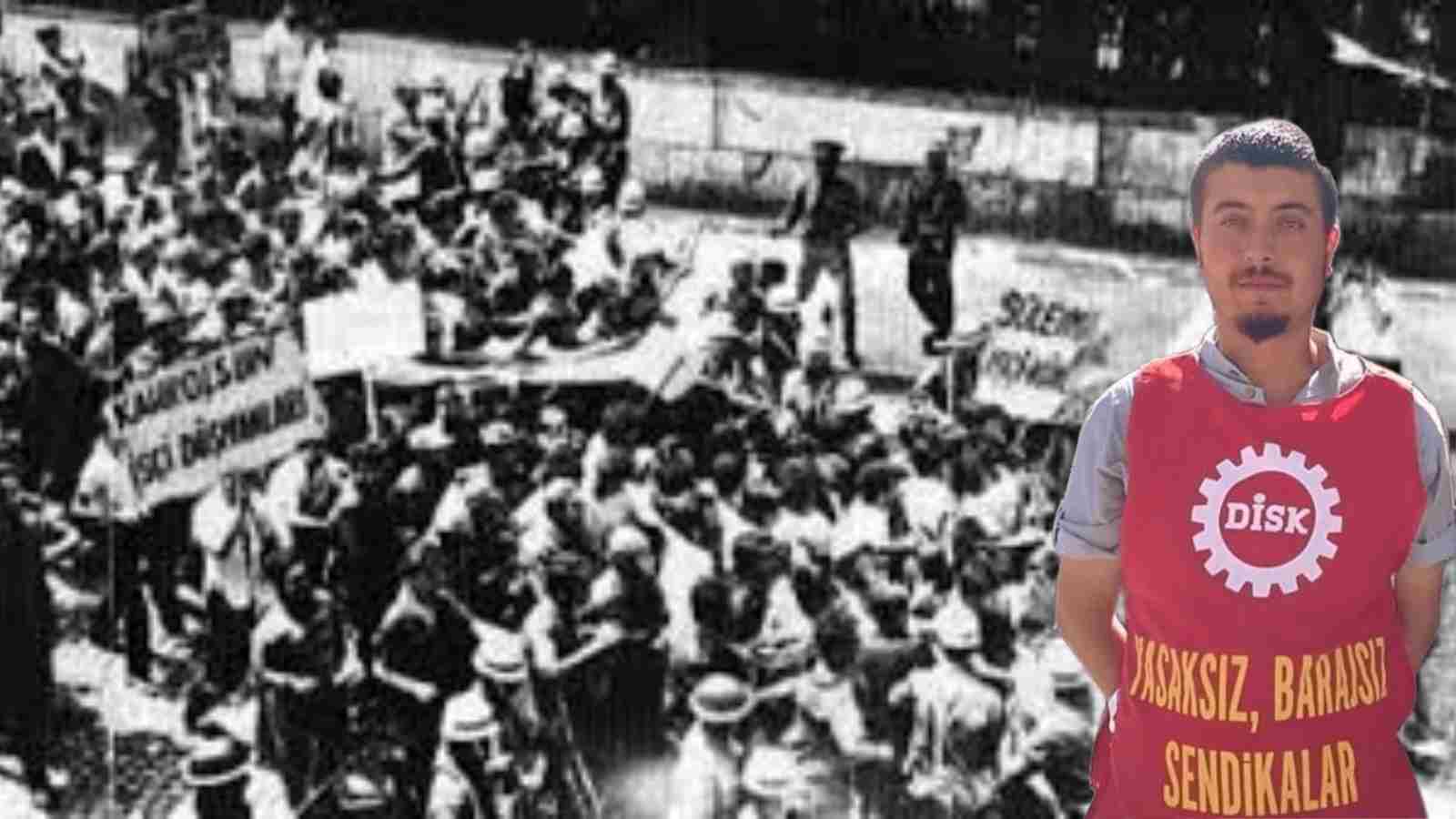
HALKWEB/Özgür Hüseyin Akış We salute the anniversary of the founding of the Confederation of Revolutionary Trade Unions of Turkey (DİSK) with our respect and determination for the honorable struggle of the working class.
Since its foundation, DISK is the name of a historical line that shouts that labor is not just a cheap production input; that the working class is the founding and transformative subject of this society. This line, which is based on struggle not compromise, resistance not surrender, organized speech not silence, has been one of the forces behind the most important gains of the Turkish working class.
DISK was not born as an ordinary organization in Turkish trade union history. It was the product of a rupture, an objection and a class consciousness. It was the expression of an understanding that transformed the “union” from a structure that only negotiated wages to one that positioned the working class as a social and political subject. Therefore, from the very beginning, DISK became the address not only for economic demands but also for the struggle for equality and freedom.
When we look back today, the picture is grim. Low wages have become permanent, precariousness is normalized, deunionization has almost become a state policy. Labor murders are passed off as “fate”, children are put to work and young people are condemned to a future without a future. This whole picture clearly tells us this: The problem is not the “failures” in individual workplaces, but the capitalist order itself.
It is precisely at this point that the historical meaning of DISK becomes important again. DISK reminds the worker that: Rights are won through struggle, not by grace. Not at the table, but with organized power. And most importantly, the working class is not only a victimized class, but also a class with the power to change.
Today, however, a significant part of the trade union movement has moved away from this historical claim. The language of struggle seems to have given way to the language of compromise, class politics to narrow institutional calculations. However, the legacy of DISK points to a trade unionism that comes to terms with the order, not a trade unionism that “manages”.
To truly salute DISK is not only possible by singing eulogies on anniversaries. It is possible to salute DISK by reproducing its founding spirit in today's conditions. In other words:
By strengthening the independent political line of the working class,
By defending strikes and resistance as legitimate and central tools,
By making young workers, women, migrant laborers a core element of the struggle,
It is possible to take a clear class position against the capitalist order.
The foundation of DISK still tells us that: This order can be changed. And the subject of this change is the organized working class.
So the word today is simple:
We salute DİSK, but mainly by reminding DİSK of its responsibility to revive its fighting spirit... By reminding them of what they have to do in a system where there are 2 million child workers in Turkey, where an average of 200 workers a month lose their lives in occupational homicides.
Because salvation, still and as always, lies in organized struggle.