




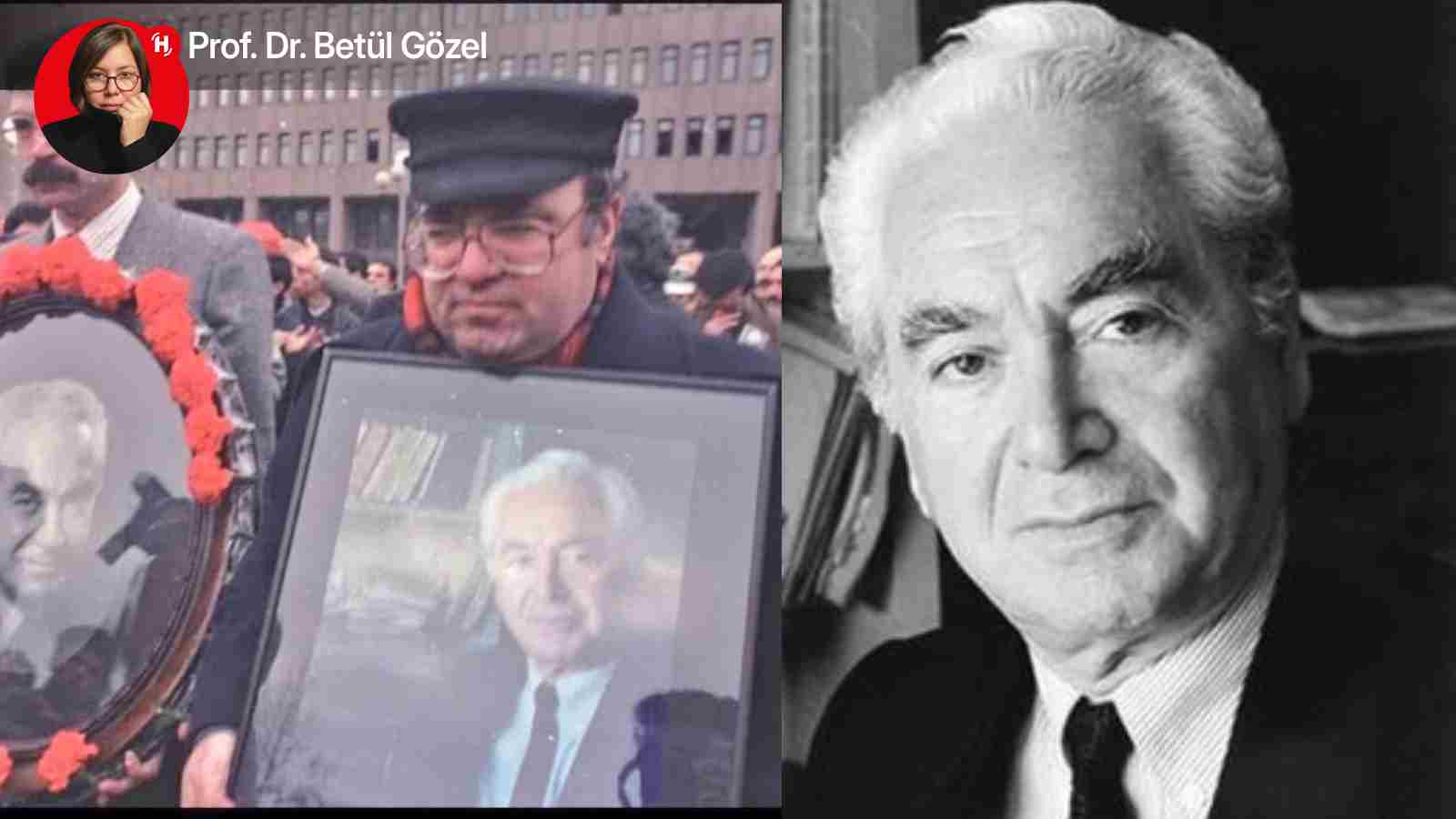
 When we talk about Muammer Aksoy, we should talk about a stance, not a loss. He was one of the people in this country who knew that saying what he thought was right came at a price, and despite this, he did not break his line. The line of law he defended affected not only his generation but also those who came after him; he became a part of social transformation in a wide area from the judiciary to universities.
He stood by the rule of law, defended the judiciary to stay away from politics, did not step back from secularism and the rights of citizens. He spoke and wrote where he saw wrong. He was a lawyer, a teacher, he also entered politics, but his main concern was not the seat; he walked the same line throughout his life.
Born in İbradı in 1917, he graduated from Ankara Law School and did his doctorate in Zurich. When he returned to Turkey, he stayed at the university. He was on the bench; he wrote, he debated.
It was no coincidence that the literacy rate in Ibradı was high during my years of compulsory service and that I heard Aksoy's name there as well.
His connection to his birthplace made what he said more understandable.
During the drafting of the 1961 Constitution, he worked as a civilian constitutional lawyer in the Constituent Assembly. He was part of the drafting team and served as a spokesperson in the commission. He opposed granting excessive powers to the executive; he defended the independence of the judiciary and the protection of the citizen against the state. This was not just talk: the Constitutional Court was established, university autonomy was written into the Constitution, trade union rights were recognized, and the principle of the social state was included in the text. These were articles that strengthened the law, not enlarged the state.
He even took the risk of stepping down when he thought that university autonomy was being undermined. After March 12, he was tried and acquitted. After September 12, he did not shut up; he represented Turkey in European institutions for a while, and when he returned home, he continued to be the public voice of law. In order to keep the institutional memory of the Turkish legal tradition alive, he took responsibility at the Turkish Law Society and served as its president.
These were not easy times. Defending them in a post-coup country was not without a price. Still, he did not break his line.
He was a member of parliament; after September 12, he became the president of the Ankara Bar Association. He always said the same thing from the rostrum of the Bar Association: Law is not an instrument of power; it is the guarantee of the citizen, rights cannot be postponed.
In 1989, he became the founding president of the Atatürkist Thought Association. His warnings about secularism, his opposition to the transfer of natural resources to foreign capital and his advocacy of public control made him more visible. This visibility also brought threats. He knew this, but he did not retreat; he kept talking.
On January 31, 1990, he was shot in front of his house in Ankara.
Not only a human being was lost that day. The voice of the law was targeted, the objection of the academia was wanted to be silenced. Years have passed; there have been verdicts on the shooters, but the back side of the case has not been clarified. Who gave the way, who turned a blind eye, who kept silent... These are still up in the air.
This is why we are talking about Muammer Aksoy today: not how he was killed, but what he did not agree to while he was alive.
What have we lost in thirty-six years?
We lost a jurist, a public voice of the law. “It happens.” We lost a stance that openly called wrongdoings and injustices wrong, a mind that did not back down. And perhaps most of all, we lost people who spoke out, knowing the cost as wrong became normalized.
If a word is precious in a country, it has a price. The price of silence is much heavier.
This is where Aksoy leaves off: not retreating when wrong becomes commonplace and not giving up what is right while doing all this.