




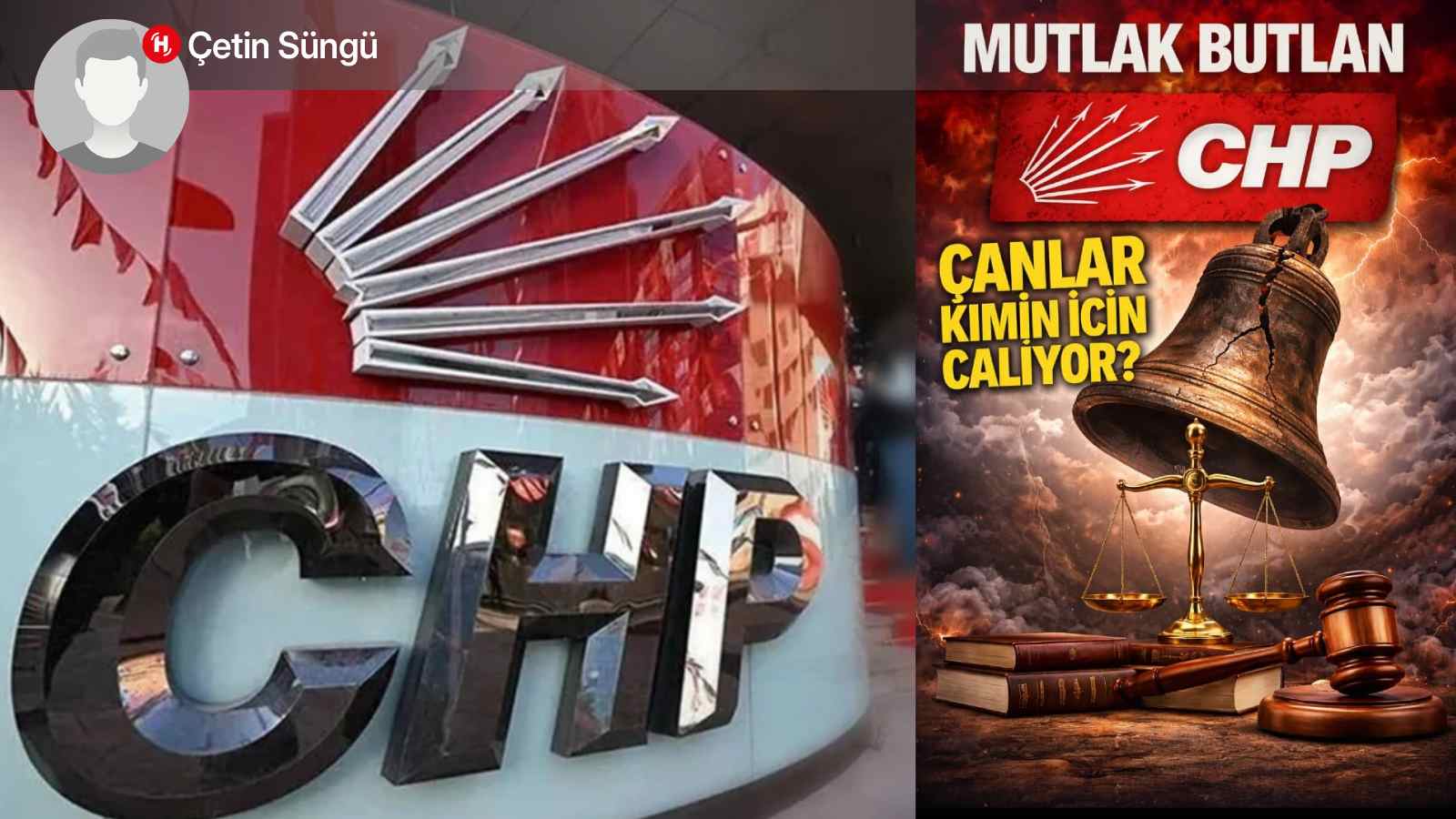
 The second hearing of the criminal case filed against Özgür Özel for alleged irregularities at the CHP's 38th Ordinary General Assembly, where he was elected as the chairman for the first time, will be held on Tuesday, January 13.
IBB Mayor Ekrem İmamoğlu, CHP Istanbul Provincial Chairman Özgür Çelik, Izmir Metropolitan Mayor Cemil Tugay and Beşiktaş Mayor Rıza Akpolat are among 12 people on trial.
LEGAL AND POLITICAL BACKGROUND: HOW DID THE ABSOLUTE NULLITY CASES START?
The January 13th verdict is not the result of a debate hanging in the air, but of a legal and political process that has been building step by step for nearly two years. Today “absolute nullity” is not a crisis that was invented one morning.
It all started with the CHP's 38th Ordinary Congress held on November 4-5, 2023. Immediately after the congress, some actors inside and outside the party raised the allegation that the will of the delegates had been crippled.
The allegations went beyond a classic procedural error: It was alleged that delegates were given benefits, votes were manipulated, and pressure and promises were put in place. Hence the lawsuits filed, “cancel” on a much heavier legal ground than his demand, and directly “absolute nullity” based on the allegation.
Absolute nullity does not mean that a transaction is later overturned; it means that it is null and void from the beginning. In other words, a possible ruling by the court would have rendered not only a congress, but all the governance relations, powers and political legitimacy arising from that congress questionable.
LITIGATION PROCESS CHRONOLOGICAL FLOW
The cases began to be heard at the Ankara Civil Courts of First Instance. Throughout the end of 2024 and the first months of 2025, hearings were postponed, files were merged and party statements were taken. In this process, the court did not accept requests such as the appointment of a trustee to the party administration or a temporary injunction, but continued to examine the case on the merits, paving the way for the crisis to deepen politically.
Throughout 2025, each postponement increased tensions within the CHP. In provincial and district organizations, “This will end legally, but how will it be carried politically?” The question was being asked louder and louder. Because the case was no longer a court case, but a test of internal party legitimacy.
In October 2025, the court rejected the claim of absolute nullity. Legally, this decision meant the continuation of the current administration, but politically it did not end the debate. On the contrary, “The court saved him, but what will politics say?” The question has become more burning.
At this point, a critical distinction emerged: The civil case was closed, but the criminal investigation file remained open. The criminal case against the alleged manipulation of votes and subversion of will during the congress process was postponed until January 13, 2026. This is what makes January 13th so politically critical.
CRIMINAL CASE AND INDICTMENT
About the names in question, “vote rigging” The charge carries a sentence of one to three years in prison.
The prosecutor's office said that Imamoğlu was arrested at the party's 38th Ordinary “Chairman of the Council” and that other suspects acted in complicity in İmamoğlu's organization.
According to the indictment prepared by the Ankara Chief Public Prosecutor's Office, during the congress process on November 4-5, 2023, some delegates “money for votes” to the government of the Republic of Turkey.
Before the start of the trial, there was a jurisdictional dispute between the criminal court of first instance and the heavy criminal court over which court had jurisdiction.
Ankara Regional Court of Appeals “dereliction of duty” Ankara 26th Ankara Criminal Court of First Instance, which issued the verdict.
The court appealed this decision to the Constitutional Court.
On September 10, the Constitutional Court rejected the court's application and the case was finalized to be heard by the Ankara 26th Criminal Court of First Instance.
On the other hand, before the hearing on October 24, the CHP administration made a new move to drop the congress case and decided to hold the 39th Ordinary Assembly. This congress was held between November 28-30.
The first hearing of the case was held on November 4, 2025. Former CHP Chairman Kemal Kılıçdaroğlu, who is a victim in the case, did not attend the hearing and the case was adjourned to January 13 due to the request of the lawyers of the parties to make up the deficiencies.
POLITICAL READING: LEGITIMACY CRISIS AND INTRA-PARTY DYNAMICS
There are some concepts in Turkish politics that pretend to speak in the cold language of law, but at their core carry the harshest truth of politics. “Absolute butlan” is precisely such a concept. On paper it is a state of invalidity, in practice it is the name of the deep crisis of legitimacy into which the Republican People's Party has been dragged.
What is being debated in the CHP today is not the procedure of a congress; what is being debated is whether the party can claim its own historical will. The absolute nullity case, regardless of its legal outcome, is the most naked mirror that shows why the CHP has failed to come to power.
Law here is not an outcome, but a mirror. What is seen in that mirror is this: The political will, which starts with the delegates, expands with the organization and should be embodied in the congress, has been surrounded by lobbies, material relations, municipal facilities and closed power networks. It is not individuals who are being targeted; it is the will of the party itself.
MUNICIPALITY-PARTY-POWER TRIANGLE
With the 2019 local elections, the CHP achieved a significant success. Istanbul and Ankara were won. However, this victory was not read as the beginning of the march to power, but as a means of building power within the party. Municipal power was substituted for party legitimacy. Electoral success was interpreted as political immunity.
The narratives in the indictments against Ekrem İmamoğlu show that this power relationship is not only political but also economic and institutionalized. The issue is not the targeting of one person. The issue is the deliberate erasure of the line between public power and party interest.
KILIÇDAROĞLU: NOT A DEMAND FOR POWER, BUT A BASIS FOR TRUST
Kemal Kılıçdaroğlu is not a personal party to this process, but a political victim. What he represents is not a desire for a return, but a call for confrontation. Despite its shortcomings and mistakes, the Kılıçdaroğlu era was an effort to put the CHP's claim of moral superiority at the center of politics.
Today, Kılıçdaroğlu's significance lies not in whether or not he will become the leader again, but in the possibility that a shady period can be closed with his assurance. What the CHP needs is not a leader with absolute power, but a figure of trust that can carry the transition process.
JANUARY 13, 2026: POSSIBLE CONSEQUENCES OF THE CASE
The January 13 trial is not a technical hearing for the CHP. In this case, the court will look into whether there was a will defect in the congress. So the question is this: Was the will of the delegates freely formed or was it systematically manipulated?
The decision has three possibilities: Acceptance of the absolute nullity, rejection but a finding of a sham, or an extension of the process. But whatever the verdict, the real test for the CHP will begin on that day. Every verdict that day, whether conviction or acquittal, will retrospectively produce a political opinion on the legitimacy of the CHP's last congress process.
SOLUTIONS AND INEVITABLE STEPS
- Suspension of membership and duties of all those named in the indictments until the end of the trial.
- 38. Political suspension of the Assembly and related processes.
- The creation of a temporary transitional administration with limited powers.
- Conducting this process on a basis of trust, with no demand for power.
- A clean congress, free of municipality facilities and closed delegation negotiations.
CONCLUSION: NOT A THREAT, BUT THE LAST OPPORTUNITY
Absolute nullity is not a catastrophe for the CHP. It is an opportunity for reestablishment, whether it is or not. If the CHP uses this opportunity, it will return to its genetic code; if not, it will turn into a legally existing but politically exhausted structure.
The issue is no longer a matter of individuals. The issue is whether the CHP will become the opposition of the regime or an internalized part of it.
CHP will either make this confrontation or pay the historical price of avoiding this confrontation.
There is no other way.